Start with the format of your art-history materials: a larger tablet gives enlarged pages and paintings more room, but font settings may not change a fixed-layout PDF or work in every app. Choose a 13-inch-class screen if keeping captions near artwork matters more than holding weight, then check your reading app, annotation needs and storage before choosing a model.
Who needs which features?
Large-print art-history readers
You need larger text without losing sight of captions and nearby artwork. Google notes that Android font-size settings do not apply to some apps, while GOV.UK warns that PDFs can be difficult to make easier to read. Check your actual reading materials rather than relying on a system setting alone.
Image-led visual-analysis students
If you regularly enlarge paintings, architectural details and plate captions, screen area and image-viewer controls deserve close attention. Apple, Samsung and OnePlus publish tablets with screens around 13 inches, though their display specifications do not establish how your particular scans will appear.
PDF annotators with growing study libraries
If you mark up readings and keep image-heavy files offline, check the pen arrangement and storage of the exact model. Samsung lists an S Pen and microSD support for the Galaxy Tab S10 FE+; OnePlus lists removable memory cards as incompatible with the Pad 3.
What should you check?
Try a typical chapter and image-heavy scan in your intended app first. Then decide whether readable text, artwork detail or managing notes and files is your main priority.
| Concern |
What to check |
Who this matters to |
| Large text and page area |
Try text enlargement and zoom in your usual ebook app and a representative PDF; check whether captions remain legible. |
If I enlarge a chapter, I still need to follow its captions without constantly moving around the page. Around 42% of consumers would make readable enlarged text their primary concern. |
| Artwork and fine detail |
View familiar images in your intended browser or app; assess zoom controls, glare and captions in your usual lighting. |
When examining a painting or scan, I want to inspect details without losing my place in the image. Roughly 33% of consumers would put artwork viewing first. |
| Annotation and offline files |
Confirm the exact pen bundle and storage configuration, including whether removable storage is supported. |
If I annotate readings and keep a growing collection of scans offline, I need a workable way to manage both. Approximately 25% of consumers would prioritise notes and file storage. |
Common buying mistakes
-
Assuming a larger font will change every PDF
Google says Android font-size settings do not apply to some apps, and GOV.UK notes that PDFs can be difficult to make easier to read. More screen area helps with zooming but does not turn a scanned page into reflowable text.
Open a typical chapter, catalogue PDF and scan in the app you plan to use. Check zoom, navigation and caption readability at your preferred size.
-
Treating display figures as an artwork colour test
Apple and OnePlus publish colour and display specifications, but those figures alone cannot tell you how a particular digitised artwork will look in your app and lighting.
Use specifications to narrow your choices, then compare familiar images on the devices where possible, paying attention to glare and image-viewer controls.
-
Assuming annotation accessories are included
Pen arrangements differ by model. Samsung lists an S Pen with the Galaxy Tab S10 FE+, while Apple presents Pencil options separately for the 13-inch iPad Air.
Confirm the contents of the exact tablet bundle and the pen compatibility you need before planning a handwriting workflow.
Samsung says a travel adaptor is not included with the Galaxy Tab S10 FE+.
-
Choosing screen size without considering how you read
A larger screen can leave more space for enlarged content, but holding a tablet through a long reading session is a different task from using it at a desk. Storage arrangements also differ: Samsung lists microSD support for the Galaxy Tab S10 FE+, whereas OnePlus lists removable cards as incompatible with the Pad 3.
Consider where you will read most often and which PDFs and images you need available offline before choosing a size and storage configuration.
Relevant brands to consider
Apple
The 13-inch iPad Air and iPad Pro are relevant if you want a large iPad for artwork, enlarged pages and optional Pencil-based notes.
- Apple lists P3 colour and anti-reflective coatings for both 13-inch lines. Its published iPad Pro specifications also include an OLED display and stated brightness and contrast figures.
- Check Pencil compatibility and bundle contents for the exact model. Published display figures do not establish colour accuracy in your reading app.
Samsung
The Galaxy Tab S10 FE+ is relevant if a large Android screen, an S Pen and expandable storage fit your study routine.
- Samsung lists a 13.1-inch display, an S Pen in the box and support for microSD cards up to 2TB.
- Samsung says a travel adaptor is not included. Google cautions that Android font-size settings do not apply to some apps, so check your preferred reader.
OnePlus
The Pad 3 is relevant to readers comparing large Android displays for scanned pages and artwork.
- OnePlus publishes a 13.2-inch, 3392 × 2400 LCD display with 315 ppi and stated 98% DCI-P3 coverage.
- OnePlus lists a 675 g weight and says removable memory cards are incompatible. Its colour-coverage figure is a manufacturer specification, not an independent artwork-viewing test.
Joybuy product choices
These tablets offer different starting points for enlarged pages and study notes: a 12.7-inch model with a stylus, a Pad 7 bundle with a pen, and a 13-inch iPad Pro variant. Check how your own books and scans behave in the reading app before deciding.
 Image unavailable
TECLAST ArtPad Pro 12.7-inch 2K, 256GB, 4G LTE (2025)
Consider this larger-screen option if you want room to zoom into pages and make handwritten study notes. The title lists a 2K display, 256GB storage and an included stylus with 4096 pressure levels. Check text enlargement and PDF behaviour in your intended app, and assess the display in the lighting where you read.
View on Joybuy
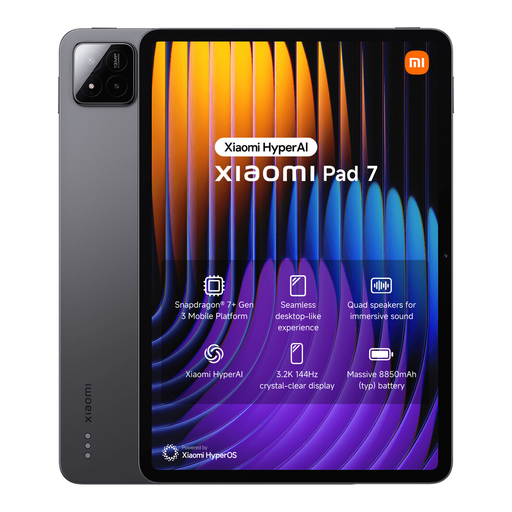 Image unavailable
Xiaomi Pad 7 Grey, 8GB/128GB, Focus Pen included
Consider this option if pen-based markup matters and you can work with a smaller reading surface than the larger models shown here. The title lists 8GB RAM, 128GB storage and an included Focus Pen. Try a typical ebook and scanned PDF at your preferred text size before choosing it for long reading sessions.
View on Joybuy
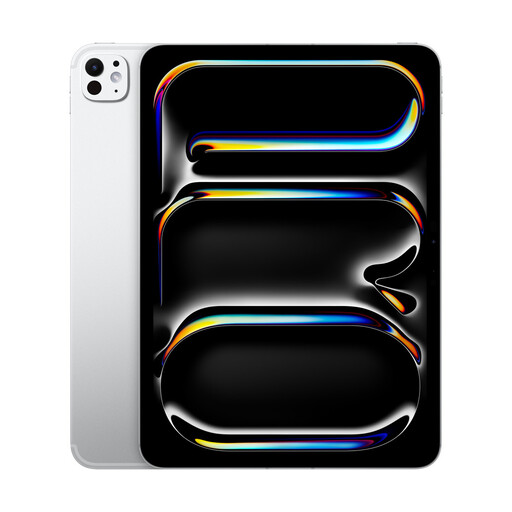 Image unavailable
Apple iPad Pro 13-inch (M5), Wi-Fi + Cellular, 1TB, Standard Glass, Silver
Consider this 13-inch variant if you want more screen area for enlarged pages alongside artwork and 1TB of storage for study files. The title specifies Wi-Fi + Cellular connectivity and standard glass. If you plan to annotate, confirm the compatible Pencil and exact bundle; also try your reading materials in the app you intend to use.
View on Joybuy
Frequently asked questions
Will a larger system font make every art-history PDF easier to read?
No: font controls may not change a fixed-layout or scanned PDF. Google says Android font-size settings do not apply to some apps, and GOV.UK notes that PDFs can be difficult to make easier to read. Try a real course PDF in your intended app and check whether zooming leaves captions usable.
When does a 13-inch tablet make sense instead of a smaller one?
A 13-inch-class tablet makes sense when you regularly enlarge text but want nearby artwork and captions to remain visible. If you prefer something smaller to hold, check whether your usual text size and image zoom still let you navigate a typical chapter comfortably.
What should I check if I annotate my readings?
Check pen compatibility and what comes with the exact tablet bundle. Samsung lists an S Pen with the Galaxy Tab S10 FE+ but no travel adaptor, while Apple presents Pencil options separately for the 13-inch iPad Air.


