
24/7 Customer Support

Free returns

Same-day & Next-day Delivery

Quality Guaranteed

Unlock Your Welcome Offers: FREE Delivery | Up to 80% OFF | Free 30-day JoyPlus trial
Download the APP
A proper cup of tea is one of life's simple pleasures, but choosing the right equipment can feel surprisingly complex. A quality teapot with infuser is essential for unlocking the full flavour of loose-leaf varieties, yet the market is filled with options that look appealing but fail in practice. As a Joybuy Product Recommendation Officer, my role is to help you see past the marketing and focus on what truly matters for a perfect brew.
Before you make a decision, be aware of a few common pitfalls that lead to disappointment and wasted money:
To ensure your new teapot is a joy to use for years to come, focus on these key parameters. They are the difference between a decorative shelf-filler and a dependable daily companion.
The material of your teapot affects heat retention, flavour purity and durability.
The mechanism for brewing is just as important as the pot itself.
Finally, consider how you will use the teapot day-to-day.
Based on these practical criteria, here are a few options from our catalogue matched to different user needs.
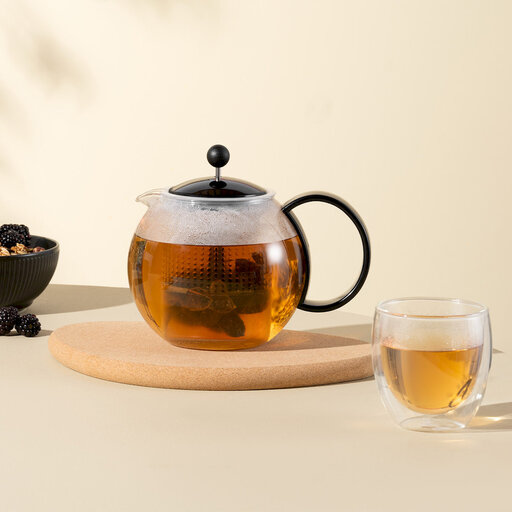
Why This Fits Their Persona: This user wants a reliable, no-fuss teapot for their daily brew. The 1-litre capacity is perfect for a couple of large mugs and the press system offers excellent control over brew strength without extra steps.
The patented press system directly solves the issue of over-brewing common with basic infusers. The body is made from borosilicate glass, eliminating the risk of cracking from thermal shock.
The key advantage is the ability to stop brewing precisely. The plastic handle remains cool for safe handling and the entire unit is dishwasher safe for easy cleaning.
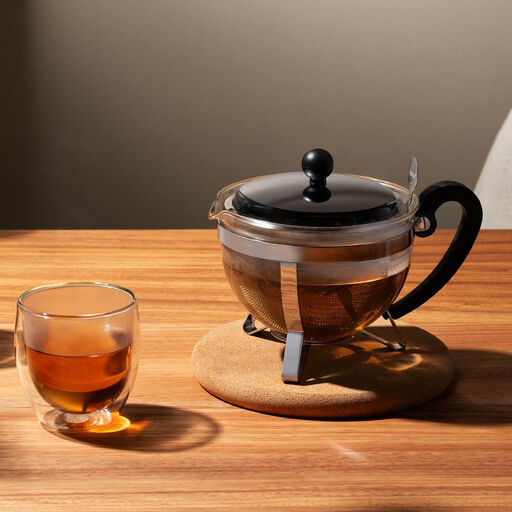
Why This Fits Their Persona: This user values aesthetics as much as function. They want a statement piece for their table when hosting. The iconic Chambord design with its steel frame is elegant, while the clear glass body makes brewing a visual experience for guests.
It avoids the "stylish but impractical" trap. The large, removable stainless steel infuser provides ample room for leaves to expand, ensuring a full-flavoured brew and sidestepping the weak tea problem.
Its key advantage is the combination of timeless design and practical brewing. The borosilicate glass body is durable and dishwasher safe and the frame's legs provide stability on any surface.
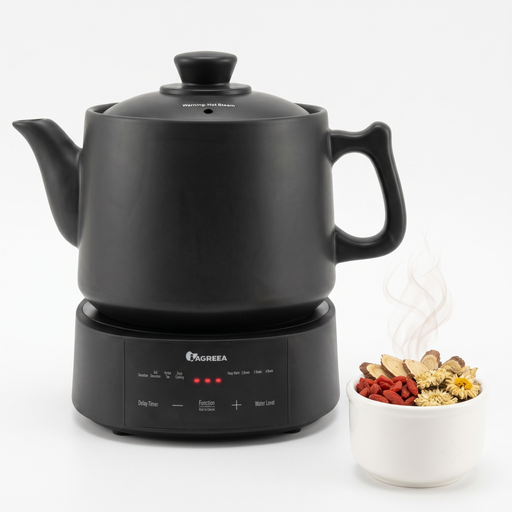
Why This Fits Their Persona: This user is serious about brewing herbal remedies, tonics or wellness infusions. They need precise control, large capacity and automated functions like timers and keep-warm settings that a standard teapot cannot offer.
This specialised electric tea maker avoids the trap of using the wrong tool for the job. Its programmable heating cycles are designed for effective herbal extraction, something a simple teapot cannot replicate.
The main advantage is hands-free, programmable brewing. The 4.5-litre food-grade ceramic pot is non-porous, easy to clean and the split design separates the pot from the electronics for safety and convenience.
We have compiled a complete, real-time list of products that fully satisfy these strict selection criteria and UK safety regulations.
The most common cause of cracking is thermal shock. To prevent this, avoid pouring boiling water directly into a cold glass pot. A simple precaution is to first rinse the pot with warm tap water to gently raise its temperature. Most importantly, ensure you purchase a borosilicate glass teapot, as this material is specifically designed to handle rapid temperature changes safely.
In most cases, no. The vast majority of glass and ceramic teapots, even those made from borosilicate glass, are not designed for direct heat from a stovetop and can shatter. Always assume a teapot is not stovetop-safe unless the manufacturer explicitly states that it is. For boiling water, it is always safest to use a separate kettle.
A teapot with a strainer (or a removable basket infuser) steeps the tea leaves in the water. To stop the brewing process and prevent the tea from becoming bitter, you must physically remove the infuser from the pot. A tea press, on the other hand, features a built-in plunger. When you press the plunger down, it isolates the tea leaves at the bottom of the pot, halting the infusion process without you needing to remove any parts. This offers more precise control over the final strength of your brew.