Tinned tuna is a staple in many UK kitchen cupboards, and for good reason. It offers a convenient and affordable source of protein that can be transformed into a quick lunch, a hearty dinner or a simple snack. However, with so many options on the shelf—chunks, steaks, in brine, in water—choosing the right one can feel surprisingly complicated.
This guide is designed to help you navigate the choices. As a Joybuy Product Recommendation Officer, my role is to provide clear, practical information so you can find the tinned tuna that best fits your meals, lifestyle and dietary preferences. We will look at the key differences between popular types and highlight a few options available for delivery across the UK.
How to Choose the Right Tinned Tuna
Making the right choice often comes down to understanding a few key factors. Keeping these points in mind can help you select the perfect tin for your next meal.
1. Cut: Chunks vs. Steak
The cut of the tuna affects its texture and how it performs in different dishes.
- Tuna Chunks: These are smaller, yet firm, pieces of fish. Their texture makes them an excellent choice for mixing into other ingredients. They are ideal for making classic tuna for sandwiches, mixing into pasta bakes, or creating a tuna mayonnaise filling for jacket potatoes.
- Tuna Steak: This refers to a larger, more solid piece of tuna. It has a meatier bite and holds its shape well, making it a great addition to salads like a Ni?oise, or for dishes where you want the fish to be a distinct component.
2. Liquid: Brine vs. Spring Water
The liquid the tuna is packed in influences its flavour, texture and nutritional profile.
- Tuna Chunks in Brine: Brine is essentially salt water. It helps to preserve the tuna and gives it a distinctly savoury, seasoned flavour. This is a classic option that many people are familiar with. However, it does add to the overall sodium content of the product.
- Tuna in Spring Water: This option allows the natural flavour of the tuna to be more prominent. It contains significantly less sodium than brine, making it a popular choice for those monitoring their salt intake. It's a versatile base for adding your own seasonings and is often considered a good option for those seeking high protein tuna with fewer additives.
3. Pack Size: Single Tins vs. Multipacks
Consider how frequently you use tinned tuna.
- Single Tins: Ideal if you use tuna infrequently or want to try different types without committing to a large quantity.
- Multipack Tinned Tuna: For busy families or fitness enthusiasts who rely on tuna as a regular source of protein, multipacks often provide better value and ensure your pantry is always stocked.
Top Tinned Tuna Recommendations
Here are a few different tinned tuna options to consider, each suited to different needs and preferences.
John West No Drain Tuna Chunks In Brine 3 x 100g
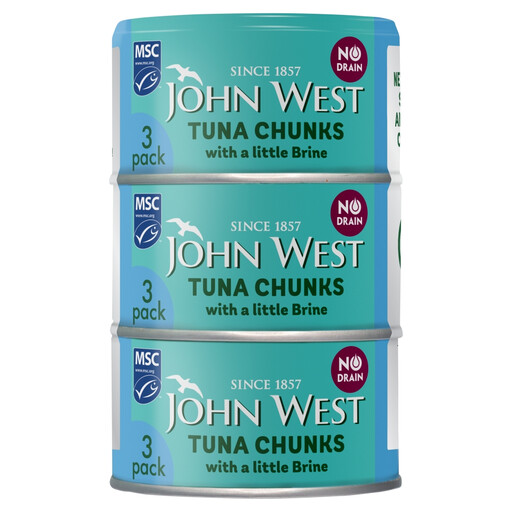
- Why It Stands Out: The main appeal of this John West tuna is its convenience. The 'no drain' feature means less mess and preparation, allowing you to add the tuna directly to your dish. The multipack format is also practical for regular use.
- Pros:
- High Protein: Contains 27g of protein per 100g.
- No Draining Required: Minimises mess and prep time.
- Convenient Multipack: The 3 x 100g pack is useful for stocking the pantry.
- Who is it for?: This is an excellent choice for busy individuals and families who need a quick, no-fuss ingredient for lunches and simple meals.
Tropical Sun Tuna Steaks In Brine 160g
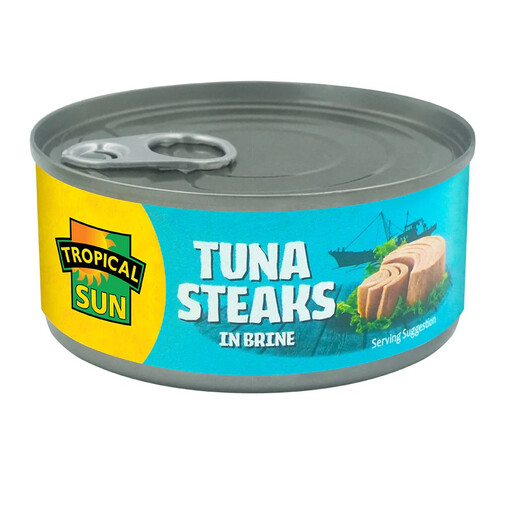
- Why It Stands Out: These are skipjack tuna steaks, offering a firmer, meatier texture than standard chunks. Packed in brine, they have a savoury flavour that works well in dishes where the tuna is the star.
- Pros:
- Steak Cut: Provides a firm, satisfying bite.
- High in Protein: Delivers 26.4g of protein per 100g.
- Versatile for Cooking: The steak format is suitable for flaking into salads or even light pan-searing.
- Who is it for?: A great option for those who prefer a more substantial texture in their tuna, particularly for use in salads or as a centrepiece for a light meal.
Morrisons Fad Free Tuna Chunks In Spring Water 145g
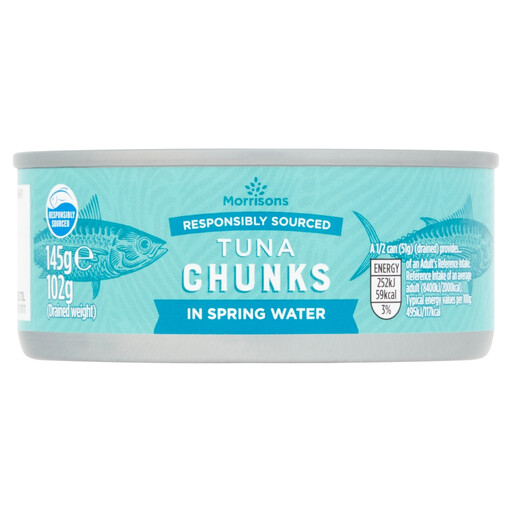
- Why It Stands Out: Packed in pure tuna in spring water, this product preserves the natural, mild flavour of the skipjack tuna. It's a versatile choice that allows you to control the seasoning and overall flavour profile of your dish.
- Pros:
- Natural Flavour: The spring water allows the authentic taste of the tuna to come through.
- Good Protein Source: Offers 24.9g of protein per 100g (drained).
- Lower Sodium Option: A suitable choice for those looking to manage their salt intake compared to brine-packed varieties.
- Who is it for?: Perfect for health-conscious consumers and anyone who prefers a milder-tasting tuna that can be seasoned to their own preference.
Looking for More Options?
The products highlighted here represent just a fraction of the available choices. If you are specifically looking for tuna preserved in salt water, you can find a wider variety to suit your needs.
? Explore our full range of tinned tuna in brine to find more options.
Frequently Asked Questions
1. Is tinned tuna a healthy food choice? Tinned tuna is a good source of lean protein, which is important for muscle maintenance and feeling full. It also contains omega-3 fatty acids. When choosing, consider the packing liquid. Tuna in spring water is generally lower in calories and sodium than tuna in brine or oil. As with any food, it is best enjoyed as part of a balanced diet.
2. What is the difference between tuna chunks and tuna flakes? Tuna chunks are larger, firmer pieces of fish that hold their shape well. Tuna flakes consist of smaller, softer pieces that are already broken down. Chunks are great for salads and pasta where you want a noticeable texture, while flakes are often used for sandwich fillings where a smoother, more spreadable consistency is desired.
3. How should I store tinned tuna after opening it? Once a tin of tuna is opened, any unused portion should be transferred to a non-metallic, airtight container. Store it in the refrigerator and consume it within two days for optimal freshness and safety. Never store leftover tuna in the original opened can.


