
24/7 Customer Support

Free returns

Same-day & Next-day Delivery

Quality Guaranteed

Unlock Your Welcome Offers: FREE Delivery | Up to 80% OFF | Free 30-day JoyPlus trial
Download the APP
Watching your child take their first wobbly steps is a milestone. Soon after, you might find yourself considering their first set of wheels. The world of toddler bikes can be surprisingly complex, with options ranging from balance bikes to tricycles and bikes with stabilisers. Choosing the right one is about more than just colour and style; it’s about finding a safe, durable and developmentally appropriate ride-on toy that builds confidence and coordination.
This guide is designed to help you navigate the choices. We will break down the different types of bikes, highlight key features to look for and provide some practical recommendations to help you find the perfect first bike for your little one.
Making an informed decision involves considering your child's age, physical development and the specific skills you want to encourage. Here are a few key points to keep in mind.
The main difference between these options lies in the skills they develop.
When selecting any ride on toys for children, safety is paramount. Look for products that meet UK and EU safety standards, such as EN71-1-2-3. Key features to check for include:
While age recommendations are helpful, a child's height and inseam (the inside leg measurement) are more accurate indicators of a good fit. For any toddler bike, the child should be able to sit on the saddle with their feet flat on the ground. For a 2 year old bike, this is especially important to ensure they feel secure and in control.
Here are a few recommendations that cater to different ages and developmental stages, selected for their features and practicality.
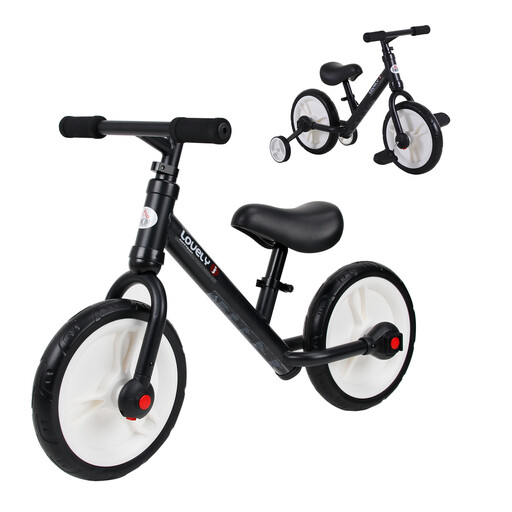
Why It Stands Out This bike’s 2-in-1 design offers excellent versatility. It can be used as a traditional bike with stabilisers and pedals for children who are new to riding. As their confidence grows, the pedals and stabilisers can be removed, transforming it into a true balance bike to help them master steering and balance.
Pros
Who is it for? This is a great option for parents seeking a long-term solution that adapts to their child's developing skills. It is suitable for children aged 2 to 5 years who might benefit from starting with the stability of stabilisers before progressing to a balance bike.

Why It Stands Out This kids tricycle provides a classic and stable introduction to the world of cycling. Its robust three-wheel design gives young riders immediate confidence. The addition of a front basket and a bell adds an element of fun, encouraging imaginative play while they ride.
Pros
Who is it for? This trike is ideal for toddlers aged 2 to 5 years who are just beginning their riding journey. It’s a fantastic choice for parents who prioritise stability and want a fun, engaging trike for toddlers that helps build confidence from the very first pedal.
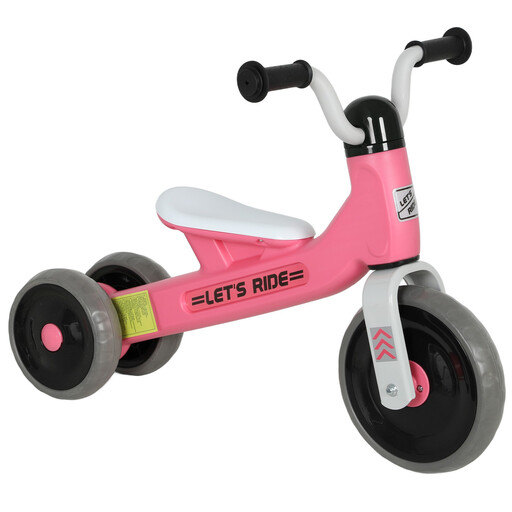
Why It Stands Out Engineered specifically for the youngest riders, this baby's first bike focuses on safety and early motor skill development. Its key safety features, such as the limited steering and fully enclosed wheels, provide peace of mind for parents while little ones explore their mobility.
Pros
Who is it for? This is an excellent choice for parents of children aged 1 to 3 years. If you're looking for a safe, purpose-built ride on toy to introduce balancing skills indoors and out, this is a strong contender.
If you haven't found the perfect fit here or want to see a wider variety of styles and colours, there are many other choices available. From different types of tricycles to a broader range of balance bikes, exploring more options can help you find the ideal match for your child's personality and needs.
Explore our full collection of boys' balance bikes and other ride-on toys to find the ideal match for your little adventurer.
Most children are ready for a balance bike between 18 months and 2 years old, or once they are walking confidently. However, the most important factor is fit. The child should be able to sit on the saddle with their feet flat on the floor.
Neither is definitively "better"; they simply teach different skills first. A balance bike focuses on teaching balance and steering, which can make the eventual transition to a pedal bike without stabilisers much quicker. A bike with stabilisers teaches pedalling and braking from the start but does not develop a child's natural sense of balance.
The most reliable method is to measure your child's inseam (from the crotch to the floor). Compare this measurement to the bike's seat height range. When your child is sitting on the bike, their feet should be able to rest flat on the ground with a slight bend in their knees. This position gives them the control and confidence they need to learn effectively.