
24/7 Customer Support

Free returns

Same-day & Next-day Delivery

Quality Guaranteed

Unlock Your Welcome Offers: FREE Delivery | Up to 80% OFF | Free 30-day JoyPlus trial
Download the APP
Watching a toddler discover the joy of colouring is a wonderful milestone. It’s a flurry of creativity, imagination and, often, a considerable amount of mess. As a parent or guardian, you want to encourage this artistic exploration, but choosing the right tools can feel overwhelming. You need crayons that are safe for curious little ones, easy for small hands to hold and hopefully, simple to clean up.
This guide is designed to help you navigate the options. We will walk through the key features to look for when selecting toddler crayons and present a few carefully chosen recommendations to help you find a suitable set for your budding artist.
Before diving into specific products, understanding a few key criteria can make your decision much easier. These are the features that matter most for safety, development and practicality.
A toddler’s instinct is to explore everything with their hands and, occasionally, their mouths. This makes safety the number one priority. Always look for non-toxic crayons for kids. This label indicates that the product is made from materials, typically wax and pigments, that are considered safe and will not cause harm if small amounts are accidentally ingested. Reputable products will clearly state their compliance with UK and EU safety standards.
Standard crayons are often too thin and fragile for the firm, developing grip of a toddler. This is why jumbo crayons for toddlers and chunky crayons are so popular. Their larger diameter makes them much easier for small hands to grasp and control, which helps support the development of fine motor skills.
The shape also plays a role. While traditional round crayons are common, some designs feature a triangular body. This ergonomic shape can encourage a proper pencil grip and has the added benefit of preventing the crayons from rolling off the table. Durability is also key; look for crayons that can withstand the enthusiastic pressure that toddlers often apply.
Creative expression can sometimes extend beyond the paper—to hands, clothes and even walls. Choosing washable crayons can save you a great deal of time and stress. These are formulated to be easily cleaned from skin and most non-porous household surfaces with just a damp cloth and mild soap. This feature provides peace of mind, allowing your child to create freely without you worrying about permanent marks.
Based on the criteria of safety, ease of use and practicality, here are our recommendations for preschool art supplies that are well-suited for young children.
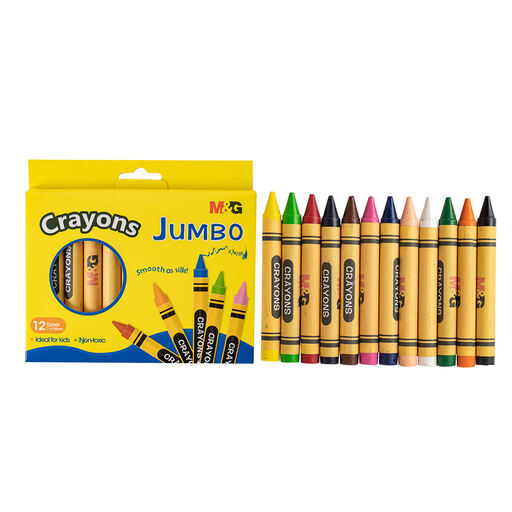
Why It Stands Out: This set offers a classic and reliable introduction to colouring. The traditional jumbo size is perfectly scaled for a toddler’s grip, and the wax glides smoothly, delivering vibrant colour without requiring too much pressure.
Pros:
Who is it for? Parents and caregivers looking for a dependable, no-fuss set of first crayons that are comfortable for a young child to use for everyday drawing and colouring activities.

Why It Stands Out: The standout feature of this set is its ergonomic triangular shape. This design naturally guides little fingers into a tripod grip, which is foundational for learning to write later on. It also cleverly stops the crayons from rolling away.
Pros:
Who is it for? Toddlers who are just developing their pincer grasp. The triangular shape provides excellent developmental support, making these ideal easy grip crayons.
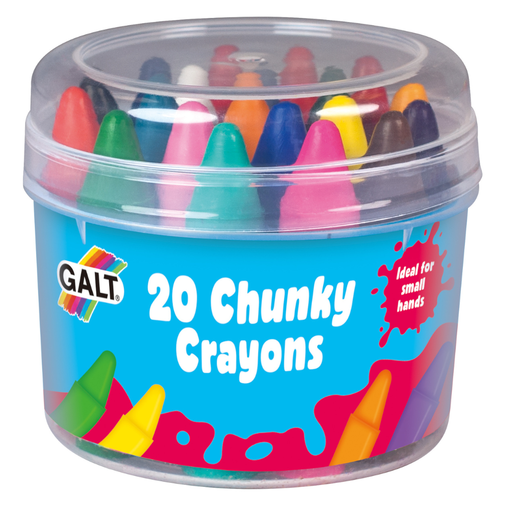
Why It Stands Out: This set from Galt offers a wider spectrum of colours and comes in a practical storage case. The chunky crayons are designed to be hardwearing, making them a durable choice for enthusiastic young artists.
Pros:
Who is it for? Families looking for a larger set of colours with the added convenience of a storage case. A great option for slightly older toddlers who are ready to explore a wider range of shades.
The recommendations above are excellent starting points, but every child's needs are different. If you are looking for other shapes, sizes or types of colouring instruments, there are many more choices available.
Explore our full range of creative tools in the Children's Colouring category to find the perfect fit for your little one.
1. At what age can a toddler use crayons? While some children show interest as early as 12-18 months, jumbo or chunky crayons are generally ideal for toddlers aged 2 and up. At this stage, their fine motor skills are developed enough to grasp a larger crayon, and they are less likely to put everything in their mouths. Always supervise young children during art activities.
2. Are toddler crayons really non-toxic? Yes, products marketed as non-toxic crayons for kids are made from materials (like paraffin wax, beeswax and safe pigments) that have been tested to meet specific safety standards. This means they are not expected to cause harm if a small piece is accidentally ingested. Always check the packaging for safety certifications.
3. How do I get crayon marks off walls? For washable crayons, a damp cloth with a bit of mild soap is usually all that is needed to wipe marks off most painted walls and non-porous surfaces. For standard wax crayons, a melamine foam cleaning sponge or a cloth with a small amount of baking soda paste can often lift the stain, but it is always best to test on a small, inconspicuous area first.