
24/7 Customer Support

Free returns

Same-day & Next-day Delivery

Quality Guaranteed

Unlock Your Welcome Offers: FREE Delivery | Up to 80% OFF | Free 30-day JoyPlus trial
Download the APP
As your toddler grows, so does their desire for independence. Suddenly, they want to do everything themselves, from washing their hands at the sink to using the "big toilet". The only thing holding them back is their height. This is where a good toddler step stool becomes an essential household item, bridging the gap and empowering your little one to take on new challenges safely.
However, the market is filled with options, and choosing the right one can feel overwhelming. As a Joybuy Product Recommendation Officer, my role is to help you navigate these choices. This guide cuts through the clutter, focusing on the practical features that matter most for your child's safety and development, helping you find a stool that works for your family.
Before we look at specific products, let's cover the key features to consider. Focusing on these three areas will help you select a reliable and practical stool.
Safety is the number one priority. A wobbly stool is a recipe for a fall, which can knock a child's confidence. Look for a non-slip step stool with a wide, sturdy base that is difficult to tip over. Key features include:
A child's booster step needs to be the right height for the task. A stool that's too short won't help, while one that's too tall could be unsafe. Consider where it will be used most. A sink stool for kids might need to be slightly taller than a toilet training stool. Also, think about portability. A lightweight design allows your child to move it themselves, fostering a sense of ownership and independence.
A bathroom step stool for toddlers will inevitably encounter water, soap and toothpaste. Choose a stool made from durable, water-resistant plastic like polypropylene. This material is not only strong but also very easy to wipe clean, ensuring you can maintain good hygiene in the bathroom and kitchen.
Based on these practical considerations, we've selected a few standout options that balance safety, functionality and design.
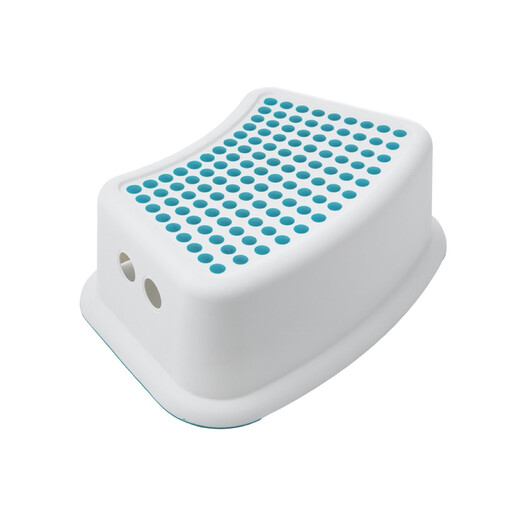
Why It Stands Out: This stool's strength lies in its simplicity and versatility. Its lightweight construction makes it incredibly easy to move around the house, not just for the toddler but for anyone needing a little boost.
Pros:
Who is it for? Families looking for a straightforward, portable and affordable kids step stool for general use around the home.
View the Addis Booster Step Stool on Joybuy

Why It Stands Out: The OKBaby Herbie stool places a heavy emphasis on safety, with generous non-slip surfaces on both the top and bottom to ensure maximum stability for your child.
Pros:
Who is it for? Safety-conscious parents who want a dedicated toilet training stool or sink-side step that will remain firmly planted on the floor.
View the OKBaby Herbie Step Stool on Joybuy

Why It Stands Out: The Shnuggle Step Stool combines safety with a clever, space-saving design. Its contoured shape allows it to fit snugly against the base of a toilet or a pedestal sink, minimising trip hazards in smaller bathrooms.
Pros:
Who is it for? Parents who appreciate thoughtful, modern design and need a children's step stool that integrates seamlessly into a compact bathroom.
View the Shnuggle Step Stool on Joybuy
If our top recommendations aren't quite what you're looking for, or if you'd like to explore a wider range of styles, colours and features, we have more to see.
Browse our full collection of potty training step stools to find the perfect fit for your home and your child's needs.
Most toddlers are ready for a step stool from around 18 months onwards, which is often when they start showing a keen interest in independent activities like hand washing. However, it's always best to check the manufacturer's age recommendation and to supervise your child, especially when they are first learning to use it.
This depends on your child's height and what they need to reach. For many toddlers, a single child's booster step provides sufficient height for the toilet and sink and is often more stable due to its lower centre of gravity. A two-step stool can be useful for reaching higher kitchen counters or taller sinks but may be bulkier and less stable for a younger child.
Always choose a non-slip step stool with rubber grips on the base and a textured standing surface. Before each use, ensure it is placed on a flat, dry floor. A wide base is crucial for preventing tipping. Most importantly, always supervise your child while they are using the stool to ensure they stand in the centre and do not overreach.