Phone users considering a compact camera
If distant landmarks or wildlife are difficult to photograph with your phone, compare the optical zoom and controls of a compact camera against the convenience of the device you already carry.


Keep using your phone if convenient snapshots and minimal luggage meet your needs. Consider a compact camera for a particular need such as optical zoom or dedicated controls, or an action camera for mounted footage and water activities—after checking the exact model’s protection requirements. If you fly with spare batteries, check your airline’s rules and pack them in line with UK Civil Aviation Authority guidance.
Start with the pictures or footage you expect to take, then decide whether carrying another device solves a specific problem.
If distant landmarks or wildlife are difficult to photograph with your phone, compare the optical zoom and controls of a compact camera against the convenience of the device you already carry.
For cycling, skiing, snorkelling or hands-free clips, check an action camera’s mounting, stabilisation and water-use conditions rather than assuming an ordinary compact suits the activity.
Plan how you will carry the camera, compatible storage and any spare batteries. The UK Civil Aviation Authority advises keeping spare batteries in the cabin and protecting them against short circuits.
Choose it when: quick sharing and carrying less matter more than a separate camera’s controls or optical zoom.
Trade-off: phone battery life and storage must also cover your photography, navigation and other trip needs.
Choose it when: you want a dedicated, fixed-lens camera for sightseeing or distant subjects without carrying a lens system.
Trade-off: it adds a device to charge, store and protect; zoom ranges and controls vary by model.
Choose it when: mounted video or recording in and around water is central to the trip.
Trade-off: waterproof use can require specific seals or a case, and this route does not replace the need to check for optical zoom if distant stills matter.
| Priority | What to check | Your needs |
|---|---|---|
| Zoom and controls | Compare the actual optical focal-length range, available controls and stabilisation on the model. Which? identifies true optical zoom as a reason to consider a dedicated camera for distant subjects. | I want clearer framing of subjects I cannot approach, or more control than I use on my phone. |
| Activity and water use | Check mount compatibility, stabilisation and the stated waterproof depth. Read whether the rating requires a case or particular sealing steps. | My plans involve hands-free clips, spray or underwater recording, so the camera needs to suit the actual activity. |
| Power and storage | Check battery removability, charging arrangements and supported card format for the exact camera. For flights, the UK Civil Aviation Authority advises cabin carriage and individual short-circuit protection for spare lithium batteries. | I need enough usable power and compatible storage for a day away from charging without packing spares incorrectly. |
| Carrying and cover | Consider a protective pouch for a shared travel bag. Read your travel-insurance policy’s exclusions and conditions for the equipment and activities involved; GOV.UK advises checking policy exclusions. | I want a kit I can carry and protect throughout the trip, and I need to know what my own policy covers before relying on it. |
A second device brings its own charging, storage and carrying routine. A compact is easier to justify when it addresses a particular need, such as optical zoom for distant subjects.
List the subjects you expect to shoot, then compare the relevant lens range and controls with what your phone already lets you do.
Water use can depend on correctly closed covers, a secured lens cover and the type or duration of exposure. DJI sets such conditions for the Osmo Action 6.
Follow the exact model’s sealing instructions and check whether its maker specifies or recommends a housing for your activity.
The UK Civil Aviation Authority advises taking spare batteries in the cabin and protecting each one against short circuits.
Protect the terminals, keep spares in cabin baggage and check the airline’s current requirements for your batteries and journey before departure.
Cover depends on the individual policy’s exclusions and conditions, including those relevant to the equipment and planned activities.
Read the policy wording and ask the insurer about loss, theft, accidental damage and unattended items before relying on the cover.
These brand examples show different camera directions; the stated features belong to particular ranges or models, not every product bearing the brand.
Canon UK describes its PowerShot range as spanning travel-zoom and other compact formats.
Sony specifies a 24–200 mm equivalent zoom lens for its RX100 VII compact camera.
GoPro describes HERO as a small 4K action camera for active recording.
DJI specifies the Osmo Action 6 as waterproof to 20 m without a case under its stated conditions.
These options include action cameras for active footage, a fixed-lens Sony camera for stills and video, and a Sony interchangeable-lens kit. Match the format to your trip before comparing individual features.
 No image available
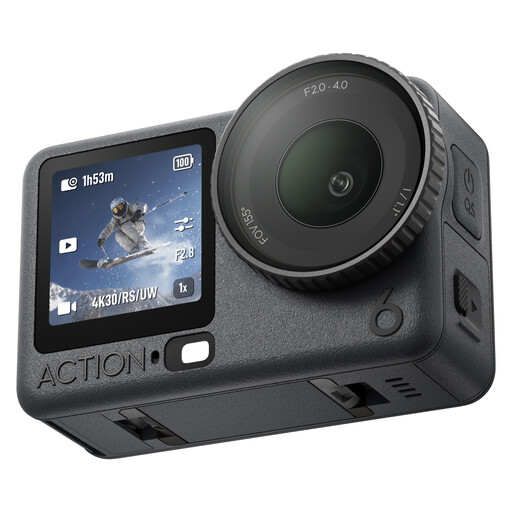
An action-camera option for active holiday footage, with a 1/1.1-inch square sensor and variable aperture stated in its title. DJI specifies water use to 20 m without a case for this model, provided its sealing instructions are followed; check whether your activity calls for a housing. Confirm the battery arrangement and app workflow for your trip.
 No image available
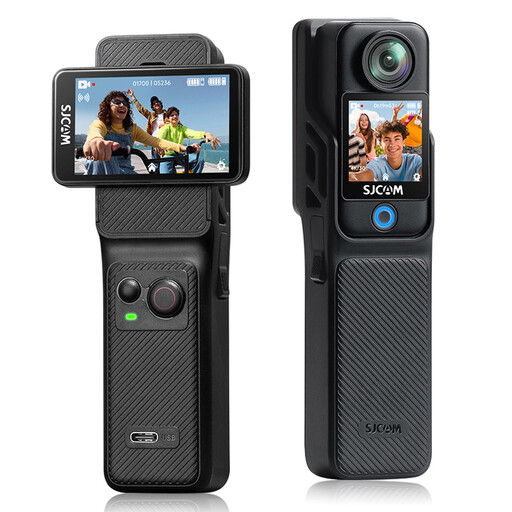
For moving footage, its title specifies 6-axis electronic image stabilisation, dual touchscreens and a 154° wide-angle view. The stated 30 m waterproof depth requires the case; the stated 437-minute recording time depends on the handle and auxiliary battery. Confirm the included power accessories and battery details before planning a flight.
 No image available
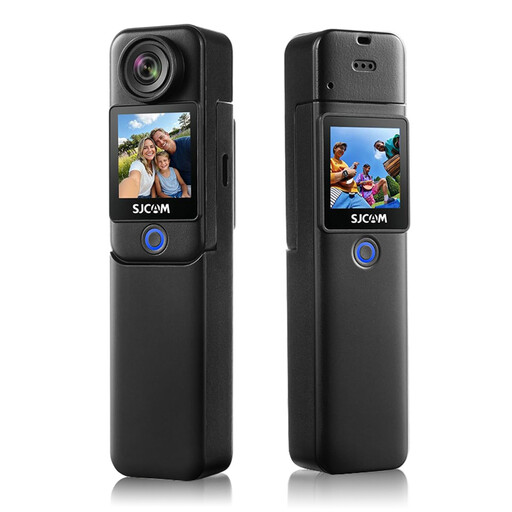
This active-footage option lists 6-axis electronic image stabilisation, a 1.3-inch touchscreen and 20MP photos. Its stated 30 m waterproof depth applies with the case, while the stated 460-minute recording time depends on the handle and auxiliary battery. Check which accessories are included and how you would carry any spare batteries.
 No image available
A fixed-lens option for travel stills and video, with a wide-angle zoom lens, 1-inch stacked sensor, 20MP stills and 4K video stated in its title. It is not presented as a water-use camera, so plan protection from rain and humidity. Check compatible memory cards and the battery details before travel.
 No image available
This interchangeable-lens option suits travellers willing to carry and protect a separate lens. Its title specifies a 16–50 mm f/3.5–5.6 power-zoom kit lens, 26MP stills and 4K60p video. Check compatible storage and battery details, and allow for the kit’s carrying arrangement rather than treating it as a pocket compact.
Usually, yes. GOV.UK says camera equipment can generally travel in hand or hold luggage on flights to the UK; check the requirements of your airline and journey before packing.
Keep spare batteries in cabin baggage and protect each against short circuits, as the UK Civil Aviation Authority advises. Check your airline’s current rules for the batteries you intend to take.
Not necessarily: choose one if recording in water, heavy spray or mounted activities is part of your plans. Check the exact camera’s depth rating and sealing instructions; DJI, for example, places conditions on water use with the Osmo Action 6.
Start with the exact camera’s supported card format and recording requirements, not capacity alone. Compatibility differs by model, so confirm the card against the camera you plan to carry.
Do not assume it will. GOV.UK advises reading policy exclusions and choosing cover that suits the trip; check your own policy and ask the insurer how it treats camera loss, theft, accidental damage and your planned activities.