Daytime cookery-show viewers
If you watch with the curtains open or the lights on, a window or lamp reflected in the screen can obscure ingredients, recipe steps and subtitles. Check reflection handling as well as picture visibility in room light.


For cookery shows in a bright lounge, choose a TV by checking both daylight visibility and reflections from the windows or lamps in your room. A model with an explicitly specified reflection-control treatment is worth considering when sharp reflections are the main distraction; a local-dimming LCD, including a Mini LED model, is another route when ambient light is the greater concern. Check the exact screen finish, size and placement rather than relying on the panel label alone.
If you watch with the curtains open or the lights on, a window or lamp reflected in the screen can obscure ingredients, recipe steps and subtitles. Check reflection handling as well as picture visibility in room light.
If colour separation and contrast matter to you in food close-ups and darker studio scenes, consider the exact model’s picture characteristics alongside its screen finish. A reflection-controlled OLED is one option, but the treatment is model-specific.
If you can change the TV’s position or control daylight with blinds or curtains, consider those changes before choosing a particular screen treatment. The screen also needs to fit your cabinet or planned wall position.
Start with the light that reaches your planned screen position: a sharp window reflection and generally bright room light call for different checks. Then assess the picture, the physical fit and how you will watch programmes.
| Concern | Buying checks | Who this matters to |
|---|---|---|
| Window and lamp reflections | Check where light will strike the screen and what reflection-control treatment the exact model specifies. | If a window or lamp appears in the picture while I follow a recipe, reducing that distraction comes before other features. Around 36% of consumers would put reflection control first. |
| Picture visibility and contrast | Assess the exact model in bright and darker scenes; for an LCD, check whether it specifies local dimming. | I want colourful ingredients to remain distinct without losing detail when the programme moves to a darker kitchen scene. That picture need would come first for around 29% of consumers. |
| Size and room setup | Measure the cabinet or wall space and check the chosen size’s stand, dimensions and mounting fittings. | Before choosing a larger screen, I need to know it will fit where it avoids the strongest reflection. Room fit and placement would be the primary concern for around 21% of consumers. |
| Programme access | Confirm the exact model supports your intended apps and inputs; check UK TV Licence requirements for your viewing. | I need to reach the cookery programmes I watch and understand whether live viewing or BBC iPlayer requires a licence. Around 14% of consumers would make access and viewing requirements their first check. |
A bright picture can still be interrupted by a sharp reflection from a window or lamp. RTINGS.com identifies reflection handling as part of bright-room TV performance.
Check the exact screen finish and, where possible, position the TV away from direct reflections at your usual seat.
Reflection treatments differ between models, while a Mini LED label does not establish how a particular screen handles reflected light. RTINGS.com also notes that Mini LED has no single set definition.
Compare exact model numbers and screen-treatment descriptions, then consult independent bright-room testing where available.
A screen can fit the wall yet sit directly opposite a bright window; its stand or mounting fittings also need to suit the intended position.
Measure the furniture or wall space, check the chosen size’s fittings and plan the cable route before ordering.
Changing the position may also mean arranging a suitable stand or bracket, or adjusting blinds or curtains.
In the UK, TV Licensing says the relevant checks concern live TV viewing and BBC iPlayer, including viewing through streaming services—not whether a television receives programmes through an aerial.
Check the programmes and services your household intends to use before setting up the TV.
These model ranges illustrate different checks for a bright lounge; a brand name alone does not establish how an individual screen will perform in your room.
Samsung UK describes two model-specific approaches: a Glare-Free screen treatment on the S95H OLED and a Quantum Mini LED approach on the QN80H.
LG UK describes Reflection Free Premium treatment on its OLED evo G6 range, a model-specific option for viewers concerned about reflected light and picture contrast.
Sony’s X90L is a 4K Full Array LED LCD model with local dimming and Google TV.
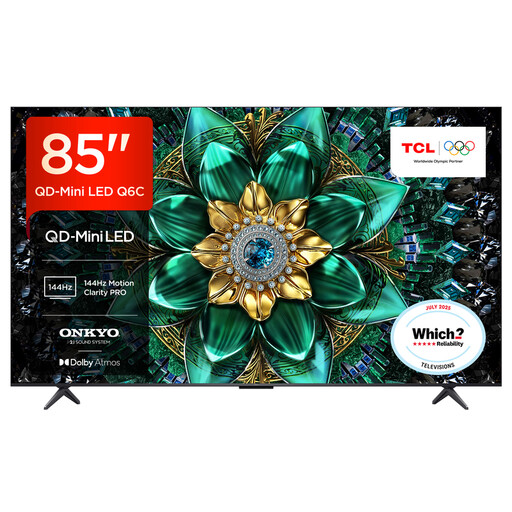
TCL’s Q6C is a QD-Mini LED route for viewers considering local dimming in a bright room.
These TVs offer OLED, QLED and QD-Mini LED options for watching cookery shows in a bright lounge. Choose between them by checking the exact screen finish and how the size will fit your room; panel type alone cannot settle the glare question.
 No image available
Consider this large-screen LCD option if local dimming is a priority and you have measured the planned viewing position. The product name specifies 4K, a 144Hz native refresh rate and up to 512 dimming zones; its product description also describes a Matte HVA panel. Check how the screen handles light in your room and whether the 85-inch size fits the intended installation.
 No image available
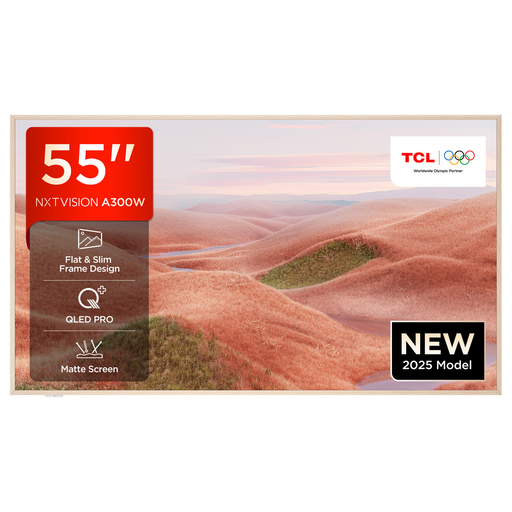
This 55-inch QLED model may suit a lounge where you can manage the screen’s position relative to the windows. Its title lists 4K and a matte anti-glare screen, but the accompanying description presents that finish as an option: confirm that this exact variant has it before relying on it for reflection control.
 No image available
Consider this OLED if you want to assess contrast and reflection handling together. The product description lists an anti-glare screen and a 300 × 200 mm VESA fitting. Check daylight visibility for the S90F itself: Samsung’s separate S95H screen-treatment description does not establish how this model performs.
 No image available
This 75-inch LCD option is worth considering if you want local dimming and have space for the screen. Its product name specifies up to 512 dimming zones and a 144Hz native refresh rate. Check the exact screen finish and how the TV will face your windows; the stated high HDR brightness does not establish reflection control.
 No image available
Consider this 75-inch option if local dimming is high on your checklist. Its product name specifies up to 2,048 dimming zones and a 144Hz native refresh rate; the product description claims approximately 3,000 nits peak brightness. That claim does not tell you how a window will reflect in the screen, so check its finish and your planned placement separately.
In the UK, you need to be covered by a TV Licence to watch live TV on any channel or service, or to use BBC iPlayer, according to TV Licensing. Watching only on-demand programmes on other services does not by itself require one, provided you do not also watch live TV.
Check which kind of light interferes with your viewing and what the exact TV model specifies. Samsung UK describes anti-reflection as softening visible reflections from windows and lamps, while anti-glare diffuses incoming light across the screen; neither label alone establishes the result in your room.
Try reducing direct daylight on the screen and checking your TV’s picture settings first. Sony notes that reflected light can affect automatic screen-brightness settings and advises manual brightness adjustment when the picture looks too bright or too dim.
Check the dimensions, weight, VESA hole pattern and cable clearance for the exact size you intend to buy. Confirm whether that variant comes with the stand or mounting arrangement you plan to use; fittings can differ across a range.