
24/7 Customer Support

Free returns

Same-day & Next-day Delivery

Quality Guaranteed

Unlock Your Welcome Offers: FREE Delivery | Up to 80% OFF | Free 30-day JoyPlus trial
Download the APP
A new television can transform your living space, but finding the right furniture to support it is just as important. The perfect TV stand does more than just hold your screen; it organises your media devices, conceals cables and complements your room's decor. With so many options available, from a minimalist TV cabinet to a feature-rich unit with integrated lighting, making a choice can feel overwhelming.
This guide is designed to help you navigate the options. We will walk through the key considerations for selecting a TV unit and highlight a few recommendations to suit different needs and styles, ensuring you find a practical and stylish solution for your home entertainment setup.
Choosing the right TV stand involves more than just matching its colour to your walls. Focusing on a few practical details will ensure your new furniture is a perfect fit for your technology and your space.
First, confirm the stand can safely support your television. Check your TV's specifications for its weight and dimensions. A TV stand's product details will list a maximum load capacity—never exceed this. For larger screens, such as a TV stand for 65 inch TV, ensure the stand's top surface is wider than the television's base for stability. If you are considering a TV stand with a bracket, you must also check the VESA pattern. This is the standard four-hole mounting pattern on the back of your TV. Ensure the stand's VESA compatibility (e.g., 600x400mm) matches your television's requirements.
Your TV stand is a central piece of furniture, so its style matters. A modern TV stand with a high gloss TV unit finish can create a sleek, contemporary look. For a more ambient effect, an LED TV stand introduces subtle lighting that can enhance your viewing experience. Functionality is equally important. A good TV stand with storage will provide space for satellite boxes, gaming consoles and soundbars. Look for a TV cabinet with doors to hide clutter or open shelving for easy access and display. For rooms with awkward layouts, a corner TV stand can be an excellent space-saving solution.
The material of your TV stand affects both its durability and appearance. Options range from traditional wood and MDF to metal and glass. A glass TV stand often uses tempered safety glass, which is strong and creates a sense of openness in a room. Consider where the unit will be placed. Measure the available space carefully, accounting for clearance around the sides for ventilation and access to cables. Integrated cable management systems are a valuable feature, helping to keep wires tidy and out of sight for a clean, organised finish.
Here are a few recommendations that address different needs, from maximising corner space to creating a modern cinematic feel.
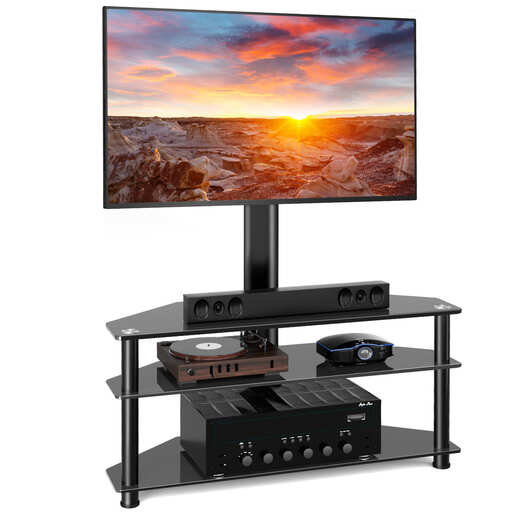
Why It Stands Out: This stand combines three popular features into one versatile unit: it’s a corner TV stand, a TV stand with a bracket and a glass TV stand. Its clever design allows it to fit neatly into a corner or sit flat against a wall, making it highly adaptable. The integrated mount removes the need to drill into your walls, which is ideal for renters.
Pros:
Who is it for?: This is an excellent choice for anyone looking to save space in a smaller living room or who wants the flexibility of an adjustable mount without permanent wall fixtures.
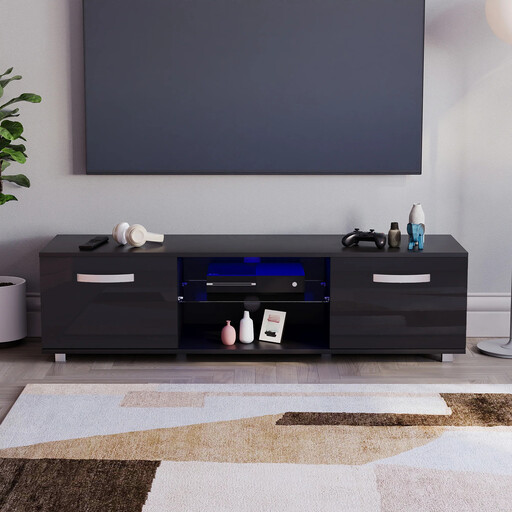
Why It Stands Out: The Cosmo TV unit is a statement piece of modern furniture. The contrast between the high gloss doors and the matte body, combined with the integrated LED lighting, creates a sophisticated and atmospheric focal point for any entertainment area.
Pros:
Who is it for?: This unit is perfect for those who want to create a contemporary, cinema-like feel in their living room and appreciate furniture that combines style with practical storage.
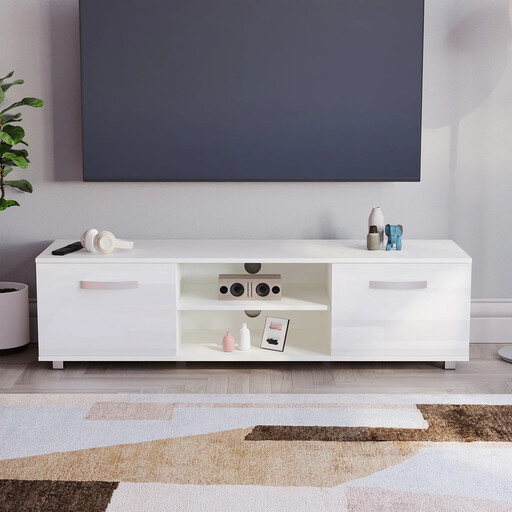
Why It Stands Out: Offering the same modern functionality as its black counterpart, the white Cosmo TV unit brings a bright and airy feel to a room. Its clean lines and high-gloss finish reflect light, which can make a space feel larger and more open.
Pros:
Who is it for?: Ideal for individuals aiming for a fresh, clean look in their living space. It provides the same great features for storage and display but with a brighter visual palette.
These recommendations offer a glimpse into what is available, but every home is unique. If you are particularly drawn to the idea of creating an atmospheric setup with integrated lighting, there are many other styles and sizes to consider.
Explore our full collection of LED television units to find the perfect match for your home.
Check three things: the TV's weight, its width and its VESA pattern (if using a bracketed stand). The stand's specifications must list a maximum weight capacity and VESA compatibility that meets or exceeds your TV's requirements. For surface-top placement, ensure the stand's width is greater than the width of your TV's feet or base.
The general guideline is to position the television so that the centre of the screen is at or slightly below eye level when you are seated. This typically means the top of the TV stand should be around 50-60 cm from the floor, but this can vary based on your sofa height and screen size. Stands with height-adjustable mounts offer the most flexibility.
Reputable manufacturers use tempered glass for TV stands. This type of safety glass is significantly stronger than standard glass and is designed to shatter into small, blunt pieces if it breaks, reducing the risk of injury. Always adhere to the stated weight limits and place the stand on a flat, stable surface to ensure safety.