
24/7 Customer Support

Free returns

Same-day & Next-day Delivery

Quality Guaranteed

Unlock Your Welcome Offers: FREE Delivery | Up to 80% OFF | Free 30-day JoyPlus trial
Download the APP
A television is often the focal point of a living room, but the furniture it sits on is what truly anchors the space. Finding the right TV unit can feel like a challenge; it needs to be the correct size for your screen, offer enough storage to hide away clutter and seamlessly match your home's décor. A messy tangle of cables or a stand that’s too small can easily detract from an otherwise well-designed room.
This guide is designed to simplify your search. We will walk you through the key considerations when choosing a new media unit and present a selection of our top recommendations for 2026, focusing on style, function and practicality for UK homes.
Before you start browsing, a little planning goes a long way. Keeping these three points in mind will help you narrow down the options and find a TV cabinet for your living room that you’ll be happy with for years to come.
The first rule for selecting a TV stand is ensuring it is wider than your television. This creates a stable, visually balanced foundation. As a general guideline, aim for a unit that is at least 10-15 centimetres wider on each side of your TV. For example, if you have a 55-inch television (which is about 123 cm wide), an entertainment centre around 140-150 cm wide would be a suitable fit. Also, consider the height. A lower unit works well for larger screens, ensuring the centre of the TV is at eye level when you are seated.
A TV unit with storage is essential for maintaining a tidy living space. Consider what you need to store.
The material of your TV unit has a significant impact on the room's overall feel.
Here are our recommendations, selected to meet the needs of UK households looking for a blend of style and functionality.
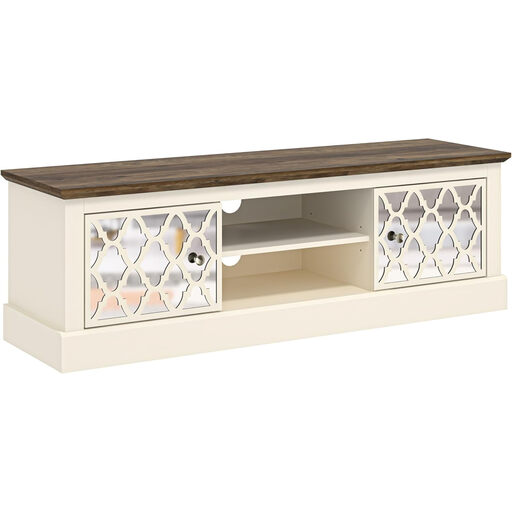
Why It Stands Out: The Sufly unit combines a clean, minimalist silhouette with a warm ivory and oak-effect finish. It offers a balanced mix of open and concealed storage, making it as practical as it is stylish. Its design feels light and airy, preventing it from overwhelming a room.
Pros:
Who is it for? Anyone seeking a functional and stylish media unit for a mid-sized living room. It’s particularly well-suited for those who appreciate a clean, contemporary aesthetic and need both display space and hidden storage.
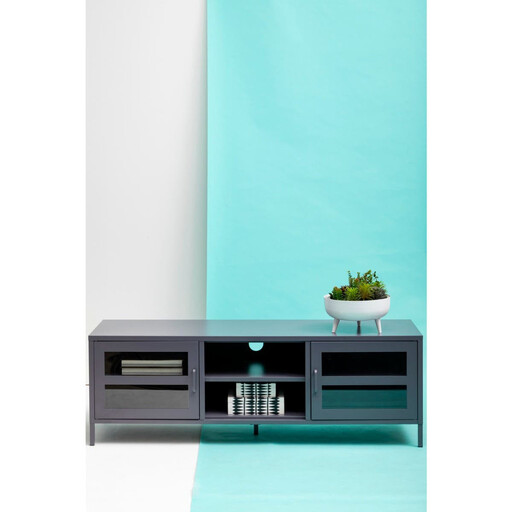
Why It Stands Out: With its robust metal construction and sleek powder-coated grey finish, the Acier TV unit makes a confident industrial statement. The combination of fluted glass doors and open shelving adds a touch of sophistication, while its generous width accommodates larger screens with ease.
Pros:
Who is it for? Homeowners looking to create a contemporary or industrial-themed living space. It’s an excellent choice for those with larger televisions who need a sturdy and stylish entertainment centre.
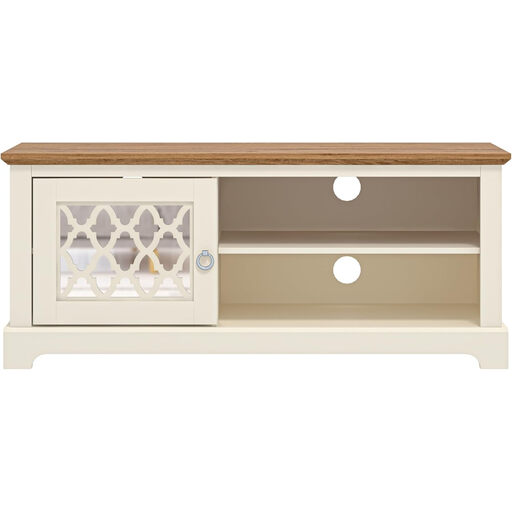
Why It Stands Out: The Novara proves that you don’t need a large space to have a functional and attractive TV setup. Its compact design packs in a surprising amount of storage, with two side cabinets and a two-tiered central shelf. The simple, modern design ensures it fits into almost any décor scheme.
Pros:
Who is it for? Renters or homeowners with limited space who need a practical and stylish solution. It’s a great option for anyone looking for a compact TV cabinet that delivers on both form and function without a large footprint.
If the industrial charm of the Acier unit caught your eye, there are many more designs that embrace the strength and style of metal. From minimalist frames to fully metallic bodies, these pieces can add a unique architectural element to your living room.
Discover our curated collection of metal TV units to find the perfect industrial centrepiece for your living room.
1. How much wider should a TV unit be than the TV? For visual balance and stability, your TV unit should be at least 20 cm wider than your television in total (10 cm on each side). This ensures the TV doesn't look like it's about to tip over and provides a small amount of surface space on either side.
2. What is the difference between a TV unit, a TV stand and a media unit? These terms are often used interchangeably. A TV stand is typically a simple, open piece of furniture designed just to hold a television. A TV unit or media unit usually implies a more substantial piece with integrated storage, such as shelves or cabinets, designed to hold an entire entertainment system. An entertainment centre is often the largest of all, sometimes incorporating tall side piers or a back panel.
3. How do I hide cables with my TV cabinet? Look for a TV unit with built-in cable management features, such as cut-outs or holes at the back of the shelves. You can also use cable ties, clips or sleeves to bundle wires together neatly behind the unit. For a completely clean look, routing cables through the wall is an option, though this is a more involved process.