Groups spread across a wide sofa
If people regularly sit well to either side, check whether the picture holds up away from the centre. RTINGS identifies viewing angle as particularly important for wide seating arrangements.


Start with the seating arrangement: a TV for a large group needs to suit the furthest regular seat without leaving people at the sides with a noticeably different picture. Consider OLED when off-centre viewing and dark scenes matter most in a room you can dim; consider a Mini LED/QLED model for daylight viewing or a larger LCD screen, but check the chosen size’s reflections, viewing angles, local dimming and physical fit.
If people regularly sit well to either side, check whether the picture holds up away from the centre. RTINGS identifies viewing angle as particularly important for wide seating arrangements.
Windows or lamps facing the screen make reflection handling worth checking alongside brightness and dark-scene detail. Assess the exact TV rather than assuming a panel label settles all three.
A larger screen may help distant viewers follow the picture, provided it fits the room and installation plan. TCL’s UK size guidance starts with eye-to-screen distance; the stand, wall space and access route need measuring too.
Consider when: Side seats are unavoidable and the room can be dimmed for evening wildlife programmes. LG describes wide viewing angles and self-lighting black levels as OLED strengths.
Keep in mind: Check the chosen model’s reflections and brightness in your room; a claim about an OLED range does not establish how every size performs.
Consider when: Daylight viewing, reflection control or a large LCD screen takes priority. Samsung describes an anti-reflection screen on its QN90D, subject to the selected size’s features.
Keep in mind: RTINGS notes that Mini LED has no fixed performance definition and that local dimming can produce halos around bright details. Compare results for the exact model.
| Concern | What to check | Who this matters to |
|---|---|---|
| Picture from side seats | Compare horizontal viewing-angle results for the exact model and size. For an LCD set, check whether the selected version has a wide-angle treatment. | If I sit towards the end of the sofa, I want the wildlife footage to remain convincing without moving everyone into the middle. Around 36% of consumers put side-seat picture consistency first. |
| Screen size and fit | Measure eye-to-screen distance from regular seats, then check the TV’s stand footprint, wall space and access route. | From the back of the room, I want a screen I can comfortably watch without ordering one that will not fit. For around 29% of consumers, size and physical fit are the main concern. |
| Daylight and dark scenes | Check reflections under your usual room lighting and compare exact-model brightness and local-dimming results. | When daylight reaches the screen, I need to follow bright landscapes and darker scenes without distracting reflections. Around 21% of consumers primarily care about room-light picture performance. |
| Narration and programme access | Check the required app or connected source, and confirm eARC/ARC compatibility if planning external audio. | If viewers are spread around the room, I need them to hear the narration and access the programme we intend to watch. Clear group audio and source compatibility come first for around 14% of consumers. |
Viewers at the sides may see a different picture. RTINGS highlights viewing angle as an important consideration for wide seating layouts.
Mark out the usual seats and compare horizontal viewing-angle results for the TV you plan to buy.
RTINGS notes that Mini LED has no fixed definition and that local dimming can cause blooming around bright highlights.
Look for dark-scene and local-dimming assessments of the exact model, especially if evening viewing matters to your group.
Screen diagonal does not tell you whether the stand or wall installation will fit. Sony lists a 144.2 cm standard stand width and an approximate 40.1 kg weight with stand for its 75-inch BRAVIA 7; other models need their own checks.
Measure the furniture, wall space and access route, then confirm the chosen TV’s dimensions, weight and mounting requirements.
Changing furniture or arranging suitable installation may add work if the existing setup cannot accommodate the TV.
People farther from the TV may need a different audio arrangement to follow narration. Sony lists eARC/ARC on its 75-inch BRAVIA 7, but connections must be checked for each candidate.
Decide where everyone will sit and confirm the connections needed if you plan to use a compatible soundbar or receiver.
External audio also needs space, compatible equipment and a connection plan.
An OLED reference point for a group that sits across a wide area and can control room lighting.
A Neo QLED/Mini LED reference point for daylight viewing and reflection control.
A model-specific reference for planning a large-screen installation and external audio connections.
A QD-Mini LED reference for buyers comparing larger screens and HDR format support.
These 65- and 75-inch TVs offer screen-size choices for the group-viewing setup. Compare each one with your seating distance, side-seat positions and room lighting; a listed feature does not replace an exact-model picture assessment.
 No image available
Consider the 75-inch size if it suits the furthest regular seat and the available installation space.
The product title lists 4K HDR, up to 512 dimming zones and a 144 Hz native refresh rate; compare viewing angles, reflections and dimming behaviour for this model.
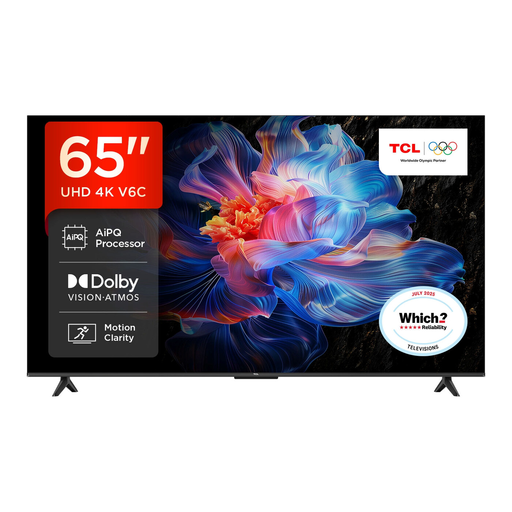 No image available
This 65-inch option is worth considering where that screen size fits the group’s seating distance and room.
Its title lists HDR and Dolby Atmos. Check side-seat viewing and reflection handling for the exact model before choosing it for a wide or bright room.
 No image available
Consider this 65-inch model if that size works for the seating layout and you want to assess a local-dimming TV for varied wildlife scenes.
The title claims up to 2,048 dimming zones and lists a 144 Hz native refresh rate. Those specifications do not establish its measured side-seat or dark-scene performance.
 No image available
The 75-inch version is an option when viewers sit farther away, subject to checking room fit and viewing distance.
Its title claims up to 2,048 dimming zones and lists a 144 Hz native refresh rate. Check exact-model viewing angles, reflections and local-dimming behaviour rather than judging picture quality from the zone claim.
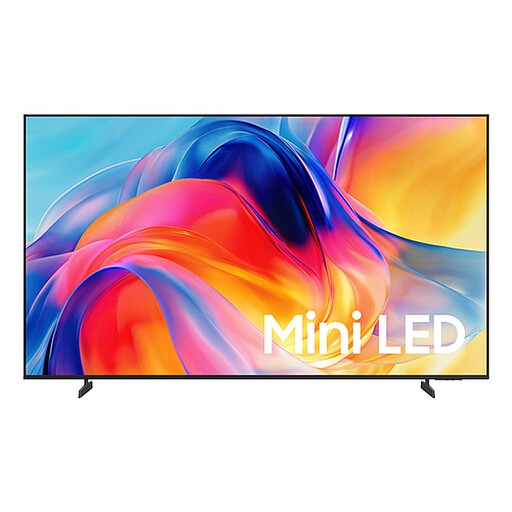 No image available
Consider the 65-inch size if it suits the regular seats and installation space.
Check the exact model’s side-seat picture, reflections, required programme apps and audio connections against your group’s needs.
Consider OLED if viewers sit far off-centre and you can dim the room; consider a Mini LED/QLED TV if daylight viewing or a large LCD screen is the priority. Compare reflections, viewing angles and dark-scene behaviour for the exact models, because the technology label alone does not settle the choice.
Measure from the usual viewing positions to the proposed screen location, including the furthest regular seat. TCL’s UK size guide gives 65 inches at about 2.0 m, 75 inches at 2.3 m and 85 inches at 2.6 m as starting points; also check the room layout, furniture and access route.
Yes. TV Licensing says a TV Licence is needed for BBC iPlayer viewing, including on-demand programmes. If you use another service, check the requirements for the particular way you plan to watch.
Ask the retailer how to use its electrical-waste take-back service before ordering. GOV.UK says retailers must offer take-back for waste equipment of the same type as an item a customer buys; confirm the arrangement that applies to your purchase.