
24/7 Customer Support

Free returns

Same-day & Next-day Delivery

Quality Guaranteed

Unlock Your Welcome Offers: FREE Delivery | Up to 80% OFF | Free 30-day JoyPlus trial
Download the APP
Navigating the world of electric vehicle accessories can be confusing. Whether your current cable is too short, you need a reliable spare for public charging, or you're a new EV owner setting up your kit, choosing the correct Type 2 EV charging cable is essential. This guide is designed to cut through the technical jargon and help you find a safe, durable and compatible cable for your vehicle.
A Type 2 to Type 2 charging cable is the standard for AC charging across the UK and Europe, used at home wall boxes and most public charging stations. It's the key that unlocks convenient power for your Battery Electric Vehicle (BEV) or Plug-in Hybrid Electric Vehicle (PHEV). Below, we'll cover the critical factors to consider before making a choice and present some of our top recommendations.
Making the right selection comes down to a few key specifications. Paying attention to these details ensures you get a cable that charges your vehicle efficiently and safely, every time.
Your vehicle's On-Board Charger (OBC) determines the maximum rate it can accept AC power. While many cables are available, a 7.2kW EV charging cable is a highly versatile option for the UK market.
Cable length is about balancing convenience with practicality. Consider where you park most often, both at home and on the go.
An EV charging cable handles a significant amount of electrical power, so safety is non-negotiable. Always look for products that meet UK and European standards.
Here are our recommendations for reliable and well-built Type 2 charging cables. We've selected options that prioritise safety, durability and user-friendly design.
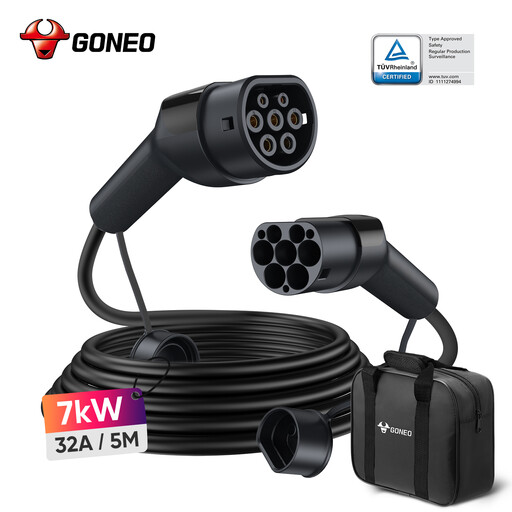
Why It Stands Out: This cable combines robust construction with essential safety certifications. Its internal engineering, featuring ultrasonic welding and silver-plated contacts, is designed for efficient conductivity and reduced heat during charging.
Pros:
Who is it for? This 5m EV charging lead is an excellent choice for EV owners with a dedicated home charging setup or who primarily use chargers with convenient parking. It's a perfect replacement EV cable that is compact and easy to manage.
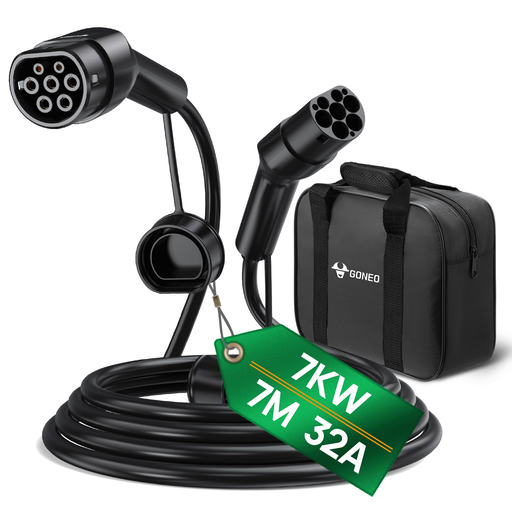
Why It Stands Out: Offering a versatile middle ground, this 7-metre cable provides extra reach without being overly cumbersome. It shares the same high-quality construction and safety features as its shorter counterpart, making it a reliable all-rounder.
Pros:
Who is it for? This is arguably the most practical option for the average EV driver. It's long enough for most situations you'll encounter at public chargers, including being a great public charging cable for Tesla (for AC top-ups), while remaining manageable for daily use at home.
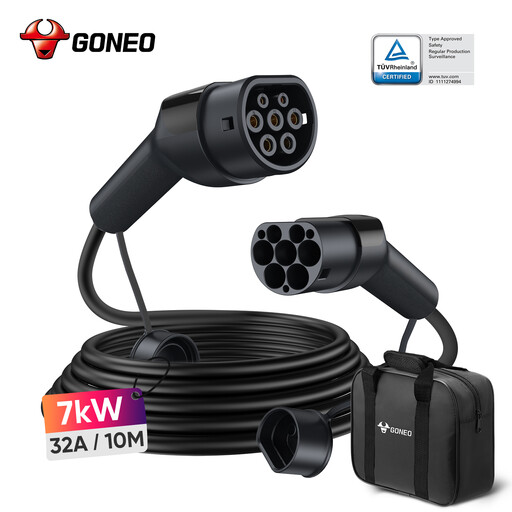
Why It Stands Out: When reach is your top priority, this 10-metre cable delivers. It provides the ultimate flexibility for challenging parking spots, ensuring you can always connect to a charger, no matter how awkwardly it's placed.
Pros:
Who is it for? The 10m EV charging lead is for drivers who frequently face unpredictable parking at public chargers or have a long distance between their parking spot and home wall box. It provides peace of mind that you'll always be able to connect.
The guide above focuses on the Type 2 to Type 2 charging cable, which is the standard for almost all new electric vehicles sold in the UK. However, some earlier EV models (such as the pre-2018 Nissan Leaf) use a Type 1 connector on the vehicle side.
If your vehicle requires this specific connection, you can explore our selection of type 1 to type 2 charging cables to find a compatible option.
1. What is a Type 2 EV charging cable? A Type 2 cable is the standard connector used for AC electric vehicle charging in the UK and Europe. It features a seven-pin connector and is used for connecting your car to home wall boxes and public AC charging points. It is sometimes referred to as a Mennekes connector.
2. Can I use a cable with a higher kW rating than my car's charger? Yes, you can. For example, you can safely use a 22kW-rated cable with a car that only accepts 7.2kW. The vehicle's On-Board Charger (OBC) communicates with the charging station to ensure it only draws power at its maximum safe rate. The charging speed will be limited by the slowest component—either the car's OBC or the charger's output.
3. Is a longer EV charging cable always better? Not necessarily. While a longer cable offers more convenience and flexibility, it is also heavier, can be more difficult to coil and store and may experience a very minor voltage drop over its length compared to a shorter one. The ideal length depends on your specific parking and charging habits. A 7m EV charging lead is often a good balance for most users.