
24/7 Customer Support

Free returns

Same-day & Next-day Delivery

Quality Guaranteed

Unlock Your Welcome Offers: FREE Delivery | Up to 80% OFF | Free 30-day JoyPlus trial
Download the APP
A clean kitchen is a happy kitchen, but navigating the crowded cleaning aisle can be a chore in itself. With countless sprays, creams and wipes all promising a sparkling finish, it’s easy to end up with a cupboard full of products that don’t quite deliver. As a Joybuy Product Recommendation Officer, my role is to help you see past the marketing clutter and choose a kitchen cleaner that genuinely suits your needs.
Before you make your next purchase, let’s look at two common pitfalls that lead to wasted money and frustration.
multi-purpose cleaner capable of tackling everything from greasy hobs to grimy floors and even bathroom tiles. While convenient, a single formula rarely excels at every task. A powerful degreaser is chemically different from a gentle, streak-free glass cleaner or a food-safe disinfectant. Relying on one bottle for everything often leads to lacklustre results on tougher jobs, forcing you to buy a specialised product anyway.kitchen degreaser designed for stainless steel can be too harsh for sealed wood, natural stone or painted cabinets, potentially stripping finishes and causing irreversible damage. The warnings are on the label, but they are easily missed.To make an informed choice, focus on what the product is formulated to do, not just its marketing claims. Here are three core parameters to consider.
The first step is to match the cleaner to the mess.
kitchen degreaser. These are usually alkaline and contain powerful surfactants that break down and lift oil and fat. Using a heavy-duty degreaser for daily cleaning is often overkill and can wear down surfaces over time.If killing germs is a priority, look for specific details.
antibacterial surface spray is designed to kill bacteria. A disinfectant cleaner often targets a broader spectrum of germs, which may include specific viruses.Nothing is more frustrating than cleaning a surface only to be left with streaks and smears.
streak-free surface cleaner is formulated to leave minimal residue behind.Instead of a one-size-fits-all approach, we've matched a few standout products to different household needs.
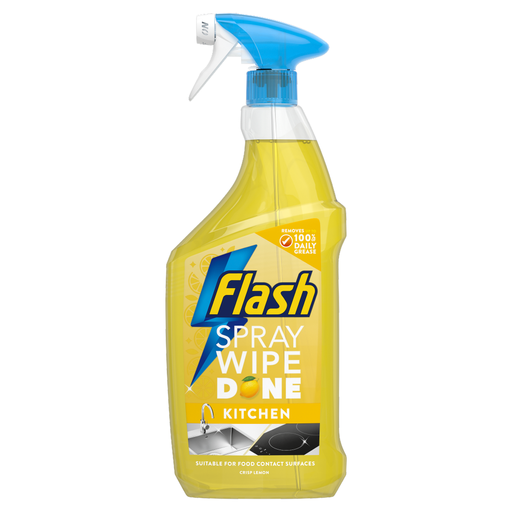
Why This Fits Their Persona: Perfect for busy individuals who need to clean up quickly after meals. Its simple spray-and-wipe action removes daily grease and grime without the need for extra steps, saving valuable time.
It avoids the "one-spray-cleans-all" myth by focusing on speed and convenience for everyday messes, rather than claiming to be a deep-cleaning oven solution.
No rinsing is required, and it's safe for food contact surfaces, making it ideal for a quick worktop wipe-down before and after cooking.

Why This Fits Their Persona: Ideal for families who prioritise hygiene. It provides confidence that kitchen surfaces are not just visibly clean but are also disinfected, which is especially important in homes with young children.
It clearly states its purpose as a disinfectant that kills 99.9% of bacteria and enveloped viruses, providing specific information rather than vague claims. It also lists surfaces to avoid, addressing the compatibility pitfall.
The formula is free from dyes, reducing concerns about residue, and it is suitable for food preparation surfaces (with rinsing), making it a versatile choice for a hygienic kitchen.

Why This Fits Their Persona: For those who love to roast, fry and bake, creating stubborn, burnt-on grease that general-purpose cleaners can't shift. This is the right tool for a tough, specific job.
This is a specialist oven and hob cleaner, not an all-rounder. It avoids the "one-size-fits-all" trap by being expertly formulated for a single, difficult task, ensuring it performs exceptionally well for that purpose.
Its powerful degreasing formula is designed to dissolve burnt-on grease on ovens, grills and hobs, restoring them to a sparkling finish with less scrubbing.
We have compiled a complete, real-time list of products that fully satisfy these strict selection criteria and UK safety regulations.
1. Can I use any kitchen cleaner on my wooden worktops? No. Many powerful degreasers and acidic cleaners can strip the sealant from wooden surfaces, leading to staining and water damage. Always check the product label for surface compatibility. For sealed wood, a pH-neutral cleaner or a product specifically formulated for wood is a much safer choice. It is always wise to test on a small, inconspicuous area first.
2. What is the difference between an antibacterial and a disinfectant cleaner? In the UK, these terms are often used interchangeably on consumer products. An antibacterial surface spray is formulated to act against bacteria. A disinfectant cleaner may target a broader range of microorganisms, including specific viruses. For confidence in a product's claims, look for mentions of compliance with official standards like EN 1276 (for bacteria) or EN 14476 (for viruses).
3. Do eco-friendly cleaning products work as well? Many modern eco-friendly cleaning products are highly effective for daily cleaning. Brands using plant-derived or biodegradable ingredients can cut through everyday grease and grime effectively. For very tough, baked-on grease, a specialist conventional cleaner might still be required, but for day-to-day maintenance, eco-friendly options are a practical and increasingly popular choice for many households.