
24/7 全天候客户支持

免费退货

当日/次日达

品质保障

开启新人专享福利: 全场免邮 | 低至 2 折 | 免费试用 30 天 JoyPlus 会员
下载 Joybuy
If you're tired of replacing peeling non-stick pans or are looking for a more durable and versatile addition to your kitchen, an uncoated stainless steel frying pan is an excellent choice. Valued for their longevity and superior heat control, these pans are a staple in both professional and home kitchens. They excel at creating the perfect sear on meats and vegetables, offering a performance that coated pans often cannot match.
This guide is designed to help you navigate the options. We will outline the key features to consider when making your choice and present a selection of uncoated stainless steel pans that cater to different cooking styles and household needs.
Choosing the right pan involves more than just picking a size. Understanding the materials and design features will ensure you select a piece of cookware that serves you well for years to come.
The quality of a stainless steel pan is largely determined by its construction. Many high-performance models feature a tri-ply frying pan design, which sandwiches a layer of a highly conductive metal like aluminium between two layers of durable stainless steel. This construction promotes fast, even heating across the entire cooking surface, eliminating hot spots that can cause food to cook unevenly.
You may also see different grades of steel mentioned, such as 304 and 316. 304 stainless steel is the most common food-grade steel, offering excellent durability. 316 stainless steel includes molybdenum, which provides enhanced resistance to corrosion from salts and acids, making it a premium choice for those seeking maximum longevity. Both are considered excellent options for chemical-free cookware.
Modern kitchens often feature a variety of hob types. If you have an induction hob, it is essential to choose an induction frying pan with a magnetic base. Most quality stainless steel pans are designed for this, but it's always wise to check the specifications.
Another key feature is versatility. An oven safe frying pan allows you to start a dish on the hob and finish it in the oven, perfect for searing a steak and then roasting it to the ideal temperature. Check the manufacturer's recommended maximum oven temperature, as this can vary depending on the handle material.
The right size depends on your cooking habits. A 20-24cm pan is often sufficient for individuals or couples, while a 28cm or larger pan is better suited for families or batch cooking. A good pan for searing will have a wide, flat base to maximise contact with the food. Also, consider the handle—it should be ergonomic, comfortable to hold, and designed to stay as cool as possible during stovetop use.
Here are our recommendations, selected to meet a range of cooking needs and preferences.
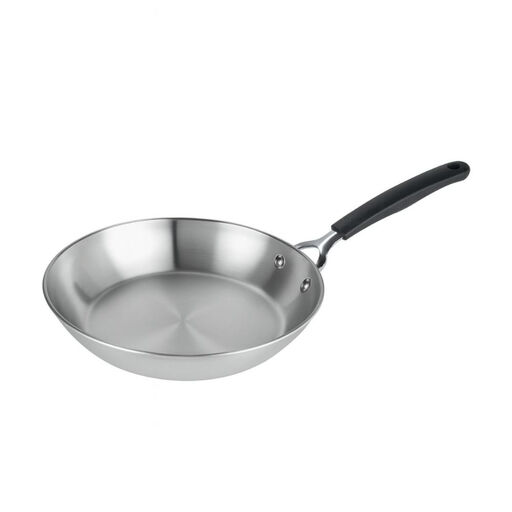
Why It Stands Out: This pan from Prestige offers a generous 29cm cooking surface, making it ideal for larger meals. Its construction is 100% stainless steel with a mirror-polished finish, providing a robust and durable surface for high-heat cooking. The encapsulated steel base is designed for fast and uniform heat distribution on all hob types, including induction.
Pros:
Who is it for? Home cooks who need a large, reliable and versatile frying pan for daily family meals, from searing steaks to cooking multiple portions at once.
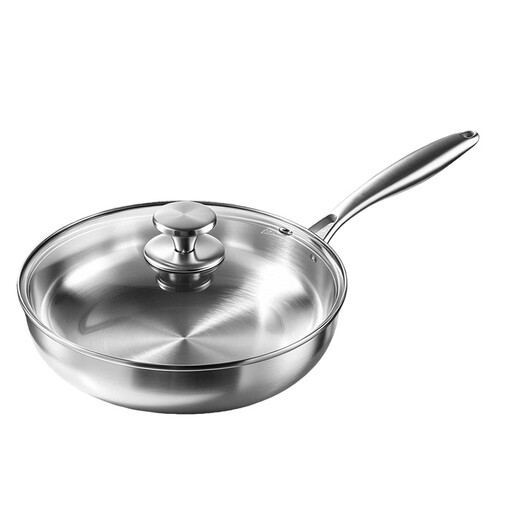
Why It Stands Out: The Maxcook pan features a tri-ply integrated construction, combining a responsive aluminium core with durable 304 stainless steel. This design ensures excellent thermal conductivity for precise temperature control, a feature often found in a professional frying pan. Its compact 22cm size is perfect for smaller households, and the hollow handle is engineered to reduce heat transfer.
Pros:
Who is it for? Individuals, couples or anyone looking for a smaller, high-performance stainless steel skillet for daily cooking tasks that demand precise heat control.
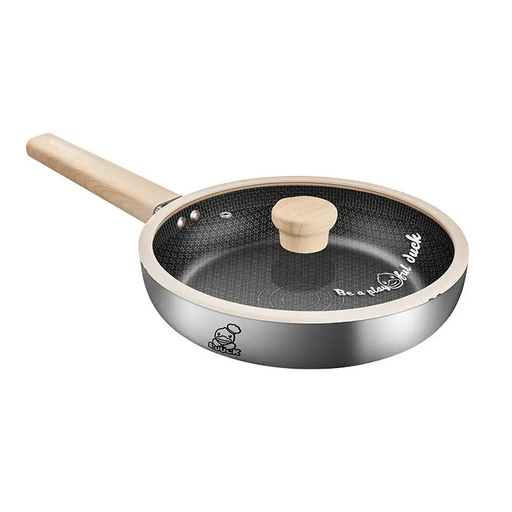
Why It Stands Out: This pan from COOKER KING is crafted from premium 316 stainless steel, offering enhanced durability and corrosion resistance compared to standard steel. The 28cm diameter provides a versatile cooking area suitable for most everyday meals. Its compatibility with induction, gas and electric hobs makes it a flexible option for any kitchen, while the playful B.Duck design adds a unique touch.
Pros:
Who is it for? Cooks who prioritise the highest grade of steel for longevity and corrosion resistance and who appreciate a touch of personality in their cookware.
If you haven't found the perfect pan for your needs here, or if you're interested in exploring other materials and sizes, there are many more choices available.
Discover our full range of Induction steel cookware to find the right fit for your kitchen.
The key is proper heat management. First, preheat the pan over medium heat for a minute or two. You can test if it's ready by dropping a tiny amount of water into the pan; if the water forms a single ball that glides across the surface, it's at the right temperature. Then, add your cooking oil or fat and let it heat up for a few seconds before adding your food. This technique, known as the Leidenfrost effect, creates a vapour barrier that helps prevent sticking.
Yes, stainless steel is widely considered a stable and safe material for cookware. Unlike some coated pans, it does not rely on synthetic chemical coatings to achieve its cooking surface. This makes it a popular choice for health-conscious individuals seeking a non-toxic frying pan and chemical-free cookware.
Many stainless steel pans are dishwasher safe, but hand washing is often recommended to maintain their finish. For tough, burnt-on food, avoid harsh steel wool. Instead, deglaze the pan while it's still warm by adding a little water and gently scraping the bottom with a wooden or silicone utensil. For stubborn stains, you can create a paste of baking soda and water, apply it to the affected area, and let it sit before scrubbing with a non-abrasive sponge.