
24/7 全天候客户支持

免费退货

当日/次日达

品质保障

开启新人专享福利: 全场免邮 | 低至 2 折 | 免费试用 30 天 JoyPlus 会员
下载 Joybuy
For many UK residents, the quality of tap water is a growing consideration. While our water is treated to be safe, concerns about the taste of chlorine, the potential for lead from older plumbing and the presence of emerging contaminants like PFAS are valid. An under sink water filter offers a practical, long-term solution, providing cleaner, better-tasting water directly from your kitchen tap and reducing reliance on single-use plastic bottles.
Navigating the market can be confusing, with a wide array of technologies and claims. This guide is designed to cut through the clutter, offering clear, practical advice to help you choose a system that fits your home and your family's needs.
Before looking at specific models, understanding a few key factors will help you make a more informed decision.
The type of filtration is the most significant difference between systems.
Independent certifications offer peace of mind that a filter performs as advertised. An NSF certified water filter has been tested against rigorous public health standards. Key certifications include:
Consider your daily water usage. A system's flow rate, measured in Gallons Per Day (GPD), determines how quickly it produces purified water. Also, check the filter's lifespan and replacement cost, as this is the main long-term running expense. If you have specific concerns, look for a system designed as a lead water filter or PFAS filter. For those who prefer mineral-enhanced water, an alkaline water filter system is an excellent option.
Based on performance, features and user needs, here are our recommendations for a variety of households.
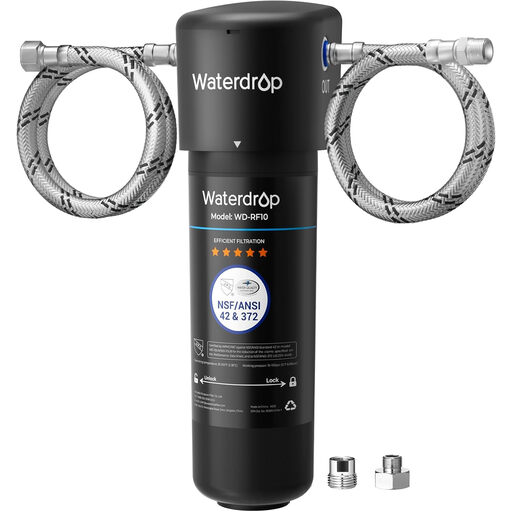
Why It Stands Out: This system is a model of efficiency and simplicity. Its standout feature is the impressive 30,000-litre high capacity, meaning the filter can last up to 12 months for a typical family. It connects directly to your existing cold water tap, so there's no need for a separate faucet. It is certified against NSF/ANSI 42 for chlorine reduction and NSF/ANSI 372 for lead-free materials, and it also effectively reduces lead, PFAS, PFOA/PFOS and other impurities.
Pros:
Who is it for?: This is an ideal choice for households wanting a significant improvement in their tap water's taste and safety without the complexity of an RO system. It's perfect for those looking for a reliable, low-maintenance water filter for tap water.
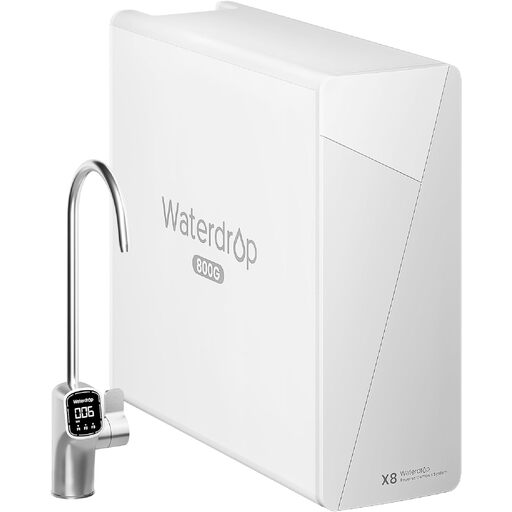
Why It Stands Out: The Waterdrop X8 is a high-performance reverse osmosis system that delivers exceptional purity. Its 9-stage filtration process is certified against NSF/ANSI 58, effectively reducing TDS, lead, fluoride, chloride and more. The tankless design saves significant under-sink space, while the high flow rate of 800 GPD means you get purified water almost instantly. A key feature is the smart faucet, which displays real-time TDS levels and filter life, putting you in complete control of your water quality.
Pros:
Who is it for?: This system is for those who prioritise the highest level of water purification. It's an excellent fit for health-conscious families concerned about a broad spectrum of contaminants and who appreciate the convenience of modern technology and a fast flow rate.
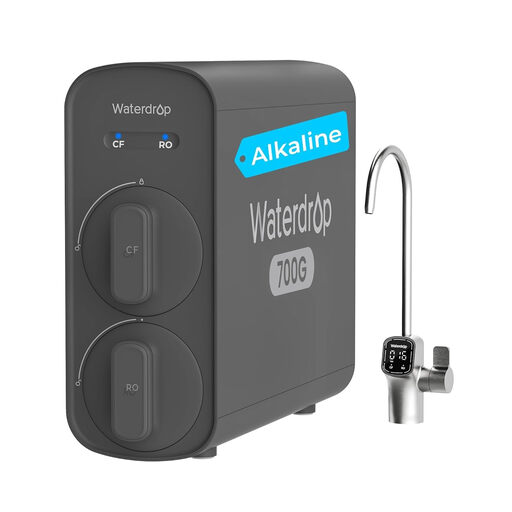
Why It Stands Out: This alkaline water filter system offers the best of both worlds: advanced purification and healthy remineralisation. After its 8-stage RO process removes impurities like PFOA, PFOS and heavy metals, a special stage adds beneficial minerals like calcium and magnesium back into the water. This not only improves the taste but also raises the pH level. With a fast 700 GPD flow and an efficient 2:1 pure-to-drain ratio, it combines health benefits with performance.
Pros:
Who is it for?: This is the perfect kitchen water filter for individuals who want water that is not only pure but also enriched. If you prefer the taste of mineral water and are interested in the benefits of alkaline water, this system is an outstanding choice.
Our recommendations cover some of the most common needs, but the world of water filtration is vast. If you're looking for different capacities, features or price points, you can explore a wider selection of solutions.
Browse our full range of sink filters to find the perfect match for your home.
Most modern systems are designed for straightforward DIY installation. Simpler systems can be fitted in minutes using basic tools, as they connect directly to your existing cold water line. Reverse osmosis systems may require an extra step, like drilling a small hole in your countertop for the dedicated faucet, but they come with detailed instructions and push-to-connect fittings that simplify the process.
Standard filters that primarily remove chlorine from water and improve taste generally leave healthy minerals intact. A reverse osmosis system UK, by design, is so thorough that it removes nearly all dissolved solids, including minerals. To address this, some models, like an alkaline water filter system, incorporate a remineralisation stage to add beneficial minerals like calcium and magnesium back into the purified water.
NSF International is an independent, accredited organisation that tests and certifies products to ensure they meet strict public health and safety standards. An NSF certified water filter provides third-party verification that the product effectively reduces the specific contaminants it claims to, such as chlorine (NSF 42) or lead. This certification offers an important layer of confidence in a filter's performance and material safety.