
24/7 Customer Support

Free returns

Same-day & Next-day Delivery

Quality Guaranteed
Download the APP
Categories
Monitoring your blood pressure at home is a key part of managing your health, but choosing the right device can feel overwhelming. With so many models on the market, how do you find a reliable and easy-to-use upper arm blood pressure monitor that fits your needs?
As a Joybuy Product Recommendation Officer, my role is to help you navigate the options with clear, practical advice. This guide will walk you through the essential features to look for and highlight a few carefully selected models to help you make an informed decision.
Before looking at specific products, it's helpful to understand the key factors that separate a good digital blood pressure machine from a less reliable one. Focus on these three areas to ensure you get an accurate blood pressure reader.
The single most important feature of any bp monitor is its accuracy. Look for devices that are clinically validated. This means the monitor has been independently tested against medical standards (like those set by the European Society of Hypertension) to ensure its readings are precise and dependable. A validated device gives you the confidence that the numbers you see on the screen are a true reflection of your blood pressure.
An ill-fitting cuff is one of the most common causes of inaccurate readings. If the cuff is too tight or too loose, it can significantly skew the results. Most monitors come with a standard adult cuff (typically 22–32 cm). Before buying, measure the circumference of your upper arm to see if this is the right fit. If your arm is larger or smaller, look for models that either come with a universal cuff or offer optional cuff sizes for purchase.
A device is only useful if you use it consistently. An automatic blood pressure monitor should be simple to operate. Key features that enhance usability include:
Based on the criteria of accuracy, ease of use and helpful features, here are our recommendations.
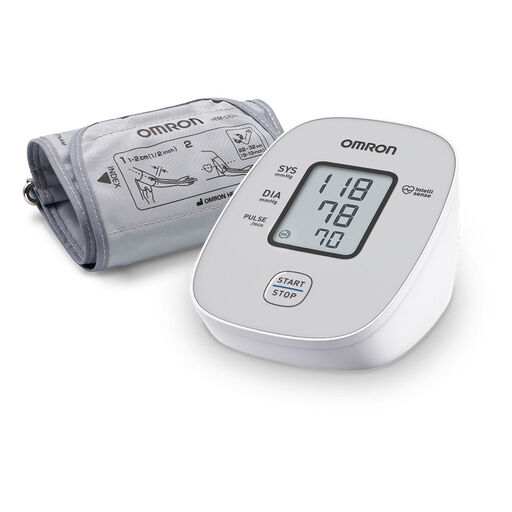
Why It Stands Out: The Omron X2 Basic is built for simplicity and reliability. It incorporates helpful guidance features, like a cuff wrap guide that confirms you have put the cuff on correctly. It also includes irregular heartbeat detection, a feature that provides an extra layer of awareness during routine measurements.
Pros:
Who is it for? This monitor is an excellent choice for individuals who are new to home blood pressure monitoring or anyone who values straightforward, no-fuss operation from a trusted brand.
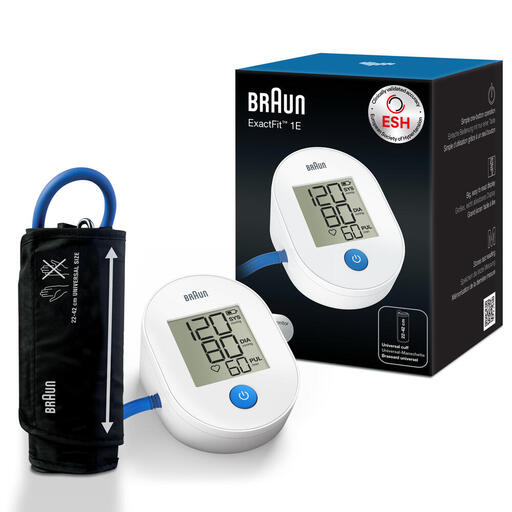
Why It Stands Out: The Braun ExactFit 1E focuses on convenience and accessibility. Its main advantage is the universal cuff (22–42 cm), which accommodates a wide range of arm sizes straight out of the box. This makes it a versatile option for households where more than one person might use it. The large, easy-to-read display is another key benefit.
Pros:
Who is it for? Ideal for users who are unsure of their cuff size or for families needing a single device that can be used by multiple people with different arm circumferences.
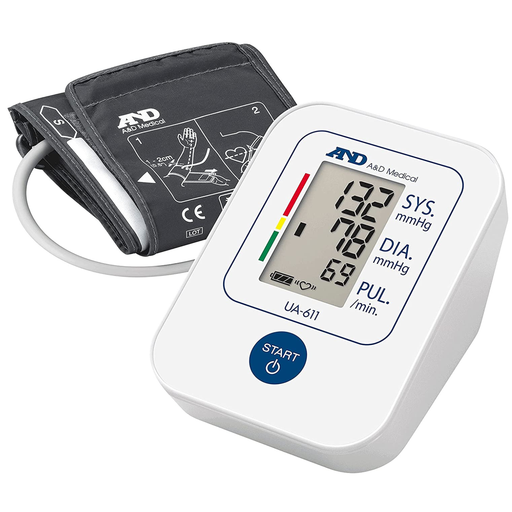
Why It Stands Out: The A&D Medical UA-611 offers more advanced tracking features while remaining easy to use. It can store up to 30 readings and calculate an average, which is invaluable for monitoring your blood pressure over time. It also features a World Health Organization (WHO) classification indicator, which provides immediate context for your reading by showing where it falls on a globally recognised scale.
Pros:
Who is it for? This monitor is well-suited for individuals who want to actively track their blood pressure trends over several weeks and share a detailed history with their doctor.
While these three models represent excellent choices for different needs, they are just a starting point. If you are looking for a device with more advanced features, such as Bluetooth connectivity or multi-user memory profiles, we have a wider selection available.
Explore our full range of Blood Pressure Monitor products to find the perfect fit for your health monitoring routine.
When used correctly, a clinically validated blood pressure monitor is highly accurate for home use. Accuracy depends on three things: choosing a validated device, using the correct cuff size and following the measurement instructions properly (e.g., sitting still and quietly with your arm at heart level).
Consistency is more important than the specific time. Many healthcare professionals recommend taking readings twice a day: once in the morning before eating or taking medication and once in the evening. However, you should always follow the specific advice given to you by your doctor or pharmacist.
The two numbers represent your systolic and diastolic pressures.