
24/7 Customer Support

Free returns

Same-day & Next-day Delivery

Quality Guaranteed

Unlock Your Welcome Offers: FREE Delivery | Up to 80% OFF | Free 30-day JoyPlus trial
Download the APP
With nearly every new device, from the iPhone 15 to the latest MacBook Pro, now using a USB-C port, the humble charging cable has become more important than ever. Yet, not all cables are created equal. A low-quality cable can mean slow charging, data transfer issues or a frustratingly short lifespan. If you're tired of flimsy wires and carrying multiple chargers, this guide is for you.
We'll walk through the key features to look for in a USB C to USB C cable and highlight a few recommendations to help you find a reliable option for your devices.
Choosing the right cable doesn't have to be complicated. Focusing on a few key specifications will ensure you get a product that meets your needs for speed, durability and convenience.
The most significant factor for charging speed is the cable's power rating, measured in watts (W). A standard cable might only support 15W, which is fine for older devices but slow for modern ones.
A cable is only useful if it lasts. Material and construction play a huge part in this. A braided charging cable, typically made from woven nylon, offers excellent resistance to fraying and everyday wear and tear. Silicone cables, on the other hand, are prized for their flexibility and tangle-resistant properties.
Length is also a practical consideration. A standard 1-metre cable is fine for desktops, but a 2m USB C charging lead provides valuable flexibility for reaching awkward wall sockets or using your device comfortably while it charges on the sofa.
While most people use their Type C to Type C cable primarily for charging, data transfer speed can be important. Most charging cables support USB 2.0 speeds, which top out at 480Mbps. This is perfectly adequate for syncing photos, music and documents. If your work involves transferring large video files regularly, you may want to look for cables supporting USB 3.1 or Thunderbolt standards, but for everyday use, 480Mbps is sufficient.
Here are a few standout options that balance performance, durability and practicality for UK users.
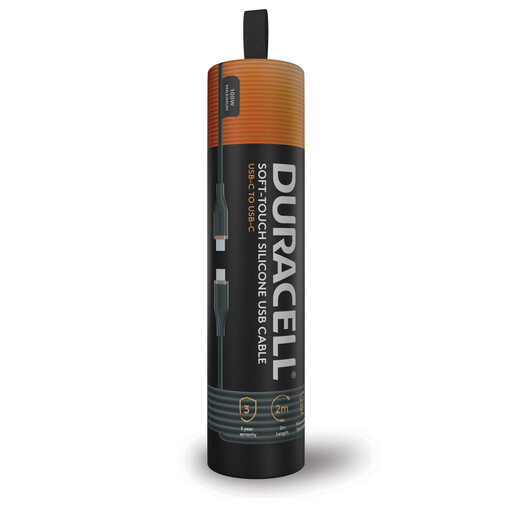
Why It Stands Out: This cable from Duracell is built for power and longevity. It supports up to 100W Power Delivery, making it a single-cable solution for everything from your phone to your high-performance laptop. The construction combines a double-braided nylon exterior with a Dupont Kevlar fibre core for enhanced strength, while the soft-touch silicone finish makes it pleasant to handle and resistant to kinks.
Pros:
Who is it for? This is an ideal choice for tech users who need a powerful, reliable and long-lasting cable that can handle the charging demands of all their modern devices, including power-hungry laptops.
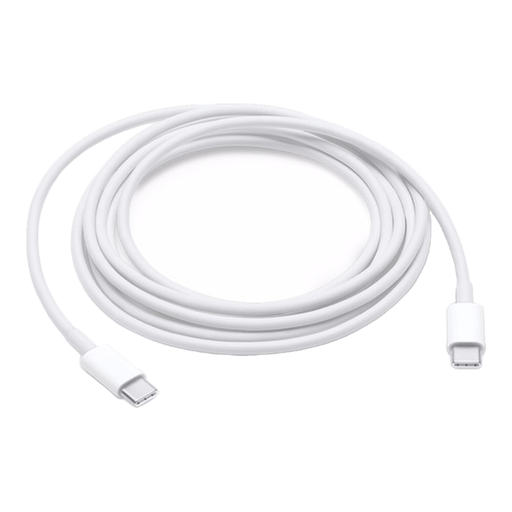
Why It Stands Out: For those invested in the Apple ecosystem, the official Apple charging cable offers peace of mind and seamless compatibility. This 2-metre cable features a new woven design that is a significant improvement in durability over previous rubberised versions, helping to prevent tangling and fraying. It’s designed to work flawlessly with your MacBook, iPad and as a USB C cable for iPhone 15 and newer models.
Pros:
Who is it for? Apple users who prioritise first-party accessories for guaranteed performance and a perfect match with their devices. It's a dependable option for charging and syncing across the entire Apple product line.
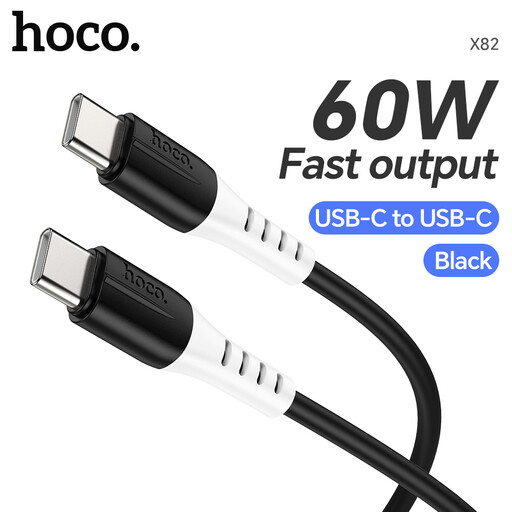
Why It Stands Out: The HOCO X82 focuses on delivering a premium feel and tangle-free experience. Its 60W Power Delivery support is more than enough for fast-charging smartphones, tablets and many ultrabooks. The standout feature is its food-grade silicone jacket, which is exceptionally soft, flexible and resistant to getting tangled in a bag. At 1 metre, it's a practical length for travel and desktop use.
Pros:
Who is it for? Anyone looking for a reliable and affordable charging cable for their smartphone or tablet. Its tangle-free design makes it particularly well-suited for commuters and travellers who need a hassle-free cable on the go.
These recommendations cover a range of common needs, but the world of USB-C accessories is vast. If you're looking for different lengths, materials or specific features, you can explore a wider selection.
? Browse our full range of Type 2 Cables
No, they do not. A cable's ability to fast charge depends on its internal wiring and power rating (e.g., 60W or 100W). To achieve fast charging, you need a cable that supports a protocol like USB Power Delivery (PD), a compatible PD wall charger and a device that can receive that level of power.
Yes, it is completely safe. USB-C Power Delivery is a "smart" technology. The charger, cable and your device communicate to determine the appropriate amount of power to deliver. A 100W cable will only supply the 20W your phone requests, preventing any risk of damage.
The primary difference is in feel and durability characteristics. A braided charging cable uses a woven fabric sheath (like nylon) that is highly resistant to cuts and abrasion, making it very durable. A silicone cable offers superior flexibility, a soft feel and is excellent at resisting tangles, making it very convenient for storage and travel. The choice often comes down to personal preference.