
24/7 Customer Support

Free returns

Same-day & Next-day Delivery

Quality Guaranteed

Unlock Your Welcome Offers: FREE Delivery | Up to 80% OFF | Free 30-day JoyPlus trial
Download the APP
With USB-C now the standard for everything from smartphones and tablets to laptops, finding the right charger can feel overwhelming. The market is filled with terms like Power Delivery, wattage ratings and various port combinations. If you are simply looking for a reliable and efficient USB C charger UK residents can depend on, it is easy to get lost in the technical details.
This guide is designed to cut through the clutter. We will explain the key features to look for in a modern wall charger UK model and provide some practical recommendations to help you power your devices safely and quickly.
Before choosing a charger, it helps to understand a few key considerations. Focusing on these points will ensure you select a plug that meets your needs for both current and future devices.
The power output of a charger, measured in watts (W), determines how quickly it can charge your device. While a basic 5W charger will work, it will be slow. For modern devices, you should look for a fast charger plug that supports the USB Power Delivery (PD) protocol. A 20W USB C charger is a popular and effective option, providing significantly faster charging for most current smartphones, including the latest iPhones. Using a PD-enabled charger can often charge a compatible phone's battery to 50% in around 30 minutes.
Consider how many devices you need to charge at once.
In many UK homes and offices, plug sockets are a limited resource. A bulky charger can block adjacent sockets, causing unnecessary frustration. Look for compact designs or, for maximum utility, a plug through USB adaptor. This clever design includes a standard 13A socket on the front, so you can charge your USB devices without losing access to the mains outlet for other appliances.
Here are a few recommendations that address different user needs, from simple fast charging to multi-device convenience.
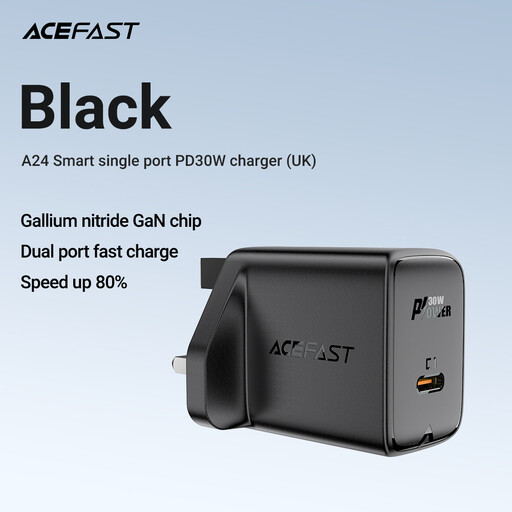
Why It Stands Out: This is a no-fuss, compact charger designed to do one job well: deliver fast power to your USB-C device. Its 20W output is perfectly suited for modern smartphones that support Power Delivery.
Pros:
Who is it for?: Anyone needing a reliable and dedicated iPhone charger plug UK replacement or a primary fast charger for a single USB-C device.
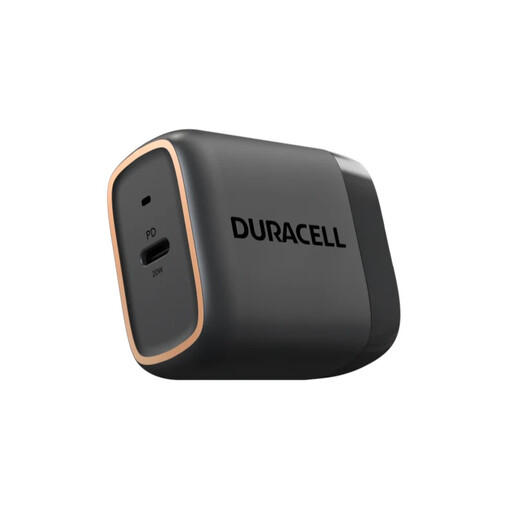
Why It Stands Out: This dual port USB charger from Duracell offers excellent flexibility. It combines a modern, fast-charging USB-C port with a traditional USB-A port, allowing you to power two gadgets at once.
Pros:
Who is it for?: Multi-device users who want to charge a new USB-C phone and an older USB-A accessory from a single plug.
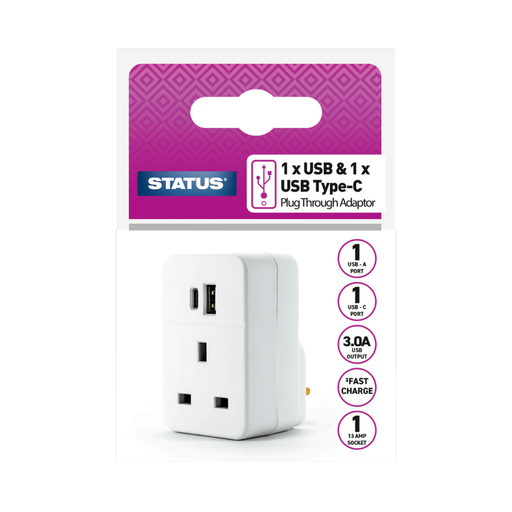
Why It Stands Out: This plug through USB adaptor is a highly practical solution for any room where sockets are in high demand. It adds both USB-C and USB-A charging ports while keeping the mains socket free for other appliances like a lamp, kettle or laptop.
Pros:
Who is it for?: Those in home offices, kitchens or bedrooms with limited wall sockets who need a multi-purpose charging hub.
While USB-C is the future, many of us still rely on devices that use the classic rectangular USB-A connector. If your gadgets primarily use this connection, a dedicated charger might be more suitable. Explore our wider selection of USB A plug options to find the right fit for your needs.
1. Can I use a 20W USB C charger for a device that requires less power? Yes. Chargers that use the USB Power Delivery (PD) standard are designed to be smart. The charger communicates with your device to determine the appropriate amount of power to send, so it is safe to use a 20W charger with a device that may only draw 10W or 15W.
2. Do I need a special cable for a fast charger plug? To achieve the maximum charging speed, it is important to use a high-quality cable that is rated for fast charging. For recent iPhones, this is a USB-C to Lightning cable. For most Android phones, tablets and other modern electronics, you will need a USB-C to USB-C cable that supports Power Delivery.
3. Are all USB C chargers sold in the UK the same? No, they vary significantly. Key differences include the maximum power output (wattage), the number and type of ports (e.g., USB-C only, or a USB A and C charger) and physical design. Always choose a charger that is compliant with UK safety standards and matches the power requirements of your devices.