
24/7 Customer Support

Free returns

Same-day & Next-day Delivery

Quality Guaranteed
Download the APP
Categories
Tired of a slow-charging phone, a bulky laptop power brick and a tangle of cables by your socket? You are not alone. As our collection of devices grows, from smartphones and tablets to powerful laptops, the standard chargers included in the box often struggle to keep up. The result is a cluttered desk and a constant wait for your gadgets to power up.
A modern USB-C fast charger is the solution. These compact and powerful accessories can charge your devices significantly faster and often power multiple gadgets from a single plug. This guide is designed to help you understand the key features to look for and to present a few carefully selected options that deliver on performance and convenience.
Navigating the market for a new charger can be confusing with all the technical jargon. Here are a few practical points to consider to help you find the right fit for your devices.
The most important specification is the power output, measured in watts (W). A higher wattage generally means faster charging, but your device must be able to accept that power.
Most modern chargers use the USB Power Delivery (PD) standard. This smart technology allows the charger and your device to communicate, ensuring the charger delivers the optimal amount of power safely.
You will often see the term GaN charger when shopping. GaN stands for Gallium Nitride, a semiconductor material that is more efficient than the traditional silicon used in older chargers. This efficiency allows manufacturers to create chargers that are significantly smaller, lighter and run cooler, all while delivering high power outputs. A GaN charger is an excellent choice for a portable laptop charger as it reduces bulk without sacrificing performance.
Think about how many devices you need to charge at once. A multi-port charger with a combination of USB-C and USB-A ports can be a game-changer for decluttering your workspace or travel bag. It allows you to power your laptop, phone and headphones simultaneously from a single wall socket. However, remember that when multiple ports are in use, the total power output is shared between them.
Based on features, power and portability, here are our recommendations for users in the UK.
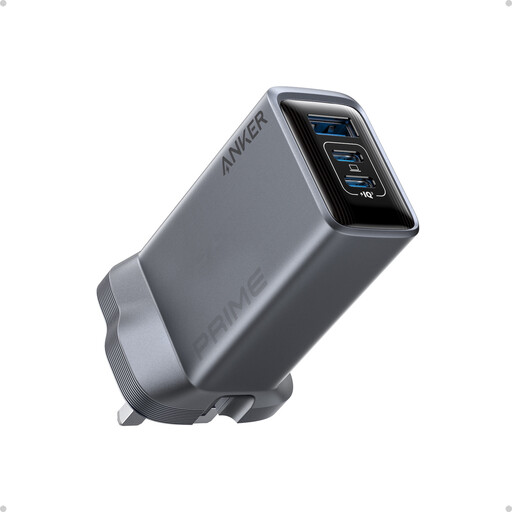
Why It Stands Out: This is a true powerhouse designed for those who need maximum performance. With a total output of 100W and the ability to deliver that full 100W through a single USB-C port, it can charge even demanding laptops at top speed. According to Anker, it can take a 14-inch MacBook Pro (M3 Pro) from 0 to 50% in just 30 minutes.
Pros:
Who is it for? Professionals, creatives and travellers who rely on a high-performance laptop alongside other devices. This single fast charging block can replace three separate chargers.
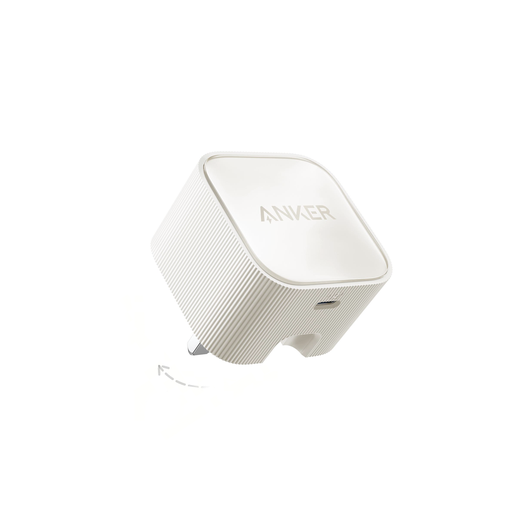
Why It Stands Out: Its incredibly small size and portability are its main attractions. This charger is barely larger than a pound coin but packs enough power to fast-charge the latest smartphones and tablets. The foldable prongs make it perfect for slipping into a pocket or a small bag without snagging.
Pros:
Who is it for? Anyone looking for a tiny, powerful and convenient charger primarily for their smartphone. It is an ideal travel companion or a secondary charger for the office.
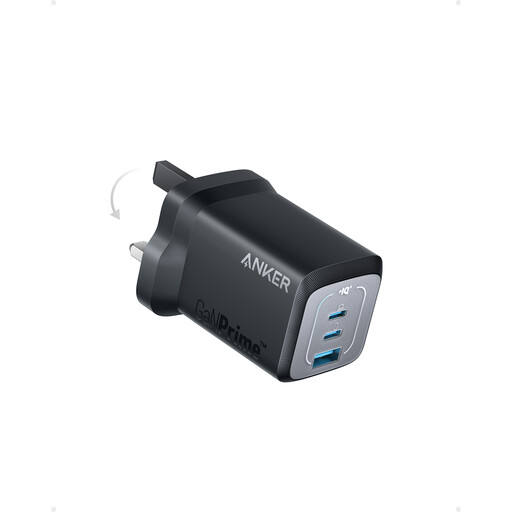
Why It Stands Out: This model strikes an excellent balance between power, size and versatility. It offers enough power (67W) to charge most ultrabooks and smaller laptops efficiently, while its three ports allow you to charge a phone and earbuds at the same time. It is significantly smaller than the standard 67W charger that comes with many laptops.
Pros:
Who is it for? Students, office workers and general users who need a single charger for their laptop, phone and another accessory. It offers multi-device convenience in a very compact form.
These recommendations cover a range of common needs, but the world of charging technology is vast. If you are looking for a different power level, port configuration or form factor, there are many other choices available.
For a wider selection of charging solutions, from single-port plugs to powerful desktop hubs, explore our full range of wall charger usb c options.
1. What is a GaN charger and is it worth it? A GaN (Gallium Nitride) charger uses a more modern and efficient material than traditional silicon chargers. This allows them to be much smaller, lighter and generate less heat while delivering the same amount of power. They are generally considered worth it for anyone who values portability and performance, especially for travel or a minimalist setup.
2. Can I use a 100W USB C charger for my phone? Yes, you can. Modern chargers with USB Power Delivery (PD) are smart. The charger communicates with your phone (or any connected device) to determine the maximum power it can safely handle and adjusts its output accordingly. A 100W charger will not damage a phone that only needs 25W; it will simply provide 25W.
3. Do I need a special cable for a USB-C fast charger? Yes, the cable is just as important as the charger. To get the full benefit of a high-wattage charger, you need a USB-C cable that is rated to handle that power. For a 100W USB C charger, you should use a cable specifically marked as "100W" or "240W EPR" compatible. Using a lower-rated cable will limit the charging speed to what the cable can safely handle.