
24/7 Customer Support

Free returns

Same-day & Next-day Delivery

Quality Guaranteed

Unlock Your Welcome Offers: FREE Delivery | Up to 80% OFF | Free 30-day JoyPlus trial
Download the APP
In a world where our laptops, tablets and smartphones all rely on the same connector, finding a reliable cable is more important than ever. A slow or flimsy USB-C to USB-C fast charging cable can be a source of daily frustration, failing to power up your devices when you need them most. With so many options on the market, all claiming different speeds and features, it can be difficult to know which one is the right investment.
This guide is designed to cut through the clutter. We will walk you through the key features to look for when choosing a cable, from power output to durability, helping you find a dependable solution that fits your needs. Whether you need a powerful MacBook Pro charging cable or a sturdy replacement iPhone 15 charger cable, we have gathered some practical advice and recommendations to help you make an informed choice.
Before diving into specific products, understanding a few key technical points can save you time and money. Here are the most important factors to consider.
Not all USB-C cables charge at the same speed. The key technology to look for is Power Delivery (PD), a standard that allows for much higher power transfer. The cable's wattage rating determines the maximum power it can safely handle.
To get the full benefit, your charger and your device must also support the same wattage.
A charging cable is only as good as its construction. Constant plugging, unplugging and coiling can take a toll, leading to frayed wires and broken connectors. For a durable charging cable, look for these features:
While the primary focus for many is charging, it is worth noting that not all charging cables are great for data transfer. If you frequently move large files between devices, check the cable's data transfer specifications. USB 2.0 speeds (480Mbps) are common and fine for basic syncing, but for transferring large video files or backups, you may want to look for a cable supporting USB 3.1 (5-10Gbps) or Thunderbolt (up to 40Gbps).
Here are a few standout options that balance performance, durability and value for UK users.
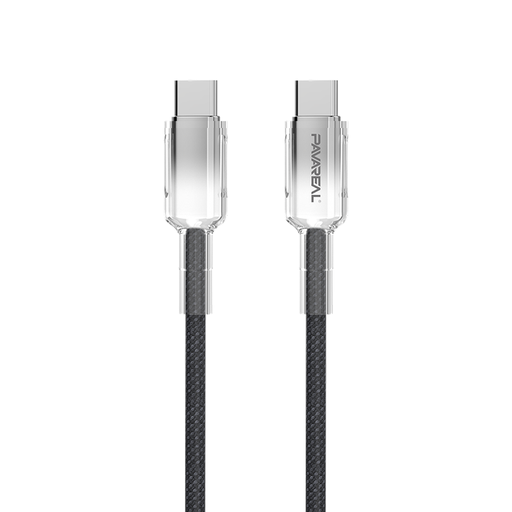
Why It Stands Out: This cable is a workhorse, built for those who need both high power and extreme durability. Its construction combines a tough ballistic nylon braid with reinforced zinc alloy connectors, making it highly resistant to the rigours of daily use and travel. The 100W power output makes it a versatile choice for charging everything from your phone to your high-performance laptop.
Pros:
Who is it for? Professionals and students who rely on a single cable to charge multiple devices, including a power-hungry laptop and demand a product that will last.
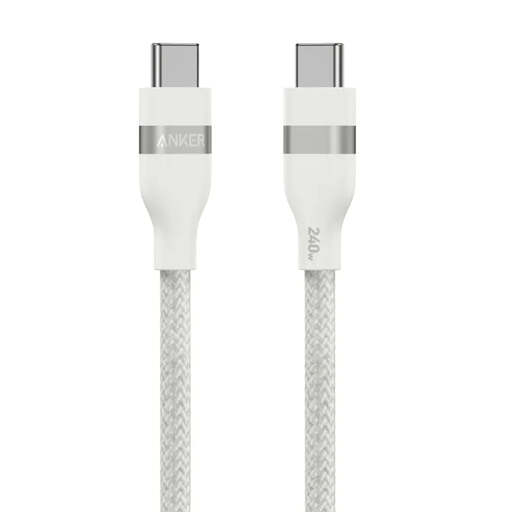
Why It Stands Out: For those who want to be ready for the future of charging, this Anker cable delivers. With a massive 240W power capacity, it can handle the most demanding laptops and devices on the market today and for years to come. According to Anker, its build is exceptionally durable, with a stated lifespan of over 30,000 bends.
Pros:
Who is it for? Tech enthusiasts and power users with top-of-the-line, high-wattage devices who want the absolute fastest charging speeds possible from a Power Delivery cable.
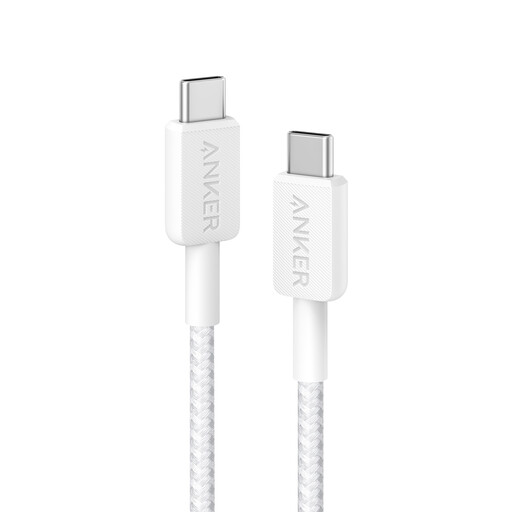
Why It Stands Out: Sometimes, you just need a reliable cable that does the job without fuss. This Anker model provides a great balance of performance and value. With 60W power output, it is more than capable of fast-charging all modern smartphones, tablets and many ultrabooks. Its double-woven nylon braid and USB-IF compliance ensure safe and dependable charging.
Pros:
Who is it for? Anyone needing a solid, everyday Type C to Type C cable for their smartphone or tablet, such as a replacement iPhone 15 charger cable.
If these recommendations do not quite match what you are looking for, whether you need a different length, colour or a specific feature, there are many other choices available.
Explore our full range of C7 cable solutions to find the perfect match for your devices and lifestyle.
1. Can I use a 100W USB-C cable on a 30W device? Yes, absolutely. The Power Delivery (PD) protocol is designed for safety and efficiency. The cable, charger and device communicate to determine the maximum safe power level. Using a higher-rated cable with a lower-rated device is perfectly safe; the device will only draw the amount of power it needs.
2. What is the difference between a standard and a braided USB-C cable? The primary difference is durability. A braided USB-C cable, typically made from materials like nylon, offers significantly better resistance to fraying, kinking and general wear and tear compared to standard plastic-coated cables. This often results in a much longer lifespan, making it a worthwhile investment for users who are frequently on the move.
3. Do all USB-C to USB-C cables support fast charging? No, they do not. To guarantee fast charging, you need a Type C to Type C cable that explicitly states support for Power Delivery (PD) and is rated for the wattage your device and charger can handle. Cheaper, uncertified cables may be limited to slow charging speeds (around 5W-15W) and basic data transfer and may not be as safe for high-power devices.