
24/7 Customer Support

Free returns

Same-day & Next-day Delivery

Quality Guaranteed

Unlock Your Welcome Offers: FREE Delivery | Up to 80% OFF | Free 30-day JoyPlus trial
Download the APP
In a world where our laptops, tablets and smartphones are essential daily tools, a slow or unreliable charging cable can be a significant point of frustration. The standard cable that comes with a device often isn't built for the rigours of daily travel, and finding a replacement that delivers on its promises of speed and durability can be a challenge. This guide is designed to help you navigate the options and find a high-performance USB-C to USB-C fast charging cable that meets your needs, without the marketing hype.
We'll look at what makes a great cable and highlight a few standout options that deliver on power, durability and practicality.
Choosing the right cable goes beyond just matching the connector type. Here are a few key factors to consider to ensure you get the performance you expect.
Not all USB-C cables are created equal when it comes to charging speed. For modern devices, especially laptops, look for a cable that supports Power Delivery (PD). A 65W PD cable is an excellent standard for charging a wide range of devices, from a MacBook Air to a Dell XPS or a high-end tablet. This rating ensures the cable can handle the higher voltage required for rapid charging, significantly reducing the time you spend tethered to a wall socket. Always pair it with a compatible PD wall charger to achieve maximum speed.
The lifespan of a charging cable is often determined by its construction. A durable USB C cable is typically one that has been reinforced at its stress points—the areas where the cable meets the connector head. A braided Type C cable, often made from nylon, offers superior resistance to fraying, tangling and everyday wear and tear compared to standard plastic-coated cables. This makes it an ideal laptop charging cable USB C for those who are frequently on the move.
If you regularly transfer large files between your devices, such as photos, videos or work documents, then a simple charging cable won't suffice. Pay attention to the data transfer specifications. While many cables operate at USB 2.0 speeds (around 480 Mbps), a dedicated USB C data cable might offer USB 3.2 speeds (5Gbps or higher), allowing you to move gigabytes of data in seconds, not minutes.
Here are our recommendations for reliable and high-performing USB-C to USB-C cables, selected for their features and build quality.
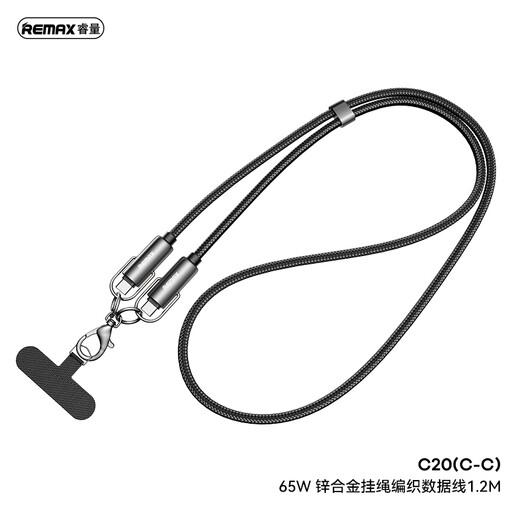
Why It Stands Out: This cable combines high-power charging with thoughtful design features. The 65W PD capability makes it a powerful choice for laptops and tablets, while the braided nylon exterior and robust zinc alloy connectors provide the durability needed for daily use. Its most unique features are the adjustable collar for cable management and a built-in tether that can be used as a strap for your phone.
Pros:
Who is it for? This cable is well-suited for professionals and students who need a single, robust cable for charging multiple high-power devices. The added design features make it particularly useful for those who value organisation and practicality.
View the REMAX 65W Braided Cable
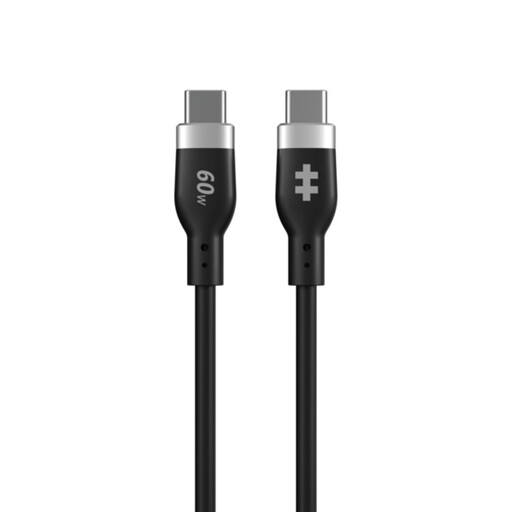
Why It Stands Out: The Hyper cable distinguishes itself with its eco-conscious construction and exceptionally soft, flexible feel. Made with 50% recycled silicone, it’s a choice for the environmentally aware user. The material also makes it a genuinely tangle-free cable, coiling easily for storage without kinking or knotting. Despite its soft exterior, it’s built to last, with internal braiding and reinforcement tested for over 10,000 bends.
Pros:
Who is it for? Ideal for commuters, travellers and anyone who prioritises portability and sustainability. If you are tired of fighting with stiff, tangled cables in your bag, the soft silicone design of this cable is a practical solution.
View the Hyper 1.5m Silicone Cable
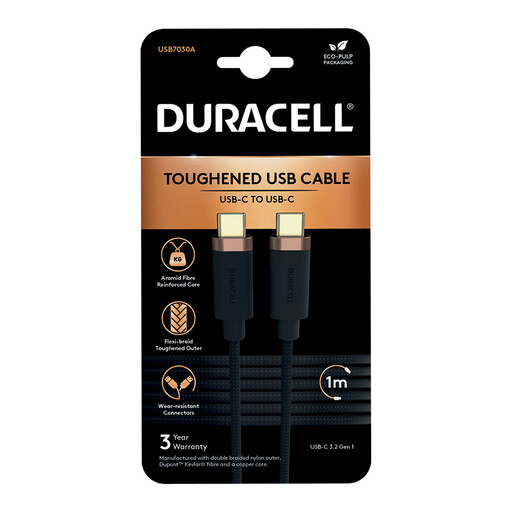
Why It Stands Out: Leveraging a brand name associated with longevity, this Duracell cable is engineered for extreme durability and high-speed performance. It supports 65W fast charging and also boasts SuperSpeed USB 3.2 Gen 1 data transfer at 5Gbps. The construction is its main selling point, featuring a double-braided nylon exterior, an internal core made with Dupont Kevlar fibre and a 3-year standard warranty.
Pros:
Who is it for? This is the cable for the power user who demands both top-tier charging speed and rapid data transfer. If you frequently move large video files or photo libraries and want a cable built to withstand heavy use, this is a leading contender.
View the Duracell 1m Fast 65W Cable
If the recommendations above don't quite match what you're looking for, or if you're interested in cables with unique form factors, there are many other styles available. For more innovative designs, you might want to explore our collection of USB-C Lanyard Cables, which offer excellent portability.
Yes, you can. Modern smartphones and charging cables use Power Delivery (PD) protocols to communicate and negotiate the correct amount of power. The cable and charger will only supply the maximum power that the phone is designed to accept, so using a higher-wattage 65W PD cable is perfectly safe and will not damage your device.
While all USB-C cables can transfer both power and data, their performance can vary greatly. A basic charging cable may only support slow USB 2.0 data speeds (480 Mbps). A high-performance USB C data cable, like the Duracell model mentioned, will support much faster standards like USB 3.2 (5Gbps or more), making it far better for transferring large files. If you only need to charge your device, a basic cable is fine, but for fast file transfers, check the data speed specification.
For typical lengths like a 1m USB C cable or even up to 2 metres, the effect on charging speed is negligible for a well-made cable. However, with very long or poor-quality cables, you can experience a slight voltage drop, which may marginally slow down charging. For fast charging, it is generally advisable to use high-quality cables that are no longer than 2 metres.