
24/7 Customer Support

Free returns

Same-day & Next-day Delivery

Quality Guaranteed

Unlock Your Welcome Offers: FREE Delivery | Up to 80% OFF | Free 30-day JoyPlus trial
Download the APP
As more of our devices, from MacBooks to power adapters, adopt the USB-C standard, finding the right cable to connect to your iPhone or iPad has become essential. A good USB-C to Lightning cable does more than just charge your device; it can unlock faster charging speeds, provide durable daily use and ensure reliable data syncing.
However, the market is filled with options, and it can be difficult to distinguish between a reliable cable and one that might fail after a few weeks. This guide is designed to help you understand the key features to look for and to highlight a few standout options that cater to different needs, whether you prioritise durability, versatility or official Apple compatibility.
Before you make a choice, consider these three important factors. They will help you select a cable that not only works but also lasts.
You will often see the term MFi certified Lightning cable when shopping for Apple accessories. MFi stands for "Made for iPhone/iPad," and it is a licensing program from Apple. When a cable is MFi certified, it means it contains a small chip that ensures it meets Apple's standards for safety, performance and compatibility. Using non-certified cables can sometimes lead to charging issues, error messages or even potential damage to your device. While not all non-certified cables are problematic, MFi certification provides an extra layer of confidence.
A frayed or broken cable is a common frustration. A durable iPhone charger cable is a sensible investment that can save you from frequent replacements. Many third-party cables feature a braided lightning cable design, where a woven nylon fabric encases the cable. This adds significant resistance to tangling, fraying and everyday wear and tear. Other materials, like reinforced silicone, offer enhanced flexibility and a soft feel while still providing improved longevity over standard plastic-coated cables.
One of the main benefits of switching to a USB C to iPhone cable is the ability to use fast charging. To achieve this, you need two things: a compatible iPhone or iPad and a USB-C power adapter that supports the Power Delivery (PD) protocol. When you pair a fast charging iPhone cable with a 20W or higher USB-C PD adapter, you can charge a compatible iPhone battery to around 50% in approximately 30 minutes. This is a significant improvement over the standard 5W charging provided by older USB-A adapters.
Here are our recommendations for a USB-C to Lightning cable, selected to meet a range of user needs and preferences.
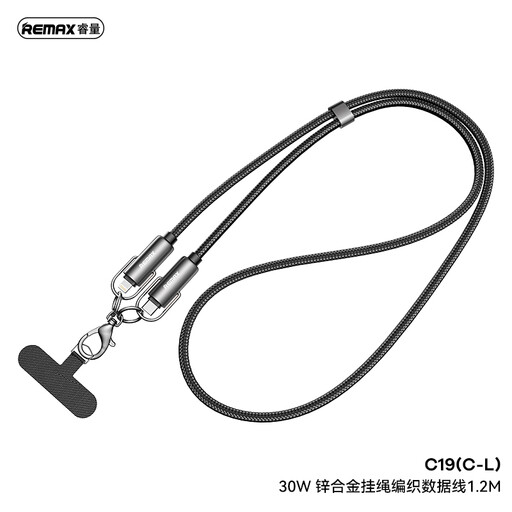
View Product: REMAX 30W Zinc Alloy Braided Data Cable
Why It Stands Out: This cable from REMAX is built with durability at its core. The combination of a braided nylon exterior and robust zinc alloy connectors makes it highly resistant to the stresses of daily use. It supports up to 30W power delivery for fast charging and includes thoughtful design touches, such as an adjustable collar for strain relief and a unique phone clip function that doubles as a lanyard.
Pros:
Who is it for? This is an excellent choice for anyone who needs a tough, reliable cable for daily charging and syncing. It is particularly suited for users who are rough on their cables and would benefit from the enhanced durability and practical design features.
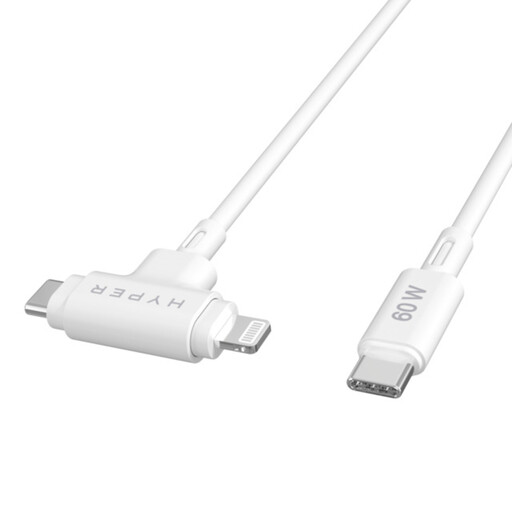
View Product: Hyper HyperJuice Silicone Hybrid 60W Charging Cable
Why It Stands Out: The HyperJuice cable is a uniquely versatile solution for users with multiple devices. Its innovative 2-in-1 hybrid connector integrates both USB-C and Lightning into a single head, allowing you to charge everything from your iPhone and AirPods to a MacBook or Android device with just one cable. It is MFi certified for Apple devices and supports up to 60W Power Delivery, making it powerful enough for some laptops.
Pros:
Who is it for? This cable is ideal for professionals, travellers and anyone living in a multi-device household. If you want one high-quality cable to charge all your modern gadgets, from Apple to other USB-C devices, this is a compelling option.
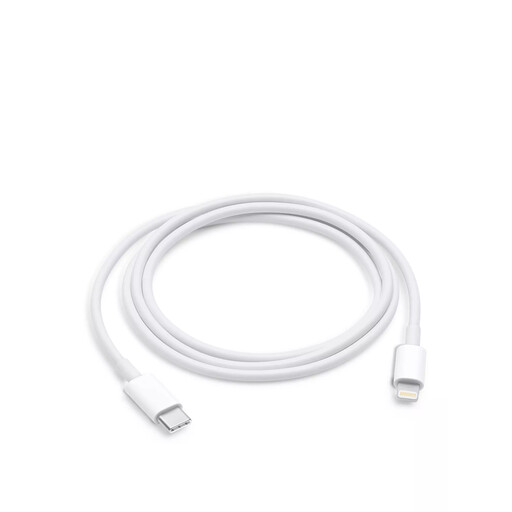
View Product: Apple USB-C to Lightning Cable (1m)
Why It Stands Out: For those who prefer to stick with official accessories, the Apple USB-C to Lightning cable is the benchmark. It is designed by Apple to work seamlessly with your iPhone, iPad and AirPods. You can be confident it will deliver reliable fast charging and data syncing without any compatibility concerns. Its clean, minimalist design is familiar, and its performance is exactly what you would expect from an official Apple charging cable.
Pros:
Who is it for? This is the go-to choice for users who prioritise guaranteed compatibility and peace of mind. If you want a cable that you know will work perfectly with your Apple ecosystem without any guesswork, the official option is a solid choice.
While these three cables cover a range of needs, your perfect match might have a different length, colour or feature set. If you are still searching for the right fit for your setup, you can browse a wider selection of cables.
Explore our full collection of USB-C to Lightning cables to find the perfect match for your devices.
Yes, when used with a USB-C Power Delivery (PD) power adapter, a USB-C to Lightning cable enables fast charging for compatible iPhone and iPad models. This is significantly faster than the standard charging speeds offered by the older USB-A to Lightning cables and 5W power adapters.
MFi stands for "Made for iPhone/iPad/iPod." It is a certification from Apple that ensures a third-party accessory has been tested to meet the company's standards for safety, compatibility and performance. Choosing an MFi certified cable helps prevent potential issues like overheating, slow charging or "Accessory Not Supported" error messages on your device.
While most USB-C chargers will provide power, you need a specific type to enable fast charging. For optimal performance, use a USB-C power adapter that supports the Power Delivery (PD) protocol, ideally with an output of 20W or higher for recent iPhone models. Using a reputable PD charger with an MFi certified cable is the recommended combination for both speed and safety.