
24/7 Customer Support

Free returns

Same-day & Next-day Delivery

Quality Guaranteed

Unlock Your Welcome Offers: FREE Delivery | Up to 80% OFF | Free 30-day JoyPlus trial
Download the APP
As our devices evolve, so do the connections they use. Many of us now have MacBooks, iPads or power adapters with USB-C ports, while our trusty iPhones and AirPods still use the Lightning connector. This can create a frustrating gap, leaving you searching for the right cable to charge your device or transfer photos.
Finding a reliable USB-C to Lightning cable is about more than just connecting two ports. It’s about ensuring safe, efficient charging and dependable data transfer. To help you navigate the options, we've put together this guide to explain the key features to look for and share some of our top recommendations for 2026.
Before choosing a cable, it's helpful to understand a few key factors that determine its quality and performance. Keeping these points in mind will help you select a cable that meets your needs for both charging and data syncing.
When shopping for an Apple lightning cable from any brand, you will often see the term MFi Certified. This stands for "Made for iPhone/iPad/iPod" and is a licensing programme from Apple. An MFi-certified cable contains a small chip that ensures it is fully compatible with Apple devices. Using a non-certified cable can lead to issues like slow charging, incompatibility warnings or even potential damage to your device. For peace of mind and guaranteed performance, an MFi certified lightning cable is a sensible choice.
One of the main advantages of using a USB-C to Lightning cable is its ability to support fast charging. When paired with a compatible USB-C power adapter (typically 20W or higher), this type of cable can charge a compatible iPhone from 0% to 50% in around 30 minutes. This feature, known as Power Delivery (PD), makes it an ideal fast charging iPhone cable for anyone needing a quick power boost.
A charging cable is an everyday item that endures a lot of bending, pulling and coiling. The materials and construction play a significant role in its lifespan. Standard cables are often made with a TPE or silicone coating, while others feature a braided nylon exterior for enhanced durability and tangle resistance. Reinforced connectors can also prevent fraying, which is a common point of failure. Consider how and where you'll be using your cable to decide which level of durability is right for you.
Here are a few standout USB-C to Lightning cables that cater to different needs, from official reliability to all-in-one versatility.
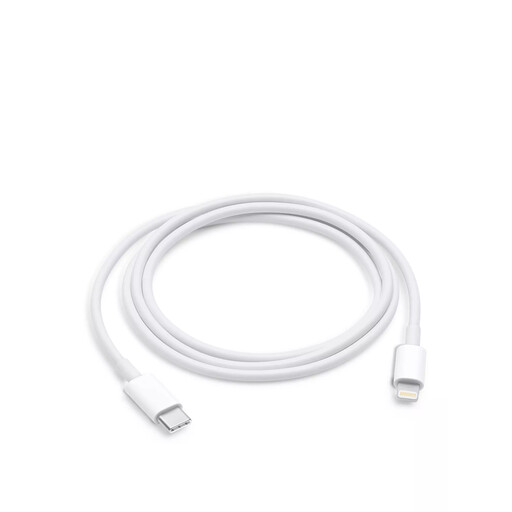
Why It Stands Out: As the official cable from Apple, this product offers guaranteed compatibility and performance. It’s designed to work seamlessly within the Apple ecosystem, providing reliable fast charging and data transfer speeds without any second-guessing.
Pros:
Who is it for? This is the go-to choice for Apple users who prioritise official accessories and want the assurance that their USB-C to iPhone charger setup is fully optimised and supported by Apple.
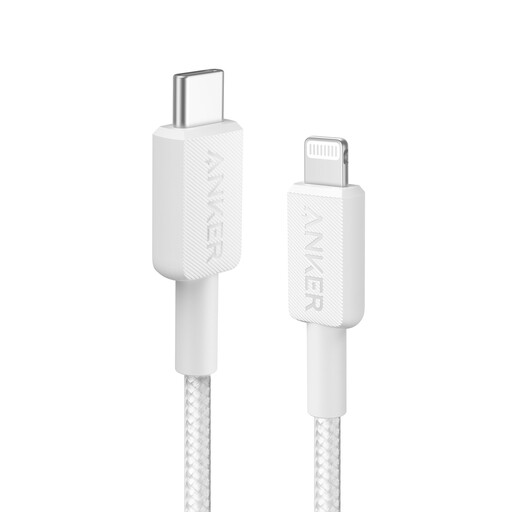
Why It Stands Out: Anker is well-regarded for producing durable and reliable accessories. This cable is MFi certified and built to last, with internal testing showing it can withstand over 12,000 bends. It offers a dependable alternative that focuses on longevity.
Pros:
Who is it for? Ideal for users seeking a robust and long-lasting iPhone data cable that can handle the rigours of daily transport and use, without compromising on charging speed or safety.
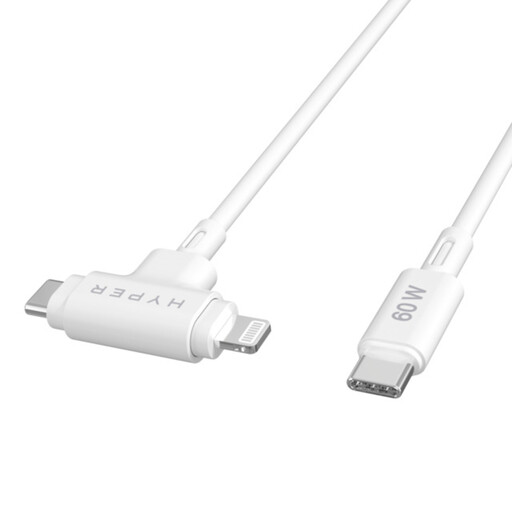
Why It Stands Out: This cable offers exceptional versatility with its innovative 2-in-1 hybrid connector design, featuring both USB-C and Lightning on a single head. It can charge a wide range of devices, from an iPhone to a USB-C powered MacBook Air, with up to 60W Power Delivery.
Pros:
Who is it for? Perfect for the tech-savvy user with multiple devices across different ecosystems. If you want one cable to charge your iPhone, iPad and USB-C laptop, this is an incredibly convenient and clutter-free solution.
While these recommendations cover a range of common needs, we understand that everyone's requirements are different. You might be looking for a longer cable, a different colour or a specific type of material.
If you'd like to explore a wider selection, you can browse our full range of cables.
[Explore our complete collection of USB lightning cables here](https://www.joybuy.co.uk/explore/usb-lightning-cable/cJydkqqI)
1. Is a USB-C to Lightning cable faster for charging? Yes, when used with a compatible USB-C Power Delivery (PD) power adapter (20W or higher), a USB-C to Lightning cable can fast charge compatible iPhone models. This is significantly faster than the standard 5W charger and USB-A cable that used to come with older iPhones.
2. What does MFi certified mean for a Lightning cable? MFi certification means the cable has been approved by Apple to meet its performance and safety standards. An MFi certified lightning cable contains an authentication chip that communicates with your Apple device to ensure safe, reliable charging and data transfer, protecting it from potential issues like overheating or short-circuiting.
3. Can I use any USB-C charger with a USB-C to Lightning cable? Yes, you can use any USB-C charger. However, to access fast charging speeds for your iPhone, you will need a USB-C power adapter that supports Power Delivery, typically with a power output of 20W or more. Using a lower-wattage USB-C charger will still charge your device, but at a slower rate.