
24/7 Customer Support

Free returns

Same-day & Next-day Delivery

Quality Guaranteed

Unlock Your Welcome Offers: FREE Delivery | Up to 80% OFF | Free 30-day JoyPlus trial
Download the APP
If you're a content creator in the UK, you know that the quality of your video can make or break your channel. While smartphones have become surprisingly capable, a dedicated vlogging camera offers a significant leap in performance, control and professionalism. From superior audio to crisp low-light footage and buttery-smooth stabilisation, the right camera can elevate your content from amateur to polished.
Navigating the market, however, can be a challenge. With so many features, specifications and marketing terms, it's easy to feel overwhelmed. This guide is designed to cut through the clutter. We'll walk you through the essential features to look for and present a few standout options that cater to different types of creators, helping you find the right tool to bring your vision to life.
Before diving into specific models, it's helpful to understand the key features that matter most for video content. Focusing on these three areas will ensure you select a camera that truly meets the demands of a modern camera for content creators.
For creators aiming for a professional look, a 4k vlogging camera is the current standard. Recording in 4K resolution not only provides viewers with a sharper, more detailed image but also gives you more flexibility in post-production. You can crop, reframe or zoom into your footage without a significant loss in quality, which is invaluable for dynamic editing. Pay attention to the sensor size as well; a larger sensor, like a 1-inch or APS-C, generally performs better in low light, producing cleaner footage with less grain.
Shaky footage is one of the quickest ways to lose a viewer's attention. A camera with image stabilisation is therefore non-negotiable for anyone who plans to shoot while walking, moving or without a tripod. There are three main types:
For a portable video camera, effective stabilisation is paramount for creating watchable, professional-looking content on the move.
Poor audio can ruin even the most stunning video. A good vlogging camera should have a high-quality internal microphone. Even better, it should include a 3.5mm microphone input jack, allowing you to connect an external microphone for crystal-clear sound. Also, consider features designed for vloggers, such as a fully articulating flip-out screen for easy self-framing, reliable autofocus with face and eye tracking and simple connectivity options for transferring files to your computer or phone.
Based on the features that matter most to creators, here are our recommendations. Each one serves a different purpose, from ultimate portability to creative versatility.
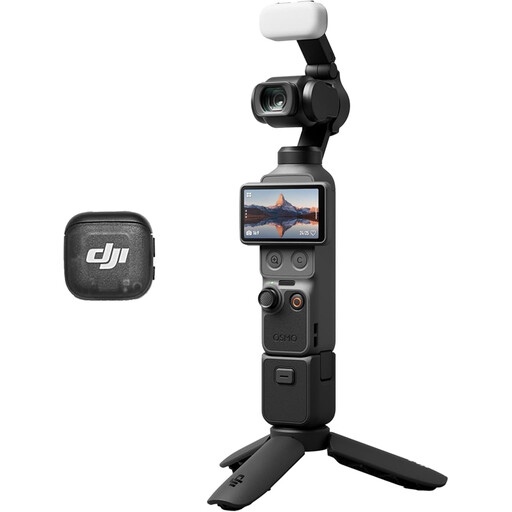
Why It Stands Out The Osmo Pocket 4 is a marvel of miniaturisation. It packs a high-quality 1-inch CMOS sensor into a body so small it fits in your palm, all while mounted on a mechanical 3-axis gimbal. This combination delivers incredibly smooth, cinematic footage that is simply unachievable with other cameras of this size. It's the definition of a powerful and portable video camera.
Pros:
Who is it for? This is an ideal choice for travel vloggers, journalists and creators who are constantly on the move. If you need to capture smooth, stable footage without carrying bulky gear, the Osmo Pocket 4 is a remarkable tool.

Why It Stands Out The Sony ZV-E10 II is built from the ground up as a dedicated YouTube camera. Its key strength lies in its versatility. As an interchangeable lens camera, it allows you to grow as a creator, adapting your look by swapping lenses. It combines a large 26.0 MP APS-C sensor for outstanding image quality with creator-focused software features like 'Product Showcase Mode' and a one-touch 'Background Defocus' button.
Pros:
Who is it for? This is a fantastic all-rounder for the serious camera for content creators. It's perfect for YouTubers who shoot a mix of talking-head videos, product reviews and lifestyle content, and who want the option to expand their creative toolkit with different lenses over time.
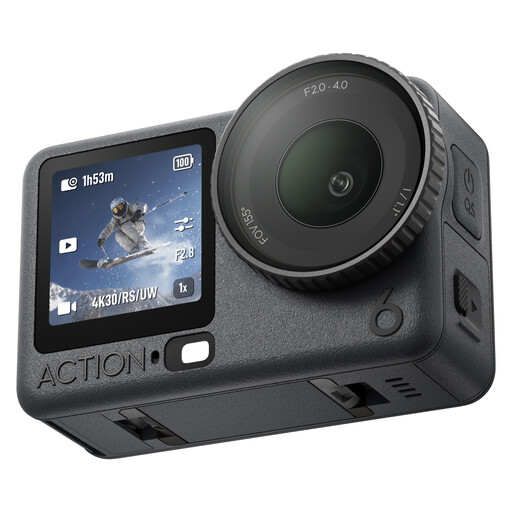
Why It Stands Out When durability is the top priority, the DJI Osmo Action 6 delivers. This rugged action camera is built to withstand the elements, being waterproof up to 20 metres without any additional housing. It features a large 1/1.1-inch sensor for impressive image quality in its class and a long-lasting, cold-resistant battery. Its advanced electronic image stabilisation ensures your action-packed footage remains steady and watchable.
Pros:
Who is it for? This is the camera for adventurers, sports enthusiasts and travel vloggers heading to extreme environments. If your content involves mountain biking, surfing, skiing or any activity where your gear might take a hit, the Action 6 is a reliable companion.
These three cameras represent strong choices for distinct creative needs, but the world of digital imaging is vast. If you're still exploring or have a different style or budget in mind, there are many other models to consider.
We invite you to browse our full collection to find the perfect match for your vlogging journey.
Explore our full range of Digital Cameras
Do I really need a 4K vlogging camera? While 1080p is still functional, shooting in 4K is highly recommended. It future-proofs your content, delivers a noticeably sharper image on modern displays and provides crucial flexibility for editing, such as cropping in on a shot without losing clarity. For creators aiming for a polished, professional output, 4K is the new standard.
What is more important: image stabilisation or a good lens? This depends entirely on your vlogging style. For creators who shoot while walking or moving, a camera with image stabilisation is essential for producing smooth, watchable video. For those who primarily shoot on a tripod in a studio, the quality and aperture of the lens become more critical for achieving a desired aesthetic, like a blurred background (bokeh).
Can I use an action camera as my main YouTube camera? Absolutely. Many successful creators use action cameras as their primary tool, especially for travel and adventure content. A model like the DJI Osmo Action 6 is a fantastic portable video camera with a wide field of view that's great for capturing immersive scenes. However, for studio work or cinematic shots requiring a shallow depth of field, a camera with a larger sensor and interchangeable lenses like the Sony ZV-E10 II, may be a more suitable primary choice.