
24/7 Customer Support

Free returns

Same-day & Next-day Delivery

Quality Guaranteed

Unlock Your Welcome Offers: FREE Delivery | Up to 80% OFF | Free 30-day JoyPlus trial
Download the APP
Choosing the right vlogging camera can feel like a monumental task. With so many specifications, features and price points on the market, it is easy to get lost in the technical jargon. Whether you are just starting your YouTube journey or looking to upgrade your gear, the goal is the same: to find a camera that helps you produce high-quality content reliably and efficiently.
This guide is designed to cut through the marketing clutter. We will outline the key features to consider when selecting a camera for content creators in the UK and present a few of our top recommendations for 2026 to help you make an informed decision.
Before diving into specific models, it is helpful to understand the core features that will have the biggest impact on your video production.
The heart of any 4K video camera is its sensor. A larger sensor, such as an APS-C, generally captures more light, which translates to better performance in dim conditions and a more cinematic look with a shallow depth of field (blurry background). Many modern cameras offer 4K resolution, but it is also worth looking at specifications like 10-bit 4:2:2 colour, which provides greater flexibility for colour grading in post-production. This is a key feature for creators who want a polished, professional aesthetic.
Shaky footage can be distracting for viewers. Image stabilisation is crucial for any vlogger who shoots handheld or on the move. There are several types: in-body image stabilisation (IBIS), optical stabilisation in the lens and digital stabilisation. For the smoothest possible shots, a gimbal camera with mechanical stabilisation offers a level of stability that is difficult to achieve otherwise. For a travel vlogging camera, finding the right balance between a compact, lightweight body and effective stabilisation is key.
Modern cameras designed for vlogging often include features that simplify the creation process. A camera with a flip screen (or a fully articulating screen) is essential for framing yourself while talking to the camera. Other important features include reliable autofocus with eye and subject tracking, a quality built-in microphone with a wind-muff attachment and the ability to function as a high-quality streaming camera via a simple USB connection.
Here are a few standout options that cater to different types of content creators, from hybrid photographers to dedicated on-the-go vloggers.

Why It Stands Out The Sony A6700 is a powerful hybrid mirrorless camera for video and stills. It packs features from Sony's high-end cinema line into a compact APS-C body. Its standout feature is the dedicated AI processing unit, which drives an incredibly fast and accurate autofocus system that can track subjects based on their body poses. The camera records beautiful 4K video downsampled from 6K quality, ensuring exceptional detail and clarity.
Pros
Who is it for? This camera is ideal for the serious content creator or hybrid shooter who needs a single, high-performance tool for both professional-quality video and high-resolution photography.

Why It Stands Out The Sony ZV-E10 II is purpose-built for vlogging. It takes the powerful sensor and processor from a more advanced camera and places them in an exceptionally lightweight and user-friendly body. Features like the 'Product Showcase' mode (which quickly shifts focus from your face to an object held up to the lens) and a one-touch 'Background Defocus' button make it incredibly simple to achieve common vlogging effects without diving into complex menus.
Pros
Who is it for? This is a strong contender for the best camera for YouTube creators who are starting out or those who prioritise portability and ease of use. It's perfect for lifestyle, beauty and talk-to-camera vlogs.
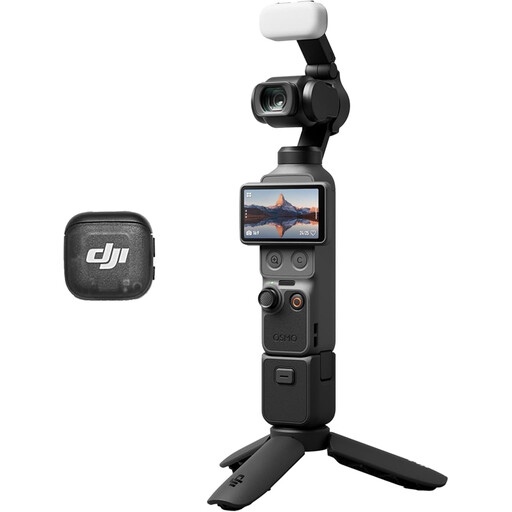
Why It Stands Out The DJI Osmo Pocket 4 is in a class of its own. This pocket-sized device integrates a high-quality camera with a 3-axis mechanical gimbal, delivering exceptionally smooth footage that is almost impossible to replicate with other forms of stabilisation. Its tiny form factor makes it the ultimate compact 4K camera for capturing life on the go, from busy city streets to adventurous travel vlogs, without drawing attention.
Pros
Who is it for? This is the ideal camera for travel vloggers, action content creators and anyone who needs the smoothest possible footage in the most portable package available.
The cameras highlighted here represent some of the most compelling options for 2026, but every creator's needs are different. If you are looking for different features, lens options or price points, you can browse a wider variety in our full collection.
Explore our complete range of zoom digital cameras to find the perfect fit for your creative workflow.
1. What is a good camera for YouTube beginners in the UK? For beginners, a camera that is easy to use and has helpful built-in features is often a great starting point. The Sony ZV-E10 II is a strong candidate because it offers excellent image quality and creator-focused modes like 'Product Showcase' and 'Background Defocus' that simplify the vlogging process. Its lightweight design and articulating screen also make it very practical for solo creators.
2. Do I really need a 4K video camera for vlogging? While 1080p is still acceptable, shooting in 4K is highly recommended for serious content creators. It provides significant advantages: your content is future-proofed as 4K becomes the standard viewing resolution. It also gives you the flexibility to crop or reframe your shots in post-production without losing quality. Even when your final video is exported in 1080p, a 4K source file results in a sharper, more detailed image.
3. Is a mirrorless camera better than a compact camera for video? It depends on your priorities. A mirrorless camera for video, like the Sony A6700, typically has a larger sensor and the ability to change lenses, offering superior image quality, low-light performance and creative flexibility. A high-end compact 4K camera, like the DJI Osmo Pocket 4, prioritises portability and unique features like built-in mechanical stabilisation. If ultimate image quality and versatility are your goals, a mirrorless camera is a great choice. If you need maximum portability and stability for on-the-go shooting, a specialised compact camera may be more suitable.