
24/7 Customer Support

Free returns

Same-day & Next-day Delivery

Quality Guaranteed

Unlock Your Welcome Offers: FREE Delivery | Up to 80% OFF | Free 30-day JoyPlus trial
Download the APP
Stepping up from a smartphone to a dedicated vlogging camera can significantly elevate the quality of your content. However, the market is filled with options, from compact point-and-shoots to advanced mirrorless systems, making the choice a challenge. Whether you're a budding content creator for YouTube, a travel enthusiast documenting your adventures or simply looking to capture life's moments in higher fidelity, finding the right tool is key.
This guide is designed to help you navigate the essential features of a modern vlogging camera. We will break down what truly matters for creating compelling video and present a few standout options to consider for your specific needs.
Choosing a camera involves balancing video quality, portability and ease of use. Here are a few key considerations for UK-based creators.
While many smartphones offer 4K video, a dedicated 4k vlogging camera often provides superior quality due to a larger sensor and better processing. A higher resolution gives you more flexibility in editing, allowing you to crop your footage without losing detail. Also, look for cameras that can shoot at higher frame rates (e.g., 60fps or 120fps), which is ideal for creating smooth slow-motion sequences.
Shaky footage can be distracting for viewers. Modern cameras offer two main types of stabilisation. Electronic Image Stabilisation (EIS) is a digital solution that crops the image slightly to counteract movement. Mechanical stabilisation, often found in a gimbal camera, uses physical motors to keep the sensor steady. For creators who are often walking and talking, a camera with robust stabilisation is non-negotiable.
Certain features make the vlogging process much smoother. A camera with a flip screen (or a fully articulating screen) is essential for framing yourself while filming. Fast and reliable autofocus ensures you stay sharp, even when moving around the frame. Finally, for clear audio, a camera with a 3.5mm microphone input allows you to connect an external microphone, a significant upgrade over built-in options. A lightweight video camera is also a major plus, especially for a travel vlogging camera.
Here are a few models that offer a compelling combination of features for different types of content creators.

Why It Stands Out The Sony A6400 is a versatile workhorse that combines the image quality of a large APS-C sensor with a compact, portable body. Its main strength lies in its autofocus system. The Real-time Tracking is exceptionally reliable for keeping subjects, including yourself, in sharp focus. The included 16-50mm power zoom lens is a great starting point and the E-mount system opens up a vast ecosystem of lenses for future upgrades.
Pros
Who is it for? This is an excellent camera for content creators who need a flexible tool for both high-quality video and professional-looking photos. It's ideal for those who want to grow their skills and invest in different lenses over time.
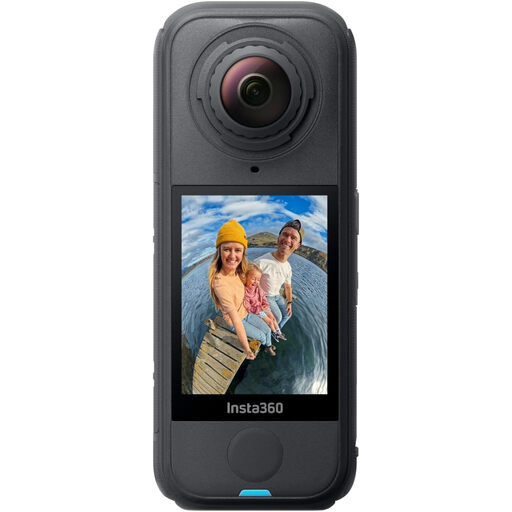
Why It Stands Out The Insta360 X4 Air changes the creative process with its "shoot first, frame later" philosophy. By capturing a full 360-degree view in stunning 8K resolution, you never have to worry about aiming the camera. After filming, you can use the app to choose your angles, creating dynamic, traditional flat video. The "invisible selfie stick" effect provides unique drone-like shots and at only 165g, it's an incredibly lightweight video camera.
Pros
Who is it for? This camera is perfect for action, sports and travel vloggers who want to capture immersive experiences without being distracted by framing. It's also a great tool for solo creators looking for unique angles that would typically require a second person to film.
View Details for Insta360 X4 Air
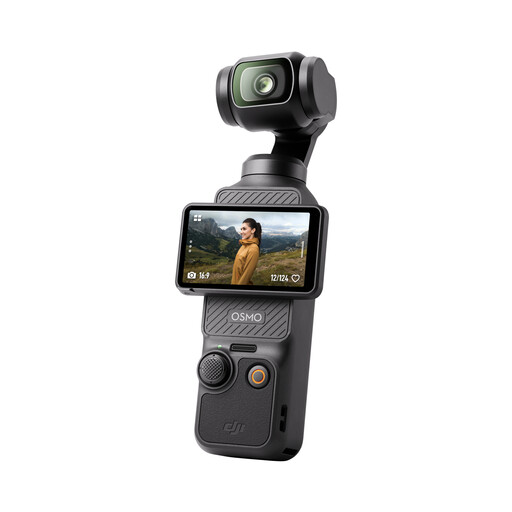
Why It Stands Out The DJI Osmo Pocket 3 is the ultimate all-in-one compact video camera for smooth footage. It integrates a high-quality camera with a 1-inch CMOS sensor into a mechanical 3-axis gimbal. This combination delivers incredibly stable, cinematic video straight out of the camera. The clever 2-inch rotatable touchscreen makes it easy to switch between horizontal and vertical shooting, while ActiveTrack 6.0 keeps you perfectly in frame.
Pros
Who is it for? This is the ideal gimbal camera UK vloggers have been waiting for. It's perfect for run-and-gun creators, travel vloggers and anyone who prioritises stability and convenience. If you want to capture smooth, professional-looking video with minimal setup, the Pocket 3 is a compelling choice.
View Details for DJI Osmo Pocket 3
The cameras highlighted here represent some of the most popular approaches to vlogging in 2026. However, every creator's needs are different. If you're still exploring or looking for different features, there are many other models to consider.
Explore our full range of cameras and find the perfect tool to start your content creation journey.
Discover More in Beginner Photography Equipment
While 1080p is still acceptable, a 4k vlogging camera is highly recommended. It not only provides a sharper, more detailed image for viewers on 4K displays but also gives you more creative options. You can crop into your shot during editing to create a "zoom" effect or reframe your composition, all while maintaining a high-quality 1080p output. It effectively future-proofs your content.
Both are very important, but their priority depends on your vlogging style. A camera with a flip screen is almost essential for any vlogger who films themselves, as it allows you to monitor your framing and focus. Good image stabilisation is critical for any content that involves movement, such as a travel vlogging camera used for walking tours. For a static, studio-based camera for YouTube, stabilisation is less critical than a flip screen. Ideally, a great vlogging camera offers both.
Yes, mirrorless cameras are a very popular choice for vloggers and content creators. Models like the Sony A6400 offer a fantastic balance of image quality, thanks to their larger sensors, and creative flexibility through interchangeable lenses. They also typically include key vlogging features like a flip screen, fast autofocus and an external microphone input, making them powerful all-in-one tools for producing high-quality content.