
24/7 Customer Support

Free returns

Same-day & Next-day Delivery

Quality Guaranteed

Unlock Your Welcome Offers: FREE Delivery | Up to 80% OFF | Free 30-day JoyPlus trial
Download the APP
Navigating the world of vlogging cameras can feel overwhelming. With endless specifications and bold marketing claims, it's easy to make a purchase you later regret. As a Product Recommendation Officer, my role is to help you see past the hype and focus on what truly delivers value for your money. Many aspiring creators in the UK fall into common traps, so let's first look at what to avoid.
Before you spend a penny, be aware of these widespread marketing tactics that often lead to disappointment:
To make an informed choice, focus on the technical specifications that have a real-world impact on your content.
The sensor is the heart of your camera. A larger sensor, such as a 1-inch or APS-C type found in more advanced compacts and mirrorless cameras, captures more light. This results in cleaner, more detailed video with better performance in low light and a more pleasing background blur. While a 4K action camera or a compact digital camera can both shoot in 4K, the one with the larger sensor will almost always produce a superior image.
For vlogging, a "wide" lens is essential. Look for a focal length of around 20mm to 24mm (35mm equivalent). This allows you to capture yourself and your surroundings without having to hold the camera at arm's length. The aperture, shown as an f-number (e.g., f/2.0), indicates how much light the lens can let in. A lower f-number is better for low-light situations and creating that desirable blurred background effect. This is a key feature to look for in a point and shoot camera with flip screen.
For any vlogging that involves movement—walking, travelling or sports—good stabilisation is non-negotiable. Electronic Image Stabilisation (EIS) is a common feature that digitally corrects for camera shake. For ultimate smoothness, some cameras feature mechanical gimbals. If you plan to capture action, a dedicated waterproof video camera with robust stabilisation is a wise investment. Also, consider connectivity; Wi-Fi and Bluetooth make it easy to transfer files to your phone for quick editing and sharing.
To help you match a camera to your specific needs, here are a few options tailored to different types of creators.

Why This Fits Their Persona: Ideal for students, teenagers or anyone wanting to try vlogging without a significant financial commitment. It's a simple, straightforward camera for beginners that serves as a great first step into content creation.
While it relies on digital zoom, its value lies in its accessibility. It provides a low-cost entry into 4K recording, allowing you to learn the basics of framing and editing before investing in more advanced gear.
Extremely affordable entry point for 4K video. Its simple point-and-shoot design makes it a very cheap travel camera that is easy to use straight out of the box.
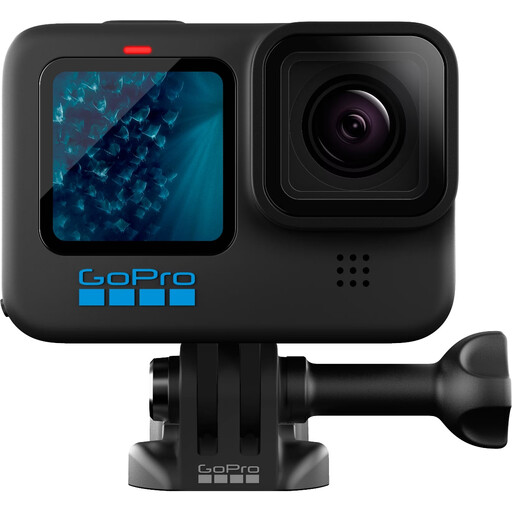
Why This Fits Their Persona: For the creator who is hiking in the Peak District, surfing in Cornwall or cycling through London. This camera is built to withstand the elements and capture smooth footage during intense activity.
It prioritises what matters for action content: class-leading HyperSmooth stabilisation and a rugged, waterproof design. It doesn't rely on misleading specs, instead delivering on its core promise of durable, high-quality capture.
Exceptional electronic image stabilisation for incredibly smooth video. It is also a fully waterproof video camera up to 10 metres without needing an extra case.

Why This Fits Their Persona: For the serious content creator who wants to elevate their production value. This is a proper mirrorless camera for YouTube, offering superb image quality and the flexibility to grow as your skills develop.
It completely sidesteps the pitfalls with a large APS-C sensor for genuine image quality and an interchangeable lens system. The included 16-50mm lens provides true optical zoom, ensuring sharpness at any focal length.
Outstanding autofocus with Real-time Tracking, a 180° tiltable screen for easy self-framing and an external microphone input for professional-grade audio.
We have compiled a complete, real-time list of products that fully satisfy these strict selection criteria and UK safety regulations.
While 1080p is still acceptable, shooting in 4K provides significant advantages. It gives you the flexibility to crop, reframe and stabilise your footage in post-production without losing quality. Even if you publish in 1080p, a video downscaled from 4K will look sharper and more detailed. For future-proofing your content, 4K is highly recommended.
This depends entirely on your commitment and budget. You can start with an affordable compact digital camera for under ?100 to learn the basics. A good mid-range option, like a high-end action camera or a dedicated vlogging compact, will typically fall in the ?300-?600 range. For those serious about quality from the start, an entry-level mirrorless system can be found from ?600 upwards.
Viewers are often more forgiving of slightly lower video quality than they are of poor, inaudible or distorted audio. If your audience can't hear you clearly, they will quickly lose interest. While great video is the goal, ensuring you have clear audio is arguably the most critical element for a successful vlog. Always prioritise a camera with an external microphone input or invest in a separate audio recorder.