
24/7 Customer Support

Free returns

Same-day & Next-day Delivery

Quality Guaranteed

Unlock Your Welcome Offers: FREE Delivery | Up to 80% OFF | Free 30-day JoyPlus trial
Download the APP
Finding the right vlogging camera can feel like navigating a minefield of technical jargon and marketing promises. With so many options available, it is easy to make a purchase you later regret. As a Joybuy Product Recommendation Officer, my role is to help you see past the hype and focus on what truly matters for creating great content.
Many aspiring creators in the UK fall into a few common traps. Understanding these pitfalls is the first step to making a smart investment.
To avoid these traps, focus on the core specifications that directly impact the quality of your vlogs. These are the non-negotiable features to check before you buy.
The heart of any digital camera is its sensor. A larger sensor, such as a 1-inch type, can capture significantly more light. This translates to cleaner, more detailed video with better colour, especially in typical British weather or when filming indoors. While many models are advertised as a 4K camera, the quality of that 4K footage is determined by the sensor and image processor. A camera with a larger sensor will produce superior 4K video that looks crisp on any screen.
For any vlogger who plans to film outside of a studio, image stabilisation is critical. There are three main types:
A good camera for YouTube needs good audio. Look for models with well-designed, multi-directional stereo microphones that feature wind-noise reduction. For the greatest flexibility, a camera with a 3.5mm microphone input jack is invaluable, as it allows you to connect an external microphone for crystal-clear sound in any environment.
Based on these critical factors, we have identified several models that are well-suited for different types of creators. Instead of a simple list, we have matched them to specific user profiles to help you find your fit.
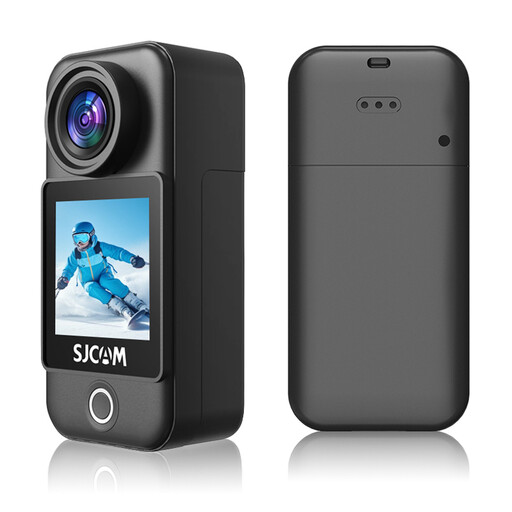
Why This Fits Their Persona: This is an excellent starting point for those on a tight budget who want to create action or travel content. Its ultra-compact, durable design makes it easy to carry everywhere, from a city walk in Manchester to a hike in the Peak District. It provides a low-cost entry into 4K video without a large initial investment.
It sidesteps the "anti-shake" illusion by incorporating a 6-axis gyro stabilisation system. This is a more advanced form of electronic stabilisation that delivers noticeably smoother footage than basic digital versions found in similarly priced cameras.
Its primary advantage is its versatility. It functions as both a pocket camera and an action camera, and is waterproof up to 30m with the included case, making it suitable for a wide range of activities.

Why This Fits Their Persona: This is designed for the vlogger who is always moving. Whether you are creating walk-and-talk videos, chasing after pets or documenting your travels, its combination of portability and powerful stabilisation is unmatched. It is the definition of a high-performance pocket camera.
It completely solves the shaky footage problem with its integrated 3-axis mechanical gimbal. This provides true cinematic smoothness that no form of electronic stabilisation can replicate, ensuring professional results straight out of the camera.
The combination of a large 1-inch CMOS sensor and the mechanical gimbal is its core strength. This pairing delivers outstanding 4K video quality and stability, while the fast subject tracking and rotating touchscreen make filming yourself effortless.
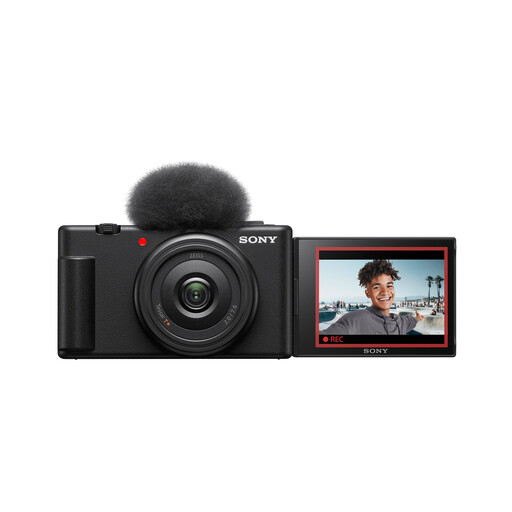
Why This Fits Their Persona: This is a purpose-built compact camera for vloggers who do a bit of everything: sit-down talks, product reviews and lifestyle content. Its features are specifically tailored to make a creator's workflow easier, from filming to sharing.
It tackles the megapixel and audio traps directly. It uses a large 1-inch sensor for superb image quality, not an inflated MP count. It also features a high-quality directional microphone and a dedicated 'Product Showcase' mode for reliable focus, solving common vlogging frustrations.
Its ultra-wide 20mm lens is perfect for framing yourself in a shot without needing a long selfie stick. The vari-angle touchscreen and fast, reliable autofocus system are designed to make solo content creation simple and efficient.
We have compiled a complete, real-time list of products that fully satisfy these strict selection criteria and UK safety regulations.
4K video files are large. As a general rule, you can expect one minute of 4K footage to use between 400MB and 500MB of space. For this reason, we recommend starting with at least a 128GB microSD card. It is also crucial to choose a card with a fast write speed, look for a U3 or V30 rating, to ensure smooth recording without dropped frames. For longer shooting days, carrying a few spare cards is a wise strategy.
For the smoothest possible footage during heavy movement like walking, jogging or cycling, a mechanical gimbal camera will almost always outperform cameras with only electronic (EIS) or optical (OIS) stabilisation. The motorised axes physically counteract shake for a floating, cinematic look. However, the advanced stabilisation systems in many modern cameras are more than capable for static shots or slow, deliberate movements, and they allow for a more compact and durable camera body.
Absolutely. An action camera can be an excellent choice for a camera for beginners or for vloggers focused on travel and adventure. They are typically very durable, compact and often waterproof. The main considerations are that their very wide-angle lenses can sometimes create a "fisheye" distortion (though many have software to correct this), and their smaller sensors may not perform as well in low-light conditions compared to a dedicated vlogging camera with a larger sensor.