
24/7 Customer Support

Free returns

Same-day & Next-day Delivery

Quality Guaranteed

Unlock Your Welcome Offers: FREE Delivery | Up to 80% OFF | Free 30-day JoyPlus trial
Download the APP
Great video content can be instantly undermined by poor audio. If you've ever filmed the perfect shot only to find the audio is muffled, windy or distant, you understand the frustration. For UK content creators on YouTube, TikTok or Instagram, clear, crisp sound is not a luxury—it's essential for keeping your audience engaged.
Navigating the world of audio equipment can be confusing. That's why we've put together this straightforward guide. As the Joybuy Product Recommendation Officer, my role is to help you understand the key features to look for in a vlogging microphone and highlight some standout options that deliver on performance and practicality.
Before diving into specific products, let's cover a few key considerations. Keeping these points in mind will help you select the right equipment for your creative workflow.
The first step is to ensure a microphone works with your existing gear. If you primarily shoot on a smartphone, you'll need a microphone for iPhone or Android, which often use Lightning or USB-C ports. Some modern systems offer a direct Bluetooth microphone for camera or phone connection, removing the need for a receiver. For traditional cameras, a receiver that plugs into a 3.5mm microphone jack is the standard. Always check the connection types to avoid compatibility issues.
For vlogging, especially on the go, you need a system that is quick to set up and doesn't weigh you down. A wireless lavalier mic system is a popular choice. These typically consist of small, clip-on transmitters and a compact receiver. Look for kits that come in a charging case, which not only protects the components but also ensures they are charged and ready for your next shoot. Systems that are pre-linked straight out of the box can save valuable time.
Your recording environment is rarely a quiet studio. A noise cancelling microphone can be incredibly useful for reducing background chatter, traffic or wind, making your voice clearer. Another valuable feature is an onboard portable audio recorder function. This allows the transmitter to record a backup audio file internally, providing a safety net in case of wireless interference or signal dropouts.
Based on features that support modern content creation, here are our recommendations for creators looking to upgrade their audio setup this year.
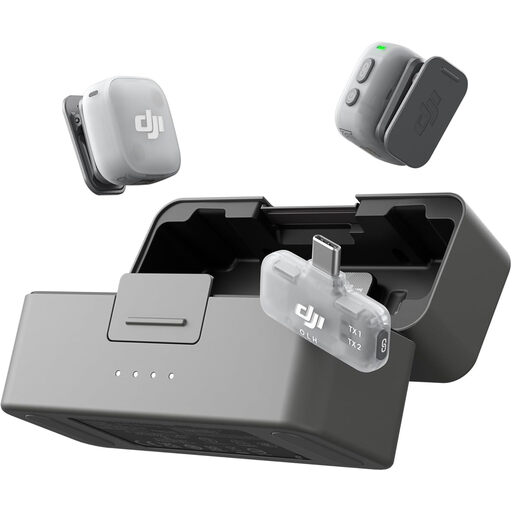
Why It Stands Out: The DJI Mic Mini 2 is designed for creators who value speed and portability above all else. Its standout feature is the ability to connect a transmitter directly to a smartphone via Bluetooth, eliminating the need for a receiver for mobile-first workflows. The transmitters are incredibly lightweight at just 11 grams and feature a magnetic design for easy attachment to clothing.
Pros:
Who is it for? This system is ideal for mobile content creators, TikTokers and vloggers who primarily film with their smartphones and need a fast, simple and highly portable audio solution.
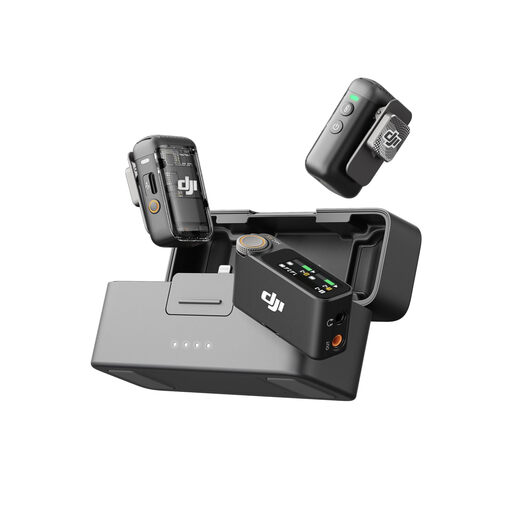
Why It Stands Out: The DJI Mic 2 is a comprehensive wireless audio kit that offers professional-grade features in an easy-to-use package. It includes intelligent noise cancelling and, crucially, 32-bit float internal recording. This technology captures a wide dynamic range, making it nearly impossible for audio to clip or distort, which is a lifesaver for recording in unpredictable environments. The system is ready to use straight out of the box, with pre-linked components and adapters for cameras, iPhones and Android devices.
Pros:
Who is it for? This is an excellent choice for serious vloggers, interviewers and small production teams who require reliable, high-quality audio with professional backup features for both camera and mobile setups.
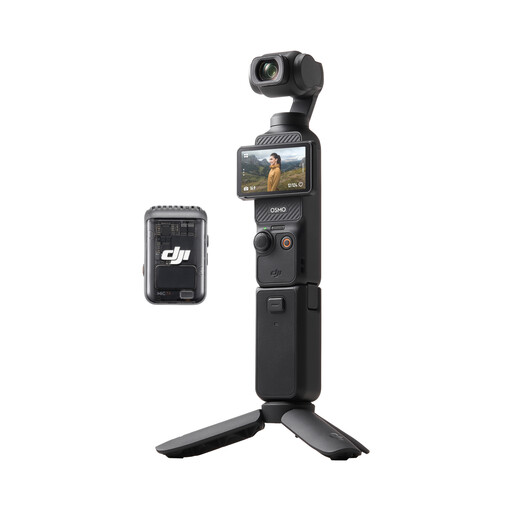
Why It Stands Out: For those looking to solve both video and audio problems in one go, the Osmo Pocket 3 Creator Combo is a complete vlogging solution. It pairs a pocket-sized camera featuring a 1-inch CMOS sensor and 3-axis mechanical stabilisation with a DJI Mic 2 transmitter. This means you get incredibly smooth 4K video and high-quality, clear audio in one integrated package. The camera's ActiveTrack 6.0 keeps you perfectly in frame, making it a powerful tool for solo creators.
Pros:
Who is it for? This combo is perfect for travel vloggers, run-and-gun filmmakers and any creator who wants a powerful, compact, all-in-one system for producing professional-looking content without a large crew or complex rig.
View DJI Osmo Pocket 3 Creator Combo Details
If our recommendations don't quite match what you're looking for or if you'd like to browse a wider variety of audio solutions, we have more to explore.
Discover more in our full camera microphone category.
Do I really need an external vlogging microphone? While most cameras and phones have built-in microphones, they are often omnidirectional and of lower quality. They tend to pick up handling noise, wind and general background sound. An external vlogging microphone is designed to isolate your voice, resulting in the clear, professional-sounding audio that helps retain viewers.
How do I choose between a lavalier and a shotgun microphone? A wireless lavalier mic is ideal when you are the primary subject, such as in interviews, tutorials or pieces-to-camera. It clips onto your clothing, ensuring consistent audio levels even as you move. A shotgun microphone is directional and mounts on your camera, making it better for capturing sound from whatever the camera is pointing at or for recording general ambient sound.
Can I connect a Bluetooth microphone to my camera? This depends on the specific microphone system and camera. Some modern audio systems, like the DJI Mic series, can connect a transmitter directly to compatible devices via Bluetooth. However, many cameras lack a built-in Bluetooth audio input and will require a dedicated receiver to be plugged into the camera's 3.5mm microphone port to receive the wireless signal. Always check the specifications for compatibility.