People caring for delicate covers
Washable covers with delicate fibres, trims or colour-sensitive finishes call for programme and drying controls that respect each cover’s care instructions, not simply a large drum.


Choose a washer-dryer only after checking that each cushion cover’s care label permits machine washing and, if you intend to use the dryer, tumble drying. The machine must fit the utility room with space for its door and connections; compare its wash capacity with its separate wash-and-dry limit, particularly if you want to run a continuous cycle. For delicate covers, suitable programme and drying controls matter more than wash capacity alone.
Washable covers with delicate fibres, trims or colour-sensitive finishes call for programme and drying controls that respect each cover’s care instructions, not simply a large drum.
When an appliance is being added or replaced in a tight space, depth, door clearance, connections and the intended installation type can determine which models fit.
A combined machine can wash and dry eligible covers, but its wash-and-dry load limit needs separate attention. Energy information and routine upkeep also matter when comparing how models will be used.
For washable cushion covers in a utility room, establish what the labels allow, then check installation fit and the load you expect to dry before comparing ongoing use.
Choose when: You have space for an appliance without a furniture door and want flexibility when placing or replacing it.
Trade-off: The appliance remains visible, and its depth and required space for services still affect where it can stand.
Choose when: Concealing the machine matters and the utility room has compatible cabinetry and a furniture-door arrangement.
Trade-off: Which? notes that the UK choice of integrated washer-dryers is narrower than for freestanding models; cabinet and hinge compatibility narrow it further.
| Concern | What to check | Who this matters to |
|---|---|---|
| Cover care | Check each cover’s permitted wash temperature and cycle. Consider drying settings only if its label allows tumble drying. | If my covers have delicate fibres or trims, I need controls that let me follow their care labels. Around 31% of consumers put cover care first. |
| Utility-room fit | Measure the available height, width and depth, allowing for the door, pipes and plug. For an integrated model, check the cabinet and furniture door. | A tight alcove makes the usable space and access to connections decisive for me; roughly 25% of consumers prioritise installation fit. |
| Wash-and-dry load | Compare the wash-only and wash-and-dry limits for the same model against your usual covers. | When I want to wash and dry covers without transferring them, the whole load must suit the continuous cycle. Around 25% of consumers put that convenience first. |
| Ongoing use | Compare the exact model’s energy label and product information for the cycles you expect to use, alongside its manual’s cleaning instructions. | If I expect to use the drying function regularly, resource use and routine cleaning affect my choice; roughly 19% of consumers make upkeep and ongoing use their primary concern. |
A load that fits the wash cycle may exceed the model’s limit for a complete wash-and-dry cycle. Bosch, for example, lists separate 10.5 kg wash and 6 kg wash-and-dry capacities for its WNG25401GB.
Check both figures for the exact model and plan a continuous cycle around its wash-and-dry limit.
A larger washed load may need to be split for drying or dried separately, adding handling and cycles.
Depth, connections and the space needed to open the door can prevent an otherwise suitable machine from fitting the utility room.
Measure the usable space in front of pipes and plugs, then follow the shortlisted model’s installation instructions. Check cabinet and hinge requirements if it is integrated.
A mismatch can mean extra fitting work or a machine that cannot be installed in the intended position.
A gentle or fabric-specific programme cannot override restrictions on a cover’s backing, trim or finish. Machine-wash permission does not establish tumble-dry permission.
Read each cover’s label before choosing the wash programme and again before selecting a drying setting.
The cycles and load sizes you actually use affect how relevant a label comparison is when washing and drying covers.
Compare the energy label and product information for the exact model, including the wash-only and wash-and-dry information applicable to your planned use.
Named Bosch models illustrate the choice between a higher-capacity freestanding format and a smaller integrated format.
AEG has named built-in and freestanding washer-dryers with different programme and drying-control descriptions.
LG’s freestanding FWY696WWLN1 provides a 9 kg wash and 6 kg dry format for comparison.
These Joybuy choices include integrated and freestanding washer-dryers. Use their stated capacities to shortlist a format, then check each cover’s care label and the installation requirements of the exact model.
 No image available
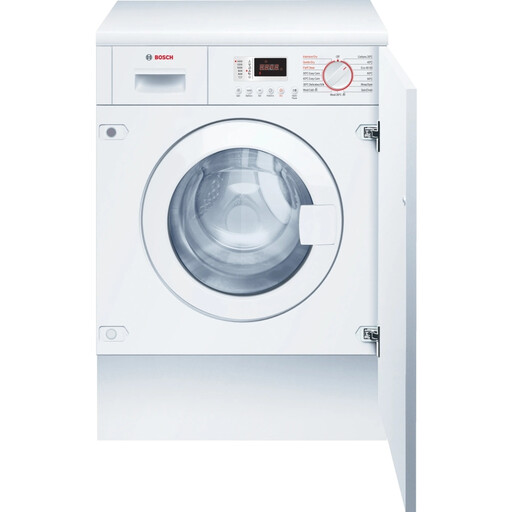
Consider this integrated model if a smaller continuous load suits your covers and you have compatible cabinetry.
The listed capacities are 7 kg for washing and 4 kg for drying. Check the furniture-door arrangement, cover care labels and current availability of this exact model; Bosch marks it as no longer available on its own product page.
 No image available
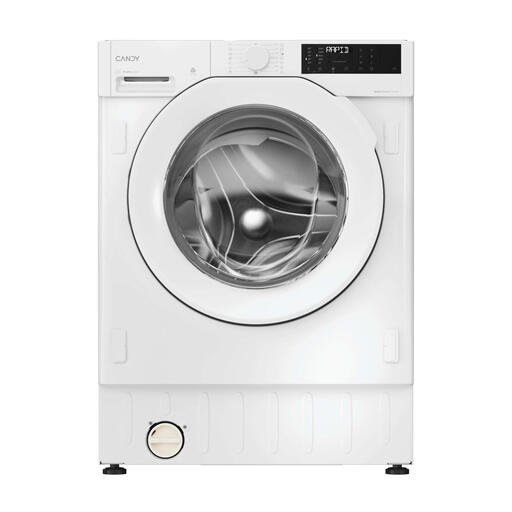
Consider this model if you need an integrated installation and want to assess a 6 kg drying limit against your usual cover load.
Its title lists 9 kg wash and 6 kg dry capacities and a 1400 spin speed. Confirm cabinet and furniture-door fit, and check the programme instructions against your covers’ labels.
 No image available
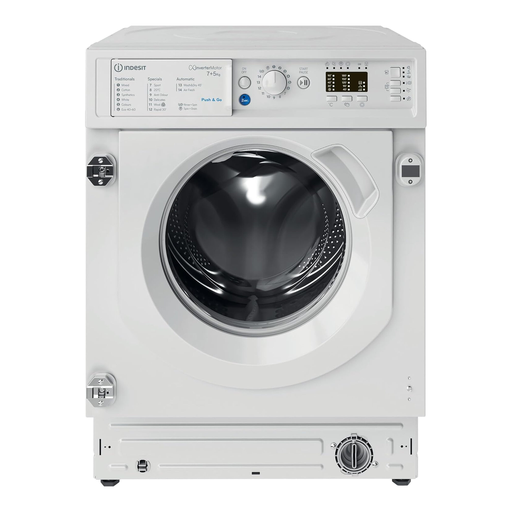
Consider this integrated model if its listed wash and dry capacities suit the number of covers you normally handle.
The title states a 59.5 cm width, 7 kg wash capacity and 5 kg dry capacity. Check the full installation dimensions and furniture-door fit; neither the capacity nor a named cycle replaces the cover’s care instructions.
 No image available
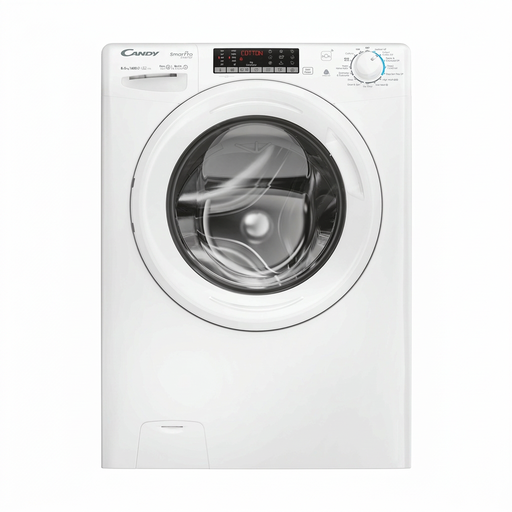
Consider this freestanding model if you do not need a furniture door and its drying limit accommodates your eligible covers.
The title lists 8 kg wash and 5 kg dry capacities and a 1400 RPM spin speed. Allow room for the door, connections and required installation clearances, and check the cover labels before selecting a cycle.
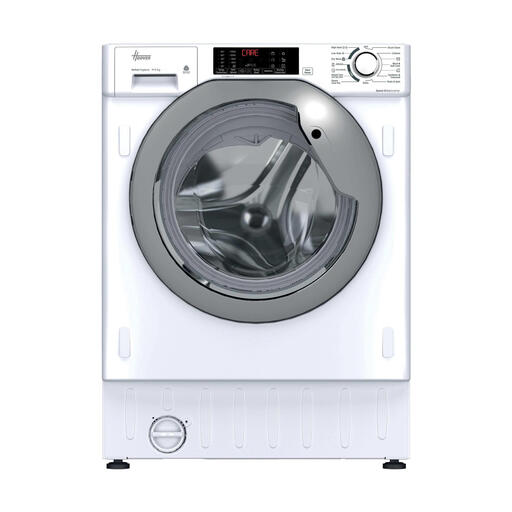 No image available
Consider this integrated model if its 5 kg drying limit suits the covers you intend to dry in one load.
The title lists a 9 kg wash capacity and a 5 kg dry capacity. Confirm the cabinet opening and furniture-door arrangement, then match the available programmes to each cover’s care label.
No: permission to machine-wash a cover does not automatically permit tumble drying. Check its label for the permitted temperature, wash action and drying method, including any restrictions arising from its backing or trims.
The figures describe different stages, so a model can accept more for washing than for drying or a continuous wash-and-dry cycle. Check the exact model’s complete-cycle limit if you want to leave eligible covers in the machine for both stages.
Measure the usable height, width and depth, accounting for pipes, plugs and the open door. As a general guide, allow around 25 mm at either side and roughly 50–150 mm at the back for ventilation and connections; follow the shortlisted model’s own installation instructions for its requirements.
Compare the energy label and product information for the exact model and the cycles you expect to use. GOV.UK provides guidance on Great Britain energy labelling; an energy-class headline alone does not describe how often you will wash only rather than wash and dry.
Follow the maintenance instructions for the exact washer-dryer. Bosch’s washer-dryer support guidance, for example, says to clean the dust filter after each use; do not assume another model has the same arrangement.