
24/7 Customer Support

Free returns

Same-day & Next-day Delivery

Quality Guaranteed

Unlock Your Welcome Offers: FREE Delivery | Up to 80% OFF | Free 30-day JoyPlus trial
Download the APP
Living in the UK often means making clever use of the space we have. For many of us in flats or homes without a dedicated utility room, finding a spot for both a washing machine and a tumble dryer is simply not an option. This is where the washer dryer comes in, offering a two-in-one solution that saves space, time and the hassle of moving wet laundry from one machine to another.
However, the market is filled with different models, features and technical jargon. As the Joybuy Product Recommendation Officer, my role is to help you navigate these options. This guide cuts through the clutter, focusing on the practical information you need to choose a washer dryer that fits your home, lifestyle and budget.
Before looking at specific models, it’s helpful to understand the key factors that will influence your decision.
One of the most common points of confusion is capacity. A washer dryer has two different capacity ratings: one for washing and a smaller one for drying. For example, an 8kg washer dryer will typically have a drying capacity of around 5kg. This means that if you wash a full 8kg load, you will need to remove some items before starting the drying cycle. For larger households, a 9kg washer dryer might be more suitable, offering more flexibility.
Modern appliances come with a host of features designed to make life easier. Here are a few to keep an eye on:
A standard freestanding washer dryer is typically 60cm wide and around 55-60cm deep. While this fits most standard kitchen spaces, if you have a particularly tight spot or shallower worktops, a slim depth washer dryer (often around 45-52cm deep) can provide a perfect fit without sacrificing performance. Always measure your space carefully before purchasing.
Here are a few standout models that cater to different needs and household sizes.
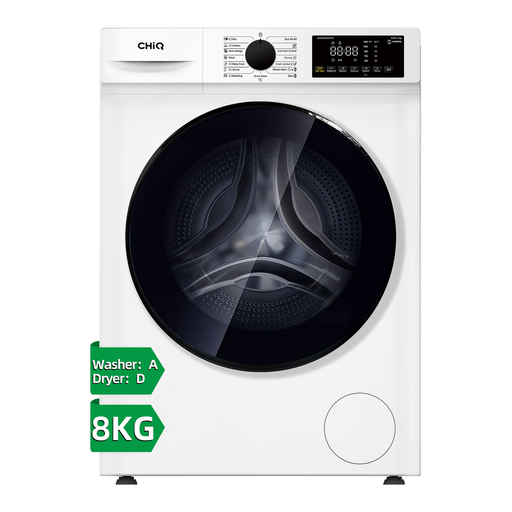
Why It Stands Out: The CHiQ JKW85882HW is a highly practical choice for those prioritising space and quiet operation. Its "Space Pro" design features a slim depth of just 52cm, making it ideal for compact kitchens. The advanced BLDC motor ensures it runs quietly, while the powerful 1400 RPM spin speed removes more water before drying, leading to shorter drying times.
Pros:
Who is it for? This model is an excellent fit for individuals, couples or small families living in flats or homes where space is at a premium and quiet performance is a must.

Why It Stands Out: This Samsung washer dryer combines a large capacity with cutting-edge technology. The generous 9kg wash and 6kg dry capacity can handle the demands of a busy family. Its standout features include ecobubble technology, which delivers a powerful clean at cooler temperatures and a Hygiene Steam cycle. As a smart washer dryer, it connects to the SmartThings app for remote control and cycle recommendations.
Pros:
Who is it for? Perfect for larger, tech-savvy families who need a high-capacity machine with advanced cleaning functions and the convenience of smart control.
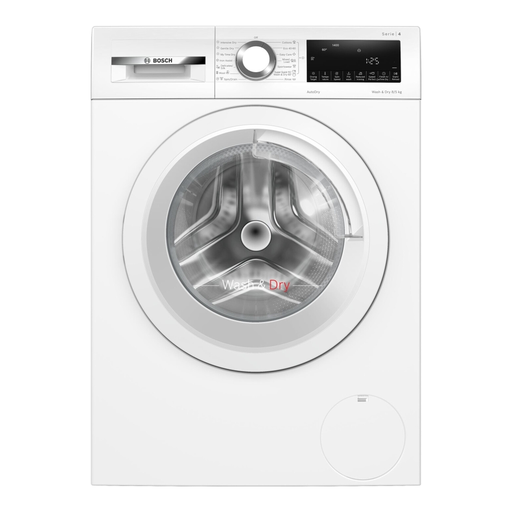
Why It Stands Out: The Bosch washer dryer is engineered for reliability, efficiency and excellent fabric care. The EcoSilence Drive motor is quiet and built to last. Its AutoDry technology uses sensors to stop the cycle precisely when your clothes are dry, preventing overheating and shrinkage. For those who dislike ironing, the Iron Assist steam treatment significantly reduces creases in dry garments.
Pros:
Who is it for? A superb all-rounder for medium-sized households that value fabric care, quiet operation and the reliability associated with the Bosch brand.
These three models represent some of the great choices available, but the right appliance is a personal decision. If you're looking for a different capacity, colour or feature set, there are many other models to consider.
Explore Our Full Range of Freestanding Washer Dryers
1. Are washer dryers as good as separate machines? A washer and dryer combo is an excellent space-saving solution. While drying times can be longer and the drying capacity is smaller than the washing capacity, modern models are highly effective and convenient. For homes without the space for two separate appliances, they are an ideal choice.
2. How much can you actually dry in a washer dryer? The drying capacity is always lower than the washing capacity. For an 8kg washer dryer, the drying limit is typically around 4-5kg. This means you can either wash smaller loads (up to 5kg) to run a continuous cycle or remove about half of a full 8kg wash load before starting the dryer.
3. Do washer dryers use a lot of electricity? Consumption varies by model and cycle. The energy label clearly shows two ratings: one for washing and a separate, higher one for a full wash-and-dry cycle. To keep costs down, look for models with sensor drying (like the Bosch AutoDry), which automatically stops the machine when clothes are dry, preventing wasted energy. Using the high spin speed to extract more water also reduces the work the dryer has to do.