
24/7 全天候客户支持

免费退货

当日/次日达

品质保障

开启新人专享福利: 全场免邮 | 低至 2 折 | 免费试用 30 天 JoyPlus 会员
下载 Joybuy
A new washing machine is a significant household investment. With endless features, technical jargon and fluctuating prices, it’s easy to feel overwhelmed. Many find themselves paying a premium for functions they never use or, worse, discovering a critical flaw only after the appliance is installed. As the Joybuy Product Recommendation Officer, my role is to help you navigate the market and identify the features that genuinely matter for your home.
Before you start browsing, let's look at the common pitfalls that can lead to buyer's remorse:
To make a sound choice, you need to understand what the numbers on the label actually mean for your daily life. Here are the three non-negotiable parameters to check.
The capacity of a washing machine is measured in the dry weight of laundry it can hold. Matching this to your household size is the key to efficiency.
Since 2021, appliances in the UK use an A-G energy rating scale, with A being the most efficient. Choosing an A rated washing machine can lead to significant savings on your electricity bills over the appliance's lifespan. These models use less water and electricity per cycle, particularly on their 'Eco' programmes. While they may have a slightly higher initial cost, the long-term running savings often make them a more economical choice.
Spin speed, measured in revolutions per minute (rpm), determines how much water is extracted from your clothes at the end of a cycle.
A higher spin speed is particularly beneficial if you rely on a tumble dryer, as it will cut down on drying costs.
Instead of a generic list, we've matched specific models to different household needs, helping you find a machine that fits your lifestyle.
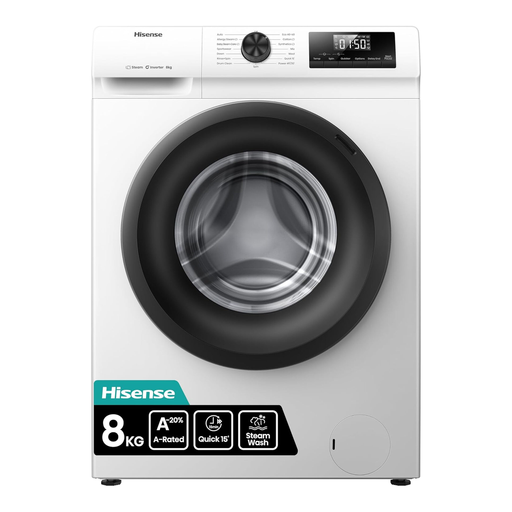
Why This Fits Their Persona: This model is a perfect fit for a first home or a smaller household. The 8kg washing machine capacity is ample for one or two people, and its A rated washing machine status ensures running costs are kept low from day one—a key factor for anyone managing a tight budget.
It avoids the "smart feature surcharge" by focusing on essential, practical functions like a reliable quick wash and a delay timer, rather than costly app integrations you may not use.
Features a durable and quiet washing machine inverter motor, offering great long-term value. The 1400rpm washing machine spin speed reduces drying times effectively.
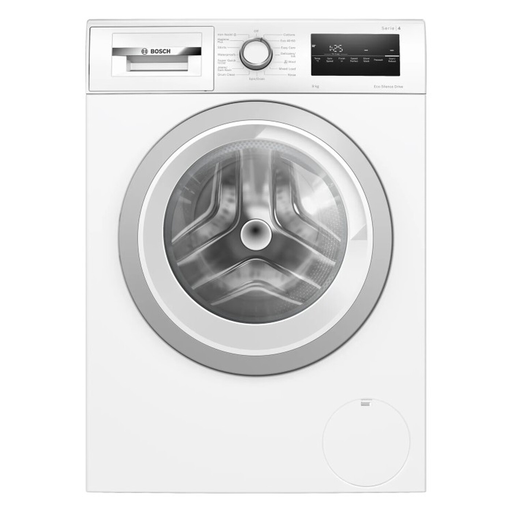
Why This Fits Their Persona: For a growing family, the 9kg washing machine capacity is a lifesaver. This Bosch model combines that with an A rated efficiency and time-saving features. The Iron Assist steam function is a huge plus, reducing the ironing pile by smoothing creases in shirts and school uniforms.
It perfectly solves the "capacity vs. reality" problem for families. It's large enough for big loads, but its ActiveWater Plus technology adjusts water usage for smaller washes, so you never waste resources.
The SpeedPerfect function cuts wash times by up to 65%, and the EcoSilence Drive motor ensures it's a quiet washing machine that won't disturb the household.
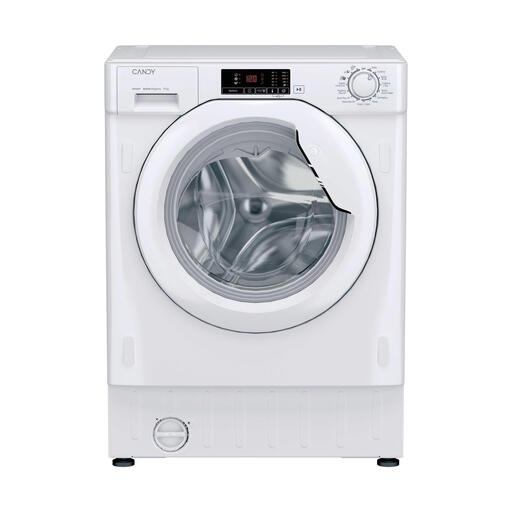
Why This Fits Their Persona: For those with a fitted kitchen, an integrated washing machine is essential for a seamless look. This Candy model hides behind a cabinet door while still offering a large 9kg capacity and a powerful 1400rpm spin, proving you don't have to sacrifice performance for style.
It avoids the "loud noise" pitfall common in open-plan kitchens. The Inverter Motor provides quieter operation, and the Kilo Detector sensor prevents energy waste by adapting the cycle to the load size.
Offers a suite of rapid washes (from 14 minutes) and a dedicated Hygiene Plus programme. The B energy rating is highly efficient for an integrated model of this size.
A freestanding washing machine is a standalone unit with finished sides and a top, designed to be placed in a utility room or a gap in your kitchen. An integrated washing machine is designed to be installed inside a kitchen cabinet and hidden behind a matching cupboard door, creating a seamless look. You will need to supply and fit your own cabinet door to the front of an integrated model.
The running cost depends on your electricity tariff and how often you use it. However, an A rated washing machine is designed for maximum efficiency. Based on the standard Eco 40-60 cycle, many A-rated models use around 40-50 kWh of electricity for 100 cycles. With average UK electricity prices, this translates to a very low cost per wash, making it a financially sound choice for the long term.
The lifespan of a washing machine can vary based on usage, brand and maintenance. Generally, a well-maintained machine from a reputable brand should last between 7 and 10 years. Models with brushless or inverter motors often have longer warranties on the motor itself (sometimes 10 years or more), as these parts have fewer points of failure than traditional brushed motors. Regular cleaning of the filter and detergent drawer can also help prolong its life.