
24/7 Customer Support

Free returns

Same-day & Next-day Delivery

Quality Guaranteed

Unlock Your Welcome Offers: FREE Delivery | Up to 80% OFF | Free 30-day JoyPlus trial
Download the APP
A quality mattress is one of the most important investments you can make for your home and well-being. It’s the foundation of a good night’s sleep. Yet, it’s constantly at risk from life’s little accidents—a spilled morning coffee, a child’s nighttime mishap, or even just the gradual accumulation of sweat and allergens. A waterproof mattress protector is not just an accessory; it's essential maintenance for your mattress, safeguarding it from stains, moisture and wear.
For families with young children, pet owners, or those managing incontinence, the need is clear. But even if you don't fall into those categories, a protector offers a crucial hygienic barrier, helping to create an anti-allergy mattress protector environment by blocking dust mites and other allergens. With so many options on the market, finding the right one can feel overwhelming. This guide is designed to cut through the clutter, offering practical advice to help you choose a protector that fits your bed and your life.
Before looking at specific products, it’s helpful to understand the key features that differentiate one protector from another. Considering these points will ensure you find a cover that is both effective and comfortable.
The way a protector attaches to your mattress significantly impacts its performance and convenience.
The original waterproof covers had a reputation for being noisy and causing overheating. Modern materials have largely solved this problem.
To maintain a hygienic sleep environment, your protector will need regular cleaning. A machine washable bed cover is non-negotiable for most households. Always check the care label, as washing and drying instructions can vary. The ability to wash at higher temperatures (e.g., 60°C) can be particularly useful for eliminating bacteria and allergens.
Based on key features like material, fit and user-friendliness, here are some standout options to consider for your home.

Why It Stands Out: This protector combines the security of a fully fitted sheet with the added comfort of a soft, quilted surface. Its deep pocket design makes it a reliable choice for a wide range of modern mattresses.
Pros:
Who is it for?: Ideal for those with deep mattresses who want a secure, full-coverage fit and appreciate an extra layer of quilted comfort.
View Product Details on Joybuy.co.uk

Why It Stands Out: With a surface made from 100% cotton, this protector prioritises breathability and a natural feel. Its ultra-thin, crinkle-free design ensures protection without altering the comfort of your mattress.
Pros:
Who is it for?: A great choice for hot sleepers or anyone who prefers the natural, skin-friendly properties of cotton.
View Product Details on Joybuy.co.uk
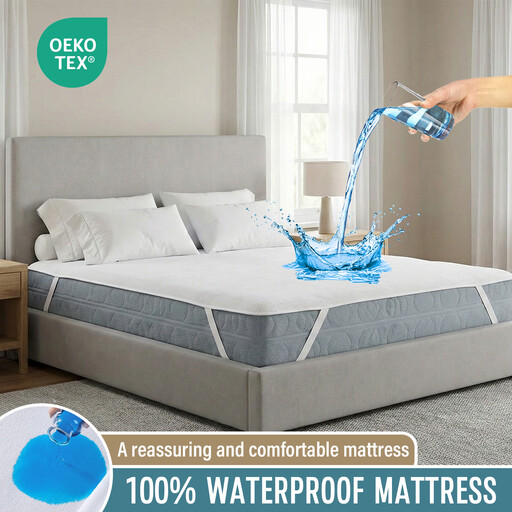
Why It Stands Out: This protector offers a straightforward and effective solution. The soft microfibre surface and simple four-corner strap design make it easy to fit and remove, providing reliable waterproof protection for any standard mattress.
Pros:
Who is it for?: A versatile and practical option perfect for children's beds, guest rooms or anyone looking for a reliable, no-fuss protector.
View Product Details on Joybuy.co.uk
If you haven't found the perfect fit for your needs or want to see protectors in different sizes and materials, there are many more choices available.
Explore our full range of waterproof bedding
1. Do waterproof mattress protectors make you sweat? While older, plastic-based protectors often trapped heat, modern versions are designed with breathability in mind. Look for a breathable mattress protector with a cotton or advanced microfibre surface and a membrane that allows air to pass through while blocking liquids. This design helps regulate temperature and prevents you from overheating.
2. How often should you wash a waterproof mattress protector? For general hygiene, it's a good practice to wash your mattress protector every one to two months. However, if you have allergies, it’s better to wash it every few weeks to remove dust mites and other allergens. It should, of course, be washed immediately after any spills or accidents.
3. Can you put a waterproof mattress protector in the dryer? Most modern protectors can be tumble-dried on a low heat setting. High heat can damage the waterproof membrane, so it's crucial to follow the manufacturer's care instructions. Air drying is also an excellent and gentle alternative. Avoid using bleach or fabric softeners, as they can degrade the waterproof layer.