
24/7 全天候客户支持

免费退货

当日/次日达

品质保障

开启新人专享福利: 全场免邮 | 低至 2 折 | 免费试用 30 天 JoyPlus 会员
下载 Joybuy
A day at the beach, a kayaking trip down the river or even a typically rainy British festival can quickly turn sour if your smartphone succumbs to water damage. A waterproof phone pouch seems like a simple solution, but the market is flooded with options that often fail to deliver on their promises. As a Joybuy Product Recommendation Officer, my role is to help you see past the marketing jargon and choose a product that genuinely protects your device.
Many people find themselves with a useless, waterlogged phone after trusting a low-quality pouch. Before you buy, be aware of these common purchasing pitfalls:
phone pouch for swimming.To avoid these issues, focus on a few key specifications. These are the non-negotiable features that separate a reliable beach phone protector from a waste of money.
underwater phone case.waterproof phone pouch will feature a robust closure system, usually involving two or three swivel locks or clamps. This mechanical system creates a much more secure and uniform seal that can withstand water pressure far more effectively.Based on these essential criteria, we have matched a few options to different user needs.
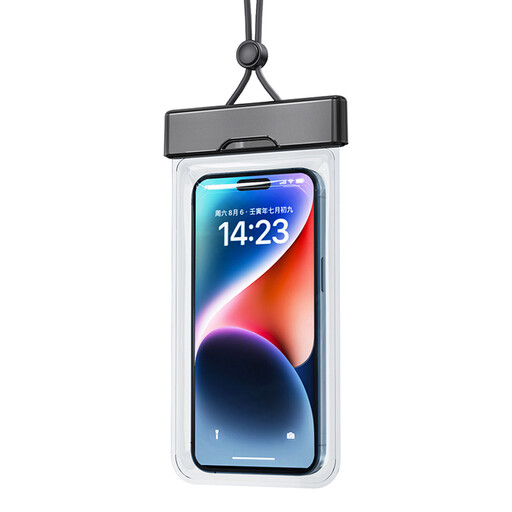
Why This Fits Their Persona: This is an ideal all-rounder for those needing reliable protection from the elements without requiring specialist features. It's perfect for keeping your phone dry during a downpour at a festival or safe from sand and splashes on a beach holiday. It's a practical, no-fuss `sand proof phone pouch` and `festival phone pouch` in one.
It uses a secure locking mechanism, not a simple press-seal, providing a trustworthy barrier against water. The clear window is designed for touchscreen use, avoiding the 'unresponsive screen' problem.
Its universal design fits a wide range of smartphones, and it offers comprehensive protection from water, dust and sand in one simple package.
Why This Fits Their Persona: Anyone enjoying kayaking, fishing or paddleboarding needs a `phone case for kayaking` that floats. For these users, dropping a phone isn't just about water damage—it's about losing it to the depths. A pouch with built-in buoyancy is a must-have.
This type of pouch directly solves the 'sinking pouch' pitfall. An air-cushioned border ensures that if it falls into the water, it will remain on the surface, ready for retrieval.
The primary benefit is buoyancy. These models are also often brightly coloured for high visibility in the water and made from tough, abrasion-resistant materials.
Why This Fits Their Persona: For snorkelling or shallow dives where photo quality is key, a flexible `universal waterproof phone bag` can be limiting. A hard case provides superior structural integrity and often features a high-clarity, optical-grade lens port for sharper images.
It bypasses the 'unresponsive screen' issue entirely, as many models use external physical buttons to operate the camera shutter, which is more reliable than a capacitive touchscreen underwater.
Offers maximum physical protection against pressure and impact. The dedicated camera controls and superior optical clarity make it the top choice for underwater photography.
We have compiled a complete, real-time list of products that fully satisfy these strict selection criteria and UK safety regulations.
Before trusting your phone to any pouch, you must perform a simple safety test. Place a dry piece of tissue or paper towel inside the pouch, seal it securely according to the instructions and submerge it completely in a sink or bucket of water for at least 30 minutes. When you remove it, dry the outside of the pouch thoroughly before opening it. If the tissue inside is perfectly dry, the pouch is safe to use.
Most modern capacitive touchscreens do not function reliably underwater, as the water conducts electricity and confuses the screen's sensors. For taking photos or videos, the best practice is to start your recording or open your camera app before you submerge the phone. Many users find that the physical volume buttons on their phone can be used to snap photos while in the pouch.
The lifespan depends on the material and frequency of use. For a heavy user who is frequently at the beach or in the water, it is wise to inspect the pouch for any signs of wear, clouding or damage to the seals before every use. We recommend replacing a heavily used pouch every season to ensure maximum protection. For occasional use, a high-quality TPU pouch can last for several years if stored correctly in a cool, dry place away from direct sunlight.