
24/7 Customer Support

Free returns

Same-day & Next-day Delivery

Quality Guaranteed

Unlock Your Welcome Offers: FREE Delivery | Up to 80% OFF | Free 30-day JoyPlus trial
Download the APP
Moving your baby from a bottle to their first cup is a significant milestone. As you browse the options, you'll find a market filled with promises of spill-proof, easy-sip wonders. However, many parents in the UK discover that the reality can be quite different. A poorly chosen cup can lead to frustration, mess and wasted money. As your Joybuy Product Recommendation Officer, my role is to help you navigate the options and identify the features that truly matter.
Before you add a cup to your basket, be aware of these common purchasing pitfalls:
To avoid these issues, focus on a few key technical specifications. Understanding these will help you select a durable, safe and practical baby training cup 6 months and beyond.
The design of the straw and its valve is the most critical factor in performance. For a baby just learning to sip, a weighted straw cup for baby is a game-changer. The weight at the end of the straw follows the liquid, allowing your child to drink from any angle without having to tilt the cup perfectly. This reduces frustration and encourages independent drinking.
The valve mechanism determines whether you get a leak proof straw cup or a constant drip. Look for cups with pressure-sensitive valves that only release liquid when the baby sips. This design is fundamental to preventing spills when the cup is not in use.
While BPA-free is a crucial safety standard you should always look for, it's become the minimum expectation. High-quality cups will also be free from other potentially harmful chemicals like BPS, Phthalates and PVC. The straw itself should be made from soft, food-grade silicone, which is gentle on a baby's sensitive gums and emerging teeth, yet durable enough to resist chewing.
A baby's first cup should be designed for their hands, not yours. Look for lightweight designs with easy grip handles that are contoured for small fingers. This helps your baby develop the motor skills and confidence to hold their own cup. The capacity is also a consideration; a 200-300ml cup is often a good starting point, providing enough liquid without being too heavy for a 6-month-old to manage.
Instead of a one-size-fits-all approach, we've matched some practical options to specific parental priorities.
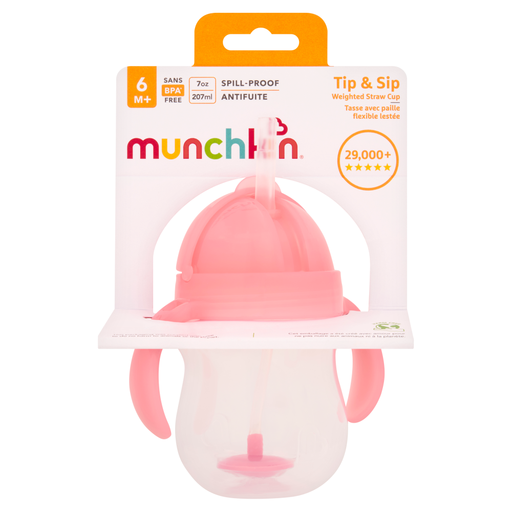
Why This Fits Their Persona: This cup offers all the essential features—a weighted straw, easy-grip handles and a secure lid—at an accessible price point, making it a practical first choice for parents who want functionality without a premium investment.
It directly addresses the "leak-proof promise" pitfall with its Click Lock system, which provides an audible click to confirm the lid is securely fastened and spill-proof.
The weighted straw allows drinking from any angle, reducing frustration for early learners. It also includes a straw-cleaning brush for better hygiene.
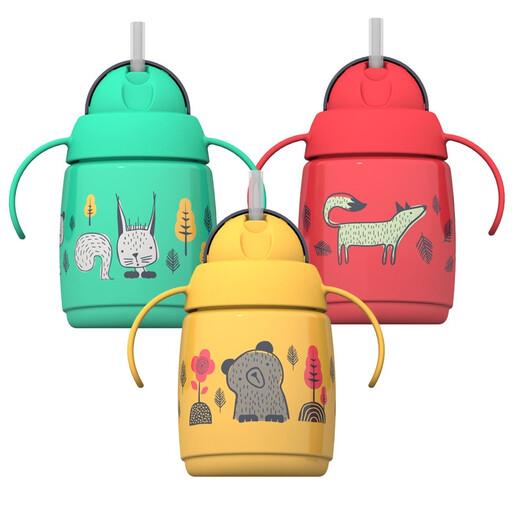
Why This Fits Their Persona: For parents seeking extra peace of mind, this cup integrates additional technology. It's a robust choice for those who value advanced features designed for hygiene and true spill-proofing during active use.
It tackles the "hidden mould trap" with a straw featuring BACSHIELD antibacterial technology. Its INTELLIVALVE is specifically engineered to be shake-proof, countering the typical "leak-proof" claim failures.
The combination of a weighted straw for any-angle drinking and the antibacterial properties of the straw provides a comprehensive solution for both ease of use and hygiene.

Why This Fits Their Persona: This is for the parent whose top priority is ensuring every part of the cup is visibly and thoroughly clean. While recommended for 12m+, its unique design is a standout for those most concerned about hygiene.
It completely eliminates the "hidden mould trap" with a unique straw that zips open, allowing you to scrub the entire inner surface without needing any special, tiny brushes.
Unmatched ease of cleaning. The one-piece, spill-proof valve is also integrated into the lid, simplifying disassembly and reassembly.
We have compiled a complete, real-time list of products that fully satisfy these strict selection criteria and UK safety regulations.
Most paediatric health advisors suggest that babies can start learning to drink from a straw cup at around 6 to 9 months of age. A weighted straw cup is an excellent baby's first cup because it makes the process more intuitive, as they don't need to master tipping the cup correctly to get a drink. Always supervise your baby during this learning phase.
The key is disassembly and thorough cleaning after every use.
Many dental and feeding specialists favour straw cups over traditional hard-spouted sippy cups. Drinking from a straw encourages the tongue to retract and promotes the lip, jaw and cheek muscle development needed for mature swallowing patterns and speech. A spill proof toddler cup with a straw offers these developmental benefits while still providing the mess-free convenience parents need.