
24/7 Customer Support

Free returns

Same-day & Next-day Delivery

Quality Guaranteed

Unlock Your Welcome Offers: FREE Delivery | Up to 80% OFF | Free 30-day JoyPlus trial
Download the APP
Navigating the dog food aisle can feel overwhelming. With so many brands, recipes and formats, finding a meal that is both nutritious for your companion and convenient for you is a common challenge. As the Joybuy Product Recommendation Officer, my role is to help you sift through the options and make an informed choice. This guide offers practical advice and highlights some noteworthy wet dog food options available in 2026 to help you find a suitable match for your dog's needs.
Before diving into specific products, let's cover a few key considerations. Understanding these points will make it easier to interpret labels and choose with confidence.
One of the most important distinctions on a label is whether the food is 'complete' or 'complementary'. A complete wet dog food is formulated to provide all the nutrients your dog needs for a balanced daily diet, without requiring additional food sources. Complementary foods, on the other hand, are designed to be served as a topper or a treat alongside a complete meal. For a primary food source, always look for the "complete" designation.
The packaging format often comes down to convenience and portion size.
The demand for high-quality ingredients has led to a wider range of recipes. Many owners are now seeking natural dog food options, which typically feature identifiable meat, fish and vegetable ingredients without artificial colours, flavours or preservatives. Similarly, grain-free wet dog food has become a popular choice for dogs with specific sensitivities or for owners who prefer a diet higher in meat protein and vegetables. When looking at a recipe, check for a high meat content listed early in the ingredients list.
Here are a few selections that cater to different needs, from convenient multipacks to recipes with specialised ingredients.
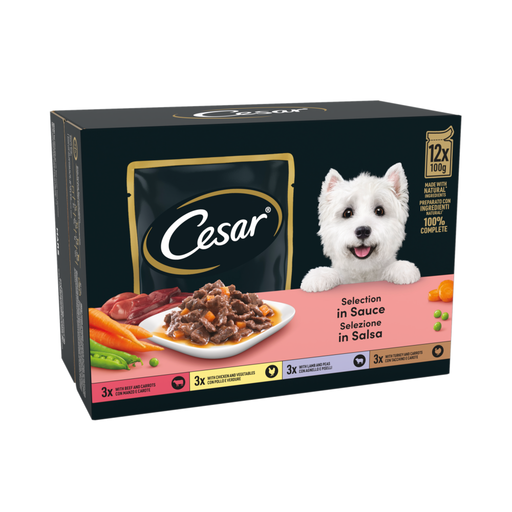
View Product: Cesar Deliciously Fresh Dog Food Pouches Mixed Selection
Why It Stands Out: This multipack offers variety and convenience in pre-portioned pouches. As a 100% complete and balanced meal, it's designed to meet the daily nutritional needs of an adult dog. The recipes are crafted with natural ingredients and served in a sauce that many dogs find highly palatable.
Pros:
Who is it for? This is a practical choice for owners of small to medium-sized adult dogs who value the convenience of single-serve pouches and want to provide a variety of familiar flavours.
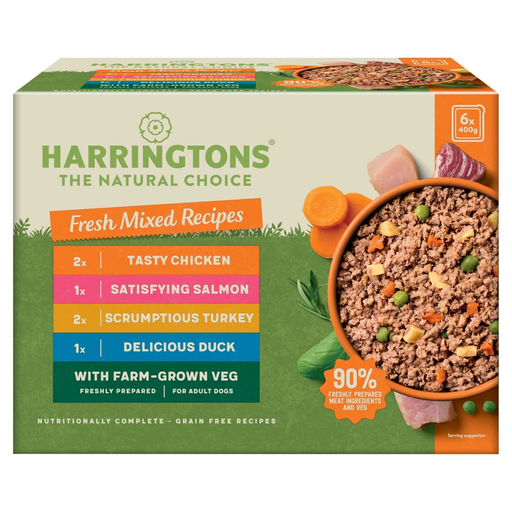
View Product: Harringtons Fresh Mixed Recipes
Why It Stands Out: Harringtons focuses on a high meat content, with this recipe featuring 70% freshly prepared chicken. It is a grain-free formula, using vegetables like potato and carrots instead. The inclusion of salmon oil provides a source of omega fatty acids.
Pros:
Who is it for? This is geared towards owners looking for a grain-free wet dog food with a high percentage of meat. The 400g dog food trays are well-suited for medium to large dogs or for those who feed a mixed diet.
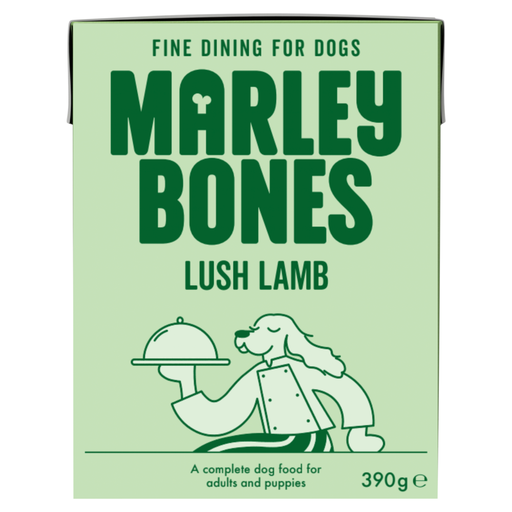
View Product: Marleybones Pantry Fresh Dog Food Lamb & Superfoods
Why It Stands Out: This recipe stands apart with its use of 60% lamb combined with a blend of superfoods like quinoa, chia seeds and hemp seeds. It is gently steam-cooked to help preserve nutrients and is suitable for both adult dogs and puppies over two months old, making it a versatile wet puppy food.
Pros:
Who is it for? This is an excellent fit for health-conscious dog owners seeking a premium, natural dog food with functional superfoods. Its suitability for puppies and adults makes it a great choice for younger dogs or those with sensitive digestion.
The products highlighted here represent just a fraction of the choices available. If you're looking for different proteins, formats or recipes tailored to specific dietary needs, there are many more to discover.
? Explore our full range of fresh dog food to find the perfect meal for your companion.
Yes, many owners practise mixed feeding. Combining wet and dry food can make meals more appealing to picky eaters and adds extra hydration to your dog's diet. It can also be a cost-effective way to incorporate the benefits of both food types. Just be sure to adjust portion sizes accordingly to avoid overfeeding.
The correct amount depends on your dog's age, breed, weight and activity level. All commercially produced dog foods include a feeding guide on the packaging. This is the best place to start. If you have any concerns about your dog's weight or dietary needs, it is always a good idea to consult your vet.
To avoid digestive upset, it is recommended to transition your dog to a new food gradually over 7-10 days. Start by mixing a small amount of the new food with their current food and slowly increase the proportion of the new food while decreasing the old food each day until the switch is complete.