
24/7 Customer Support

Free returns

Same-day & Next-day Delivery

Quality Guaranteed

Unlock Your Welcome Offers: FREE Delivery | Up to 80% OFF | Free 30-day JoyPlus trial
Download the APP
Wet wipes offer undeniable convenience, whether for a quick refresh, makeup removal or personal hygiene. However, the UK market is flooded with options, and not all are created equal. Choosing the wrong product can lead to plumbing disasters, skin irritation or contributing to environmental waste. As a Joybuy Product Recommendation Officer, my role is to help you navigate the choices and avoid common purchasing mistakes.
Before you add a pack to your basket, let's look at the most common pitfalls that catch consumers out.
To make a smart purchase, focus on these core specifications rather than marketing slogans. This will ensure the wipes you choose are effective, safe for your intended use and align with your values.
The material of the wipe itself is the most critical factor, especially for eco-conscious buyers.
For flushable toilet wipes or moist toilet tissue, the only certification that matters in the UK is the 'Fine to Flush' logo. This standard, developed by Water UK, is the country's official test to prove a wipe can be safely flushed down the toilet. Wipes that pass this rigorous test break down quickly in the sewer system, unlike others that may only meet less stringent international or manufacturer standards. Always check the packaging for this specific logo. Even with certified wipes, it is recommended to flush no more than one or two at a time.
Whether you need facial cleansing wipes or wipes for sensitive areas, the liquid formula is key.
Based on these practical criteria, here are some recommendations tailored to different needs and lifestyles.
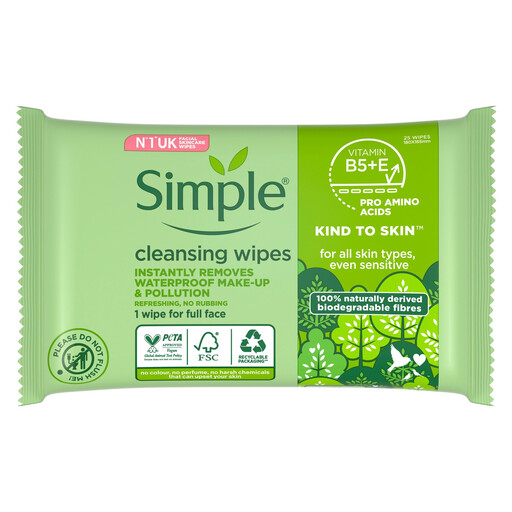
Why This Fits Their Persona: This user prioritises sustainability without compromising on skincare. These wipes are ideal for daily makeup removal and cleansing, with the assurance that they won't contribute to plastic pollution.
It directly counters the "greenwashing" trap by being made from FSC-certified plant-based fibres. The product states it biodegrades in 42 days in compost, offering a clear, responsible disposal route (do not flush).
Infused with skin-friendly ingredients like vitamins B5 and E, it's gentle enough for sensitive skin while being effective on waterproof makeup. It is also vegan and PETA-approved.
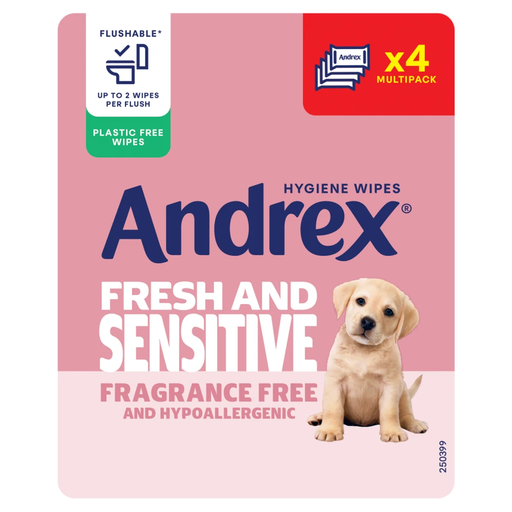
Why This Fits Their Persona: Perfect for a busy family bathroom where different members have delicate skin. They provide a gentle yet effective clean for everyone, from toddlers to adults.
It avoids the "sensitive skin" trap with a 99% water-based, fragrance-free and hypoallergenic formula. It is also endorsed by the British Skin Foundation, providing extra reassurance. It also meets industry flushability standards.
These wipes are plastic-free and come in packaging made with 30% recycled material, adding an element of sustainability. The multipack format offers good value for family use.
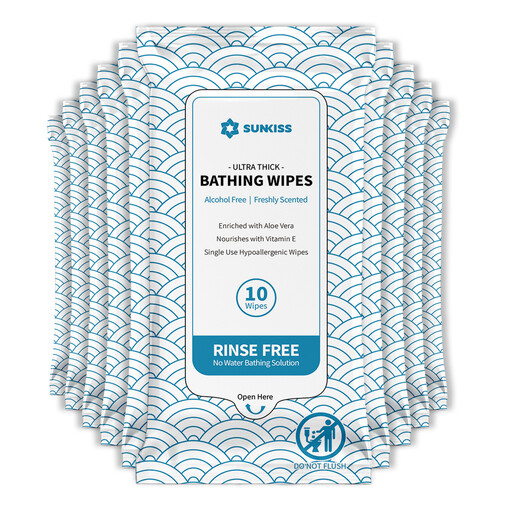
Why This Fits Their Persona: Ideal for campers, festival-goers, gym users or for adult care situations where a shower isn't practical. These large, thick body bathing wipes provide a convenient way to achieve a full-body clean without water.
Unlike small facial wipes that are impractical for body use, these are specifically designed for the task. Their extra-large 8"x12" size and thickness mean one wipe can do the job of many smaller ones, offering better value and less waste.
The formula is enriched with aloe for a soothing feel, making it suitable for sensitive adult skin. The large pack size of 40 wipes is practical for extended trips or regular use.
We have compiled a complete, real-time list of products that fully satisfy these strict selection criteria and UK safety regulations.
1. Can you really flush 'flushable' wipes in the UK? You should only ever flush wipes that carry the official 'Fine to Flush' certification logo on the packaging. This is the only standard recognised by UK water companies as safe for our sewer systems. Even then, you should only flush one or two wipes at a time to prevent blockages. If in doubt, it is always safer to dispose of wipes in a bin.
2. What is the difference between biodegradable and plastic-free wipes? This is a key distinction. Plastic-free wipes are made from natural materials like plant cellulose or cotton, which can decompose fully under the right conditions (e.g., in a compost bin). Biodegradable wipes can, in some cases, still contain plastics that are engineered to break apart into smaller pieces (microplastics) but do not disappear completely. For the most environmentally responsible choice, look for wipes explicitly labelled as "plastic-free".
3. How can I stop my facial cleansing wipes from drying out? The most important step is to reseal the pack tightly after every use. Some brands feature an "aqua-lock" or a rigid plastic closure which is more effective than a simple adhesive tab. Another useful tip is to store the pack upside down; this allows gravity to keep the liquid distributed amongst the top wipes, ensuring the next one you pull out is fresh and moist.