
24/7 Customer Support

Free returns

Same-day & Next-day Delivery

Quality Guaranteed

Unlock Your Welcome Offers: FREE Delivery | Up to 80% OFF | Free 30-day JoyPlus trial
Download the APP
A knock at the door used to be a simple affair. Now, it could be a long-awaited parcel, an unexpected visitor or just a neighbour popping by. Managing your doorstep has become a key part of modern home life, and a wireless video doorbell offers a practical solution. It provides the convenience of seeing and speaking to visitors from your smartphone, whether you're in the living room or on holiday, adding a welcome layer of security and control.
Navigating the market, however, can be confusing. With so many features and specifications, it’s easy to feel overwhelmed. As the Joybuy Product Recommendation Officer, my role is to help you understand the key features that matter for UK homes. This guide will walk you through what to look for and present a few carefully selected options to help you make an informed choice.
Before diving into specific models, let's cover the essential features to consider. Focusing on these will help you find a device that fits your home and lifestyle.
The primary function of a doorbell with a camera and intercom is to see who is at your door clearly. While 1080p (Full HD) is a common standard, a 2K video doorbell offers significantly more detail, which can be useful for identifying faces or reading labels on packages. Equally important is the camera's performance after dark. Some models offer standard infrared night vision (which produces a black-and-white image), while others provide video doorbell with colour night vision, using a small spotlight to illuminate the scene in full colour for better clarity.
The beauty of a wireless video doorbell is its simple, wire-free installation. Most models are a battery powered doorbell camera, which is ideal for renters or anyone who wants to avoid drilling and electrical work. Battery life can range from a few months to over half a year, depending on usage. When choosing, also check the product's IP (Ingress Protection) rating. A weatherproof video doorbell with a rating of IP65 or higher is built to withstand the unpredictable British weather, ensuring reliable operation through rain, wind and cold.
Modern doorbells do more than just stream video. A doorbell with a motion sensor can alert you to activity even if the bell isn't pressed. More advanced models use AI to distinguish between people, animals and vehicles, reducing false notifications. If you use a smart home assistant, look for an Alexa compatible doorbell to integrate it with your existing ecosystem, allowing you to see the video feed on a smart display. Finally, consider whether a video doorbell with a chime is included, as this ensures you'll hear the bell inside your home even if your phone isn't nearby.
Based on the features that offer genuine convenience and security, here are our recommendations. Each one caters to slightly different needs, helping you find a suitable match for your home.
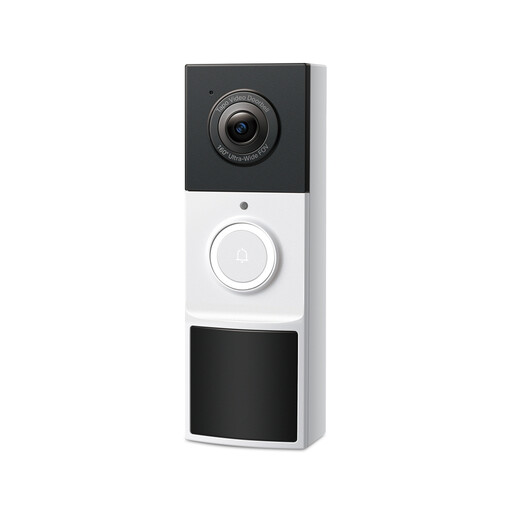
Why It Stands Out: The Tapo D210 strikes an excellent balance between high-end features and user-friendly design. Its 2K 3MP resolution delivers exceptionally clear video, while the 160° ultra-wide field of view ensures you can see visitors from head to toe, as well as any parcels left on the ground.
The inclusion of full-colour night vision, aided by a built-in spotlight, makes it a strong performer in low-light conditions. It also features smart AI detection to differentiate between people, animals and vehicles, sending you more relevant alerts.
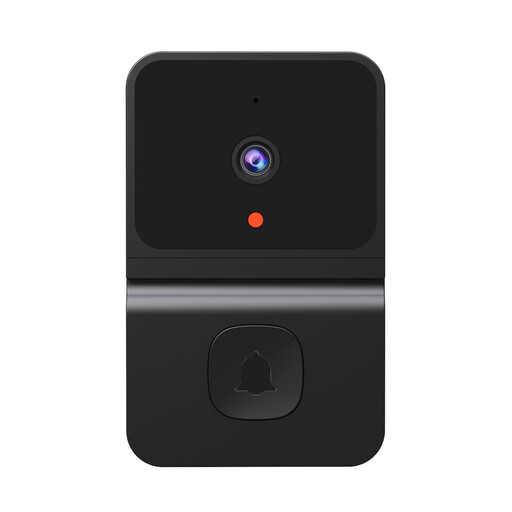
Why It Stands Out: The Rexsun T23 focuses on delivering the core essentials of a home security doorbell in a straightforward and accessible package. It offers live video, two-way audio and instant notifications to your phone, all powered by a rechargeable battery for simple, wire-free setup.
While it uses standard infrared for black-and-white night vision, it provides a clear image after dark. The package includes an indoor chime receiver, ensuring you get alerts even when you're away from your phone.
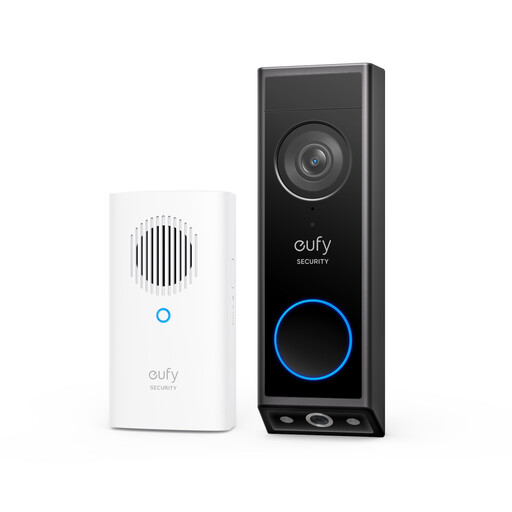
Why It Stands Out: The eufy E340 addresses a common problem with many video doorbells: the blind spot directly below the camera where parcels are often left. It features an innovative dual-camera system—a forward-facing camera for visitors and a downward-facing one for your doorstep.
This model offers 2K Full HD clarity and impressive colour night vision. It also provides flexible power options; you can use it as a battery powered doorbell camera with a quick-release battery pack or connect it to existing doorbell wiring for continuous power.
If the models above don't quite fit your requirements, there are many other excellent devices available. Whether you need specific smart home integrations or a different design, you can find a solution that works for you.
Explore our full collection of Wireless Smart Doorbells to find your perfect match.
1. How long do wireless video doorbell batteries last? Battery life varies by model and usage but typically lasts between 2 to 6 months on a single charge. Factors that affect battery life include the frequency of motion detection, the number of times the doorbell is rung and how often you use live view. Most apps will notify you when the battery is running low.
2. Do I need a subscription for a smart doorbell camera? Not always. Many video doorbells, like the Tapo D210, offer local storage via a microSD card, allowing you to save and view recordings without a monthly fee. Others, like the Rexsun T23, offer optional cloud storage subscriptions, which securely store your videos online for access from anywhere. It's important to check the storage options for each model before purchasing.
3. Are wireless video doorbells difficult to install? No, most are designed for easy DIY installation. A battery powered doorbell camera usually only requires you to mount a bracket to your doorframe or wall with a few screws or strong adhesive tape. The setup process is then completed through a smartphone app, which guides you through connecting the device to your Wi-Fi network.