
24/7 Customer Support

Free returns

Same-day & Next-day Delivery

Quality Guaranteed

Unlock Your Welcome Offers: FREE Delivery | Up to 80% OFF | Free 30-day JoyPlus trial
Download the APP
Navigating the world of advanced car diagnostics can feel like a minefield. You know a basic code reader isn't enough, but the market is flooded with tools making bold claims. As a car enthusiast or a hands-on mechanic, you need a tool that does more than just tell you a fault code exists; you need one that helps you actively find and fix the problem. This is where a bi-directional OBD2 scanner comes in.
However, choosing the right one in the UK involves sidestepping a few common pitfalls that can lead to wasted money and a toolbox full of regret. Before you invest, be aware of these frequent traps:
professional car scanner tools lure you in with a low initial price, only to lock essential features or new vehicle updates behind costly annual subscriptions. A tool that costs ?500 upfront can quickly become a ?1000+ investment over a few years.car diagnostic tool all systems, but this often just means it can read and clear fault codes from various modules (like ABS, SRS and Transmission). It frequently lacks the active test capabilities needed to command components and truly diagnose an issue.To ensure you get a tool that empowers, rather than frustrates, focus on these non-negotiable technical specifications.
This is the single most important feature that separates a professional-grade tool from a simple code reader. True bi-directional control means the scanner can send commands directly to your vehicle's Electronic Control Unit (ECU). Instead of just reading data, you can command the car to perform actions.
For example, you can:
An active test scan tool allows you to confirm if a component is faulty without having to remove it first, saving hours of labour and guesswork.
Modern vehicles require electronic resets for even routine maintenance. A capable automotive scan tool with reset functions should go far beyond a simple oil service light. Look for a tool that explicitly lists the advanced functions you are likely to need, such as:
A diagnostic tool is a long-term investment. To ensure it remains useful, two factors are critical: its update policy and its hardware capabilities. An obd2 scanner with lifetime updates offers significant long-term value, protecting you from the recurring subscription fees that plague many professional brands.
Equally important is support for the latest vehicle communication protocols. CAN FD (Flexible Data-Rate) is used by many newer GM and Ford vehicles, while DoIP (Diagnostics over Internet Protocol) is essential for modern BMW, Volvo and Jaguar Land Rover models. A scanner without these is already behind the times.
We have analysed the market to find tools that balance capability, value and transparency. Here are our recommendations, matched to different user needs.
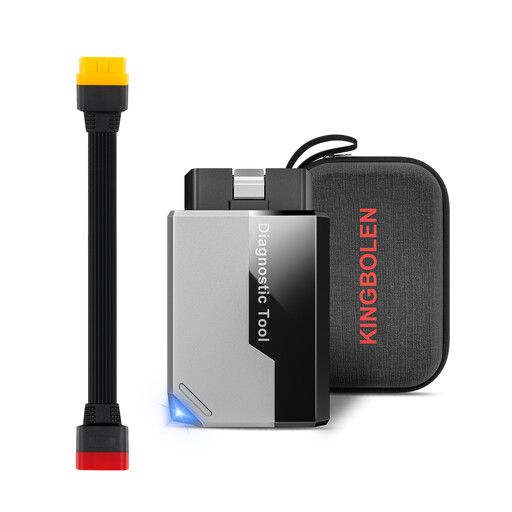
Why This Fits Their Persona: This compact obd2 scanner bluetooth adapter turns your smartphone into a powerful diagnostic tool. It's ideal for the serious enthusiast who wants bi-directional control and key reset functions for their own vehicles or small side jobs, without the bulk and cost of a professional tablet.
It directly confronts the hidden subscription trap by offering lifetime free updates for its 15 reset services and all system diagnostics. It also supports CAN-FD and FCA AutoAuth, avoiding the outdated protocol pitfall.
Offers a strong combination of bi-directional control, 15 common reset functions and a zero-cost update policy, representing excellent long-term value.
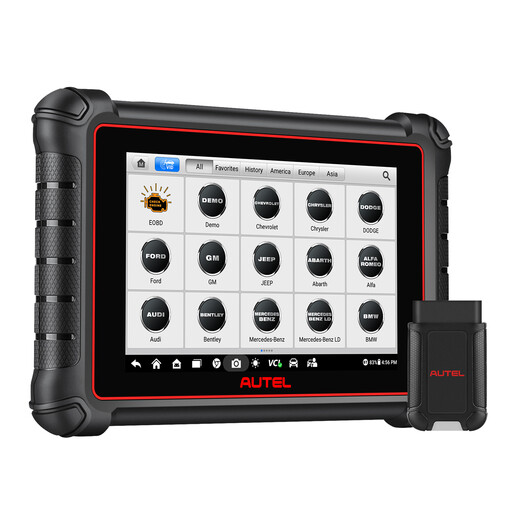
Why This Fits Their Persona: This is a dedicated, tablet-based professional car scanner designed for a workshop environment. Its large screen, wireless VCI and extensive vehicle coverage are built for daily professional use on a wide variety of customer vehicles.
It avoids the outdated protocol trap by including both DoIP and CAN FD support, ensuring compatibility with the very latest vehicles entering the workshop. Its OE-level diagnostics go far beyond the "All Systems" illusion, providing deep functionality.
Offers over 40 service functions and full bi-directional control. The wireless Bluetooth connection provides freedom of movement around the vehicle, and it can be expanded with modules like a battery tester or endoscope.
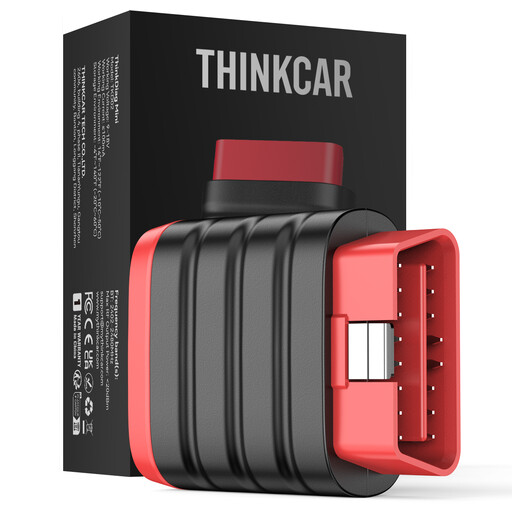
Why This Fits Their Persona: For those taking their first step beyond a basic engine code reader, this tool offers a low-cost entry into full-system diagnostics. It allows you to read codes and view live data from all modules, providing a complete health check of the vehicle.
It is transparent about its capabilities. While it is not a bi-directional tool, it provides genuine full-system code reading and also comes with lifetime free updates for its core diagnostic functions, avoiding any subscription surprises.
An affordable way to access diagnostic data from every system in your car, not just the engine. It's a powerful information-gathering tool for those on a tight budget.
We have compiled a complete, real-time list of products that fully satisfy these strict selection criteria and UK safety regulations.
For the initial setup, app download and software updates, a Wi-Fi connection is necessary. However, for performing diagnostics and active tests on a vehicle, the tool typically only requires a stable Bluetooth connection to your smartphone or tablet. You do not need a constant internet connection in the garage or on the drive.
In the context of diagnostic tools, "lifetime" generally refers to the operational life of that specific product model. It means you will not be charged annual subscription fees for software and vehicle coverage updates for as long as the manufacturer continues to support that device. This provides a significant cost saving and peace of mind compared to subscription-based models.
When used correctly and according to instructions, these tools are very safe. They send commands that are within the vehicle manufacturer's pre-defined operational parameters (for example, commanding a window to go up or down is a standard function). However, for more sensitive procedures like module coding or adaptations, it is crucial to follow the on-screen prompts carefully and ensure your vehicle's battery voltage is stable (above 12V) to prevent any risk of data corruption or misconfiguration.