
24/7 Customer Support

Free returns

Same-day & Next-day Delivery

Quality Guaranteed

Unlock Your Welcome Offers: FREE Delivery | Up to 80% OFF | Free 30-day JoyPlus trial
Download the APP
Modern vehicles are more complex than ever, with dozens of interconnected electronic control units (ECUs) managing everything from the engine and transmission to the headlights and window switches. For professional mechanics and serious DIY enthusiasts, a basic code reader that only pulls engine fault codes is no longer sufficient. To perform effective diagnostics and repairs, you need a tool that can communicate both ways.
This is where a bi-directional scan tool becomes essential. Unlike standard readers, these advanced devices can send commands to a vehicle's modules, allowing you to perform active tests and pinpoint faults with precision. This guide will walk you through the key features to consider and present our top recommendations to help you find the right automotive scan tool for your needs in 2026.
Choosing the right scanner can feel overwhelming. To cut through the jargon, focus on these three practical considerations.
As vehicle technology advances, so do the communication protocols. To ensure your tool isn't obsolete in a year, look for support for the latest standards.
This is the defining feature of a professional-grade tool. Bi-directional control, also known as an active test scanner, lets you send commands directly to vehicle components. Instead of just reading a sensor value, you can actively test the component itself. For example, you can:
This capability dramatically reduces diagnostic time by allowing you to confirm if a component is faulty without having to remove it first.
A truly professional tool must be an OBD2 scanner full system device. This means it can access and diagnose not just the engine (ECU), but all other modules, including the ABS, SRS (airbag), transmission, body control module (BCM) and more. Furthermore, consider the software update policy. Some tools require annual subscriptions to maintain full functionality, while others offer lifetime free updates for core diagnostic features and resets, which can represent significant long-term value.
As the Joybuy Product Recommendation Officer, I've filtered through the market to identify scanners that offer a strong combination of features, vehicle coverage and value for UK users.
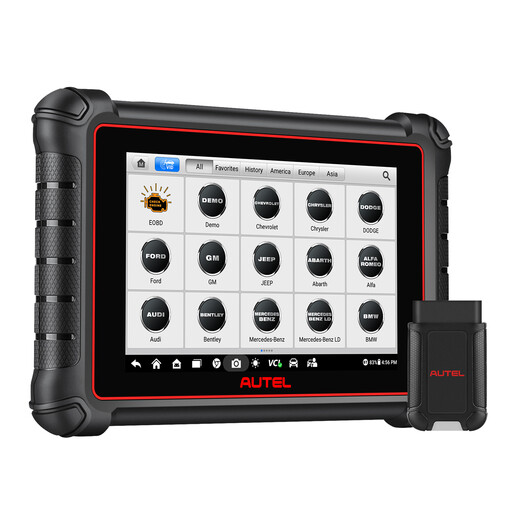
Why It Stands Out: The Autel MK900-BT is a comprehensive, tablet-based tool designed for the demands of a professional workshop. It combines a user-friendly Android 11 interface with powerful OE-level diagnostics. Its wireless VCI (Vehicle Communication Interface) provides freedom of movement around the vehicle and it comes ready with built-in DoIP and CAN FD protocol support, eliminating the need for extra adaptors.
Pros:
Who is it for? This tool is an excellent fit for small to medium-sized garages and highly experienced technicians who require a single, powerful device for diagnosing a wide range of US, Asian and European vehicles.
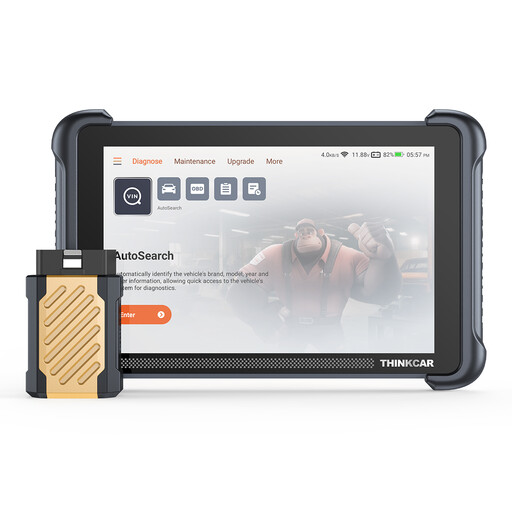
Why It Stands Out: The ThinkScan 689BT strikes an impressive balance between advanced functionality and long-term value. Its standout feature is the lifetime free update service for its 34+ reset functions and full system diagnostics. This makes it a compelling option for those looking to avoid ongoing subscription fees. It also packs professional features like ECU coding and bi-directional control into a robust Android 10 tablet.
Pros:
Who is it for? Ideal for advanced DIY enthusiasts and independent workshops who want a feature-rich ECU coding tool with bi-directional capabilities without the commitment of annual subscription costs.
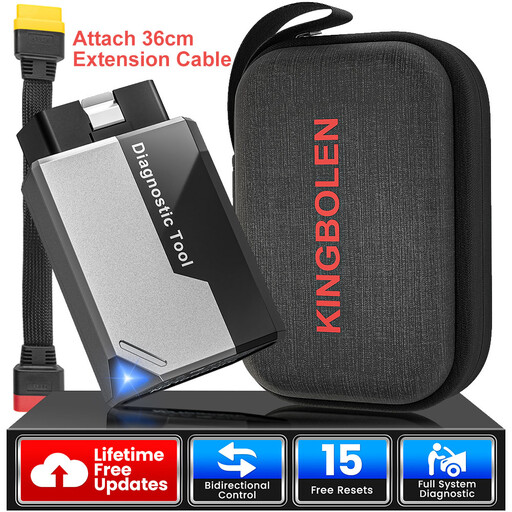
Why It Stands Out: The KINGBOLEN Ediag Elite redefines portability by turning your smartphone (iOS or Android) into a powerful diagnostic tool. This pocket-sized Bluetooth dongle offers full system diagnostics, bi-directional control and 15 of the most common reset functions with lifetime free updates. Its support for CAN-FD and FCA AutoAuth makes it surprisingly capable for its size.
Pros:
Who is it for? This is the perfect tool for mobile mechanics, car enthusiasts who enjoy DIY projects or as a quick-scan secondary device in a professional garage. Its convenience and powerful features make it an excellent value.
Our recommendations cover a range of needs, but the world of automotive diagnostics is vast. If you're looking for different features or price points, explore our complete collection of Car Diagnostic Tools to find the perfect match for your garage.
A standard OBD2 scanner is a "read-only" device. It can pull diagnostic trouble codes (DTCs) and view live data streams from a vehicle's ECU. A bi-directional scan tool can do all of that, plus it can send commands back to the vehicle's modules to perform active tests, such as turning on a fuel pump or cycling an ABS solenoid.
If you plan to work on vehicles manufactured from 2020 onwards, then yes, this support is becoming increasingly necessary. Many modern vehicles from brands like GM, BMW, Volvo and Jaguar Land Rover use these protocols to communicate with their various electronic systems. Without a compatible scanner, you may be unable to perform a full system diagnosis.
Generally, yes. This typically means you will not have to pay an annual subscription fee to continue using the diagnostic software, vehicle coverage and special functions that were advertised at the time of purchase. It's a significant cost-saving feature. However, it is always good practice to confirm the manufacturer's specific policy, as some may charge for adding brand-new, major functions in the future.