
24/7 Customer Support

Free returns

Same-day & Next-day Delivery

Quality Guaranteed

Unlock Your Welcome Offers: FREE Delivery | Up to 80% OFF | Free 30-day JoyPlus trial
Download the APP
Choosing between BIBS soothers, BIBS dummies and BIBS pacifiers can feel surprisingly complicated. Different nipple shapes, materials, sizes and colours may appear similar online, yet they are not interchangeable for every baby or stage.
Marketing can also distract from the practical details. A stylish finish does not tell you whether the teat suits your baby, while a “natural” material may require more careful cleaning. Before buying, focus on three common pitfalls:
The guide below explains the specifications worth checking, followed by product matches for different UK family needs.
BIBS sizing is generally arranged around these stages:
Age guidance is a starting point rather than a guarantee of comfort. Check the product packaging and instructions, and consider moving up as your baby grows. A larger teat or shield should not be introduced simply because it looks more substantial.
A natural rubber latex soother has a soft, flexible feel that some babies find familiar, particularly families introducing a dummy alongside breastfeeding. However, latex can change colour, become sticky or weaken with heat, sunlight and use. It may also cause an allergic reaction in some children.
A silicone baby soother is made from a smooth, food-grade synthetic material. Silicone is generally more resistant to changes in texture and is a practical option for families avoiding latex. It can feel firmer than rubber latex, so your baby may have a clear preference.
Neither material should be treated as automatically suitable for every child. Always inspect the teat before use and follow the manufacturer’s cleaning instructions.
Common BIBS nipple shapes include:
A curved shield with ventilation holes helps reduce the amount of plastic and moisture against the skin around the mouth. This is a useful practical feature, but it cannot prevent every instance of irritation. Wipe away dribble and stop using the soother if redness persists.
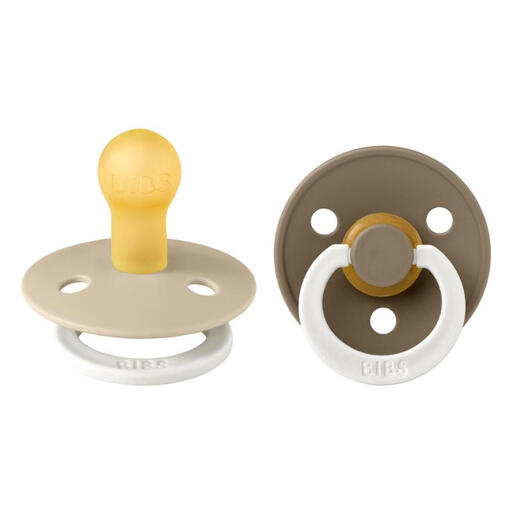
Why This Fits Their Persona: A two-pack gives new parents a spare for the changing bag, pram or bedside table, while the glow-in-the-dark handle can make night-time searching easier.
It makes the material, size and cleaning limitations clear: this is a Size 1 natural rubber latex soother and should not be microwave-sterilised or put in a dishwasher.
Round latex teat, outward-curved shield, ventilation holes and a two-pack format.
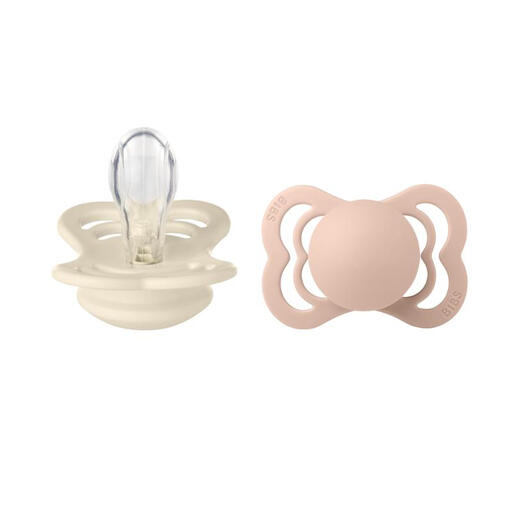
Why This Fits Their Persona: This is suited to parents who want a modern wide-shield design and prefer a latex-free teat for a newborn.
The product specification identifies a food-grade silicone nipple and Size 1 format, rather than relying on vague “natural” wording.
Symmetrical silicone teat, large ventilation openings, BPA-, PVC- and phthalate-free materials, and EN1400+A2 compliance stated in the listing.
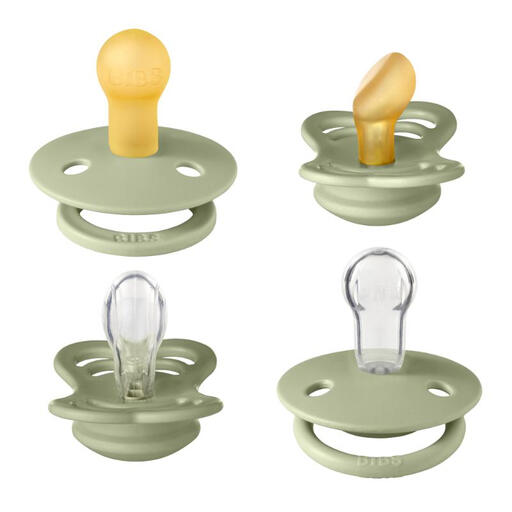
Why This Fits Their Persona: Expectant parents and breastfeeding families can compare round, symmetrical and anatomical shapes alongside latex and silicone before committing to a larger pack.
It reduces the risk of buying several identical dummies that your baby may reject because of shape or texture.
Four Size 1 soothers, three nipple shapes and two teat materials in one collection. Colours may be assorted.
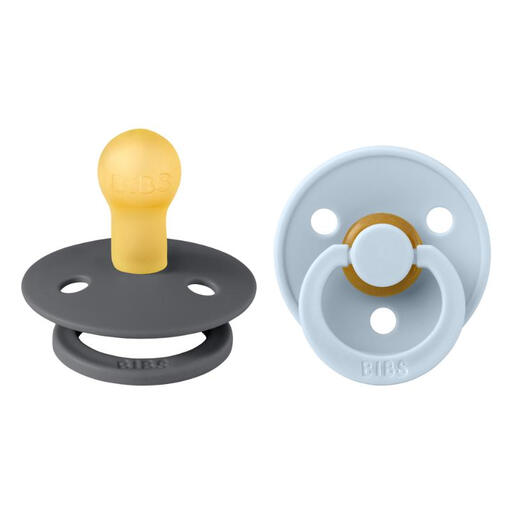
Why This Fits Their Persona: Families managing frequent outings or night-time wake-ups may appreciate a two-pack and the glow handle, provided their baby is at least 6 months old.
The glow feature is practical rather than presented as a safety substitute, and the listing clearly states the Size 2 age guidance and latex cleaning limits.
Glow-in-the-dark handle, round natural rubber latex teat, ventilation holes and two coordinated colours.
We have compiled a complete, real-time list of products that fully satisfy these strict selection criteria and UK safety regulations.
Before first use, sterilise the soother according to its care instructions. Many BIBS latex models are scalded with boiling water for around five minutes, then cooled and dried. Do not use microwave sterilisation or a dishwasher for natural rubber latex unless the product instructions specifically allow it. Silicone models may have different options.
For everyday use:
Some families choose a round, breast-like nipple because its shape feels familiar during feeding. However, babies vary in their response, and no dummy can guarantee a smooth transition or prevent feeding difficulties. Follow advice from your midwife or health visitor if you have concerns about breastfeeding or latch.
The product guidance commonly recommends replacement every four to six weeks, with immediate replacement if damage, weakness, stickiness or enlargement appears. Latex may show wear sooner than expected, particularly if exposed to heat or chewing.
Check the instructions for the exact model and teat material. Natural rubber latex should generally be scalded rather than microwave-sterilised or cleaned in a dishwasher. Food-grade silicone may have more cleaning options, but the product guidance remains the deciding source.