
24/7 Customer Support

Free returns

Same-day & Next-day Delivery

Quality Guaranteed

Unlock Your Welcome Offers: FREE Delivery | Up to 80% OFF | Free 30-day JoyPlus trial
Download the APP
As a cyclist in the UK, you know that visibility is not a luxury—it's a necessity. Whether you're commuting through London traffic on a grey morning or enjoying a country lane as dusk settles, being seen is paramount. A bicycle helmet with a light seems like the perfect all-in-one solution. Yet, the market is flooded with options, and it's easy to fall into common purchasing traps.
Many riders invest in a helmet only to discover its flaws after a few weeks. Before you make a decision, let's look at the three most common pitfalls to avoid:
To ensure your money is well spent on a helmet that is safe, practical and comfortable, focus on these core parameters.
Your helmet's primary job is protection. In the UK and Europe, all cycle helmets must meet the CE EN 1078 standard. This certification ensures the helmet has passed rigorous tests for shock absorption, retention system strength (chin strap) and field of vision.
You may also see other certifications, such as CPSC (the mandatory US standard) or ASTM. While not required in the UK, a certified bike helmet CPSC or ASTM model indicates it has met another stringent set of safety protocols, which can provide additional peace of mind. Always check the product description for explicit mention of EN 1078 certification.
An integrated light is only useful if it works when you need it. Consider these practical aspects:
A helmet you forget you're wearing is a sign of good design. The fit system is crucial. Look for a helmet with an adjustable dial at the back. This allows you to fine-tune the fit with one hand for a snug, secure feel that doesn't wobble.
Ventilation is also key, especially on warmer days or strenuous rides. The number of vents is less important than their placement. Well-designed channels that pull air over your head will keep you far cooler than a helmet with many small, ineffective holes.
To help you navigate the options, we've matched some products to common UK rider profiles.
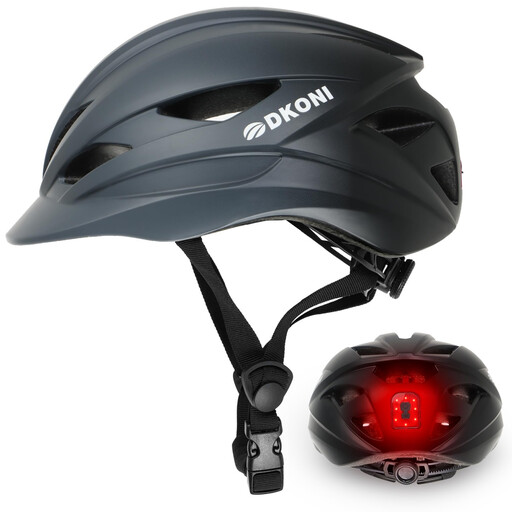
Why This Fits Their Persona: This helmet is a practical choice for the daily commuter who needs reliable visibility without unnecessary complexity. Its focus on core features makes it a dependable workhorse for getting to and from the office or running errands around town.
It avoids the "Bright but Brief" trap with a stated 3-5 hour runtime, sufficient for several days of commuting on a single charge. The adjustable fit system directly counters the "One-Size-Fits-None" issue.
Features a removable USB rechargeable rear light for easy charging. The 15-vent design provides good airflow for comfort during city rides.
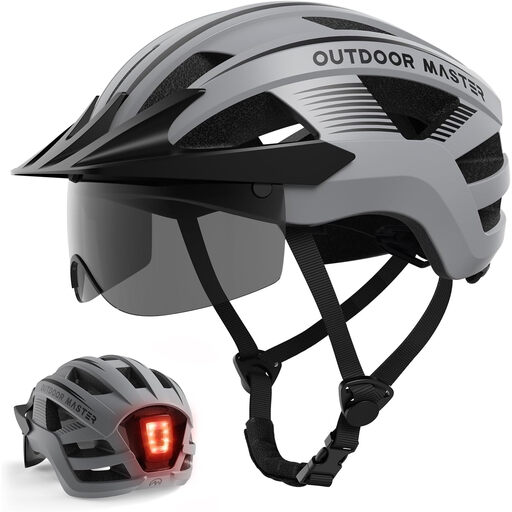
Why This Fits Their Persona: Ideal for the cyclist who rides in varied conditions. The magnetic goggles offer protection from wind, rain and sun glare, making it a versatile choice for year-round road cycling or e-bike journeys where higher speeds are common.
This helmet avoids "Certification Confusion" by explicitly stating it meets both CPSC and ASTM standards, demonstrating a commitment to verified safety. The integrated visor and goggles are practical additions, not just gimmicks.
The key advantage is its modularity, with a detachable bike helmet with visor and light combination. It also features a modern Type-C charging port for the rear light.
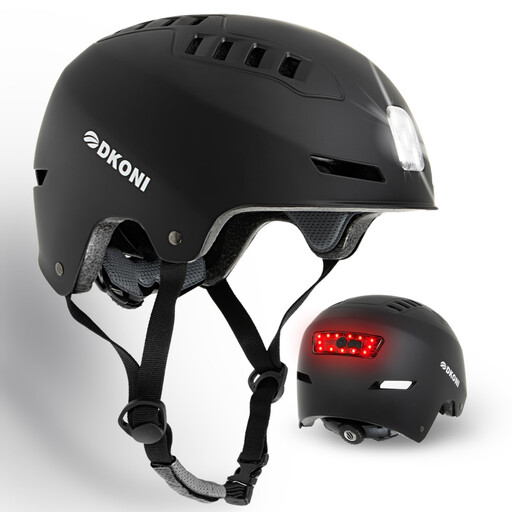
Why This Fits Their Persona: For the rider who prioritises being seen above all else. This helmet is designed for 360-degree visibility, making it an excellent choice for navigating complex junctions and busy roads, especially at night or in poor weather.
This helmet offers a comprehensive solution rather than a single, underpowered light. By providing both front and rear illumination, it delivers on the promise of enhanced safety. It also lists CPSC, CE and ASTM certifications, removing any ambiguity about its protective qualities.
The standout feature is the dual lighting system: 5 white LEDs at the front and 13 red LEDs at the rear with four distinct modes. It also has 20 vents for superior cooling.
An integrated helmet light is a great safety feature, especially when paired with a capable bike. If you're considering an upgrade, an e-bike can make your commute faster and easier.
For a typical adult cycle helmet with led light, you should expect between 3 to 8 hours of runtime on a flashing mode from a single charge. Continuous (solid) modes will use more power and reduce this time. This is generally enough for several days of commuting. Always check the manufacturer's specifications and consider your average ride time.
Most helmets with integrated lights are designed to be water-resistant, not fully waterproof. They should withstand rain and road spray without any issues. However, they should not be submerged in water. The USB charging port is usually covered by a rubber flap to protect it from moisture.
You must replace your helmet immediately after any significant impact, even if there is no visible damage. The internal EPS foam liner is designed to crush to absorb a single impact, and its protective capability is compromised after that. Most manufacturers also recommend replacing your helmet every 3-5 years, as materials can degrade over time due to UV exposure and general wear.