
24/7 Customer Support

Free returns

Same-day & Next-day Delivery

Quality Guaranteed

Unlock Your Welcome Offers: FREE Delivery | Up to 80% OFF | Free 30-day JoyPlus trial
Download the APP
Gone are the days when "tight enough" was a reliable measurement for bicycle maintenance. With modern bikes increasingly using lightweight alloys and carbon fibre components, the risk of costly damage from over-tightening a bolt is higher than ever. A fraction of a turn too far can lead to a cracked frame or a compromised component, turning a simple adjustment into an expensive repair.
This is where a bicycle torque wrench becomes an indispensable part of your toolkit. It allows you to tighten every fastener to the precise specification recommended by the manufacturer, ensuring both the safety and longevity of your bike. This guide is designed to help you understand what to look for in a torque wrench and to highlight a few recommendations that offer great utility for home mechanics.
Navigating the options can be confusing. Here are a few key considerations to help you select the right tool for your needs.
The two main types of torque wrenches you will encounter are click-type and digital.
For bicycle maintenance, you don't need a tool designed for heavy automotive work. Most bike components require relatively low torque settings.
Consider what you already have in your toolbox.
Here are our recommendations for torque wrenches that provide precision and utility for cyclists and home mechanics.
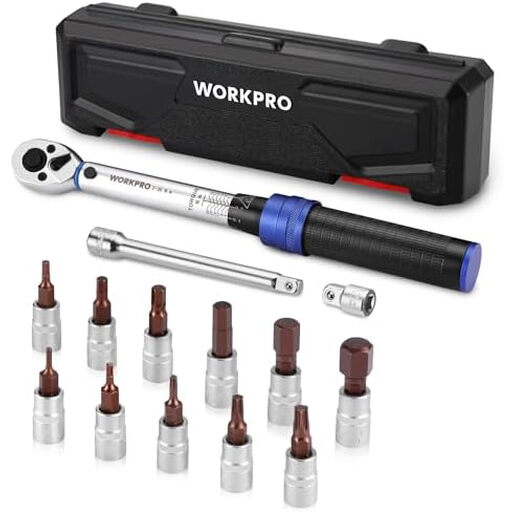
Why It Stands Out: This WORKPRO kit is a classic example of a well-equipped click torque wrench set. Its torque range of 2-26 N·m is ideal for the vast majority of bicycle components, and the inclusion of a comprehensive bit set means you can get to work straight out of the box.
The tool provides clear, tactile feedback when the preset torque is reached, helping to prevent over-tightening. The 72-tooth bi-directional ratchet head is practical for working in tighter spaces.
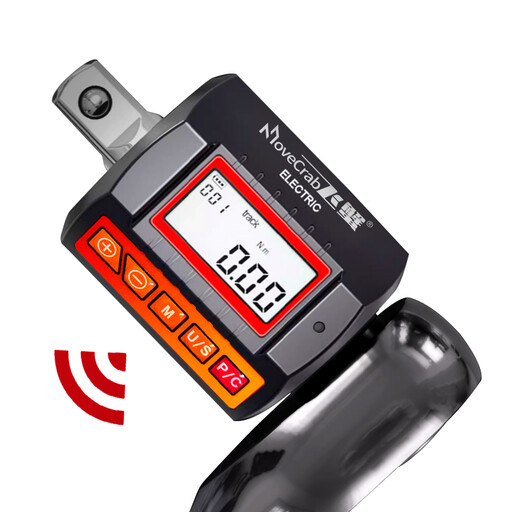
Why It Stands Out: This clever device offers a versatile and space-saving way to achieve digital precision. The MoveCrab digital torque adapter fits between your existing ratchet handle and socket, instantly converting it into a highly accurate torque measuring tool.
Its exceptionally wide torque range of 4.05-135 N·m and included drive adapters (1/2", 3/8" and 1/4") make it suitable for everything from delicate bicycle parts to heavier tasks on a car or motorcycle torque wrench applications.
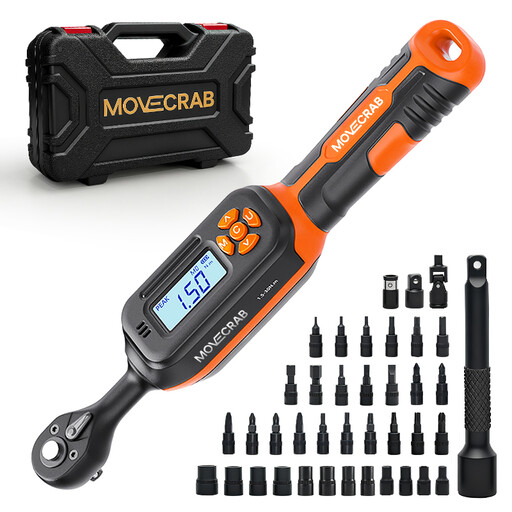
Why It Stands Out: For those who want the ultimate in precision and features, this MoveCrab digital torque wrench set is a comprehensive solution. The wrench itself offers a precise torque range of 1.5-30 N·m, making it perfectly suited for detailed work on high-end bicycle components.
It boasts advanced features like real-time, peak and preset working modes, along with memory for 500 readings. The clear LED screen, combined with audible and visual alerts, makes hitting your target torque simple and error-free. The 40-piece kit includes a huge assortment of bits and sockets, ensuring you're prepared for almost any job.
While these recommendations cover a range of needs, from simple mechanical sets to advanced digital kits, we understand every mechanic's workshop is different. If you're looking for other configurations or specialised tools, you can find more choices in our broader collection.
For a wider selection of maintenance tools, explore our full range of Bicycle Repair Tool Kits.
1. Why do I need a torque wrench for my bicycle? A torque wrench is essential for preventing damage to your bike's components, particularly those made from carbon fibre or lightweight aluminium. It ensures that every bolt is tightened to the manufacturer's exact specification, which prevents stress fractures from over-tightening and ensures parts won't loosen from being under-tightened. This is critical for safety and performance.
2. What torque setting should I use for my bike? You should always refer to the manufacturer's specifications. Torque values are often printed directly on the component itself (e.g., on the stem or seat post clamp). If not, they will be listed in the bicycle's or component's user manual. Never guess or rely on "feel," as this can lead to inaccurate and unsafe results.
3. How should I care for a click-style torque wrench? To maintain the accuracy of a mechanical click-type torque wrench, it is crucial to wind the handle back down to its lowest setting after each use. This releases the tension on the internal spring, preventing it from fatiguing over time and ensuring the wrench remains calibrated and accurate for years to come.