
24/7 Customer Support

Free returns

Same-day & Next-day Delivery

Quality Guaranteed

Unlock Your Welcome Offers: FREE Delivery | Up to 80% OFF | Free 30-day JoyPlus trial
Download the APP
Searching for bikes for sale can quickly become confusing. Wheel sizes, frame measurements, gears and marketing terms often appear together, while important details such as rider weight limits and assembly requirements are easy to miss.
The right choice depends less on appearance and more on where the bicycle will be used, who will ride it and how often it will need maintenance. This guide explains the main buying pitfalls and highlights suitable options for children, casual riders, commuters and those seeking a more capable bicycle for mixed terrain.
Age guidance is useful, but it is not a substitute for checking rider height, inside leg measurement and maximum user weight. Two children of the same age may need different bicycles, while an adult may find a nominally suitable frame uncomfortable.
For example, a 12-inch bike may suit a child around 80–105 cm tall, whereas a 20-inch children’s bike may be more appropriate for an older or taller child. Always compare the manufacturer’s measurements before ordering.
A high gear count does not automatically make a bicycle suitable for every route. Gears add flexibility, but they also require correct adjustment and occasional maintenance. A single-speed bicycle can be easier for a young beginner to operate, while a Shimano 7-speed folding bike may be more practical for an adult dealing with hills and changing urban conditions.
Consider the terrain first. Flat pavements and parks may not require many gears; longer commutes or moderate inclines can benefit from a wider range.
Many bikes arrive partly assembled. Handlebars, pedals, saddles and front wheels may need fitting, and tools are not always included. Incorrectly tightened components can affect steering and braking.
Before the first ride, check the brakes, tyre pressure, wheel security, saddle height and all quick-release mechanisms. If you are not confident with bicycle assembly, a local cycle shop can complete the set-up and make the necessary adjustments.
Wheel size affects stability, handling and the rider’s ability to control the bicycle. Common choices include:
A child should be able to reach the controls comfortably and place their feet securely when stationary. Avoid buying a bicycle that is significantly too large simply to extend its useful life.
Tyre width and tread should match the surface. Narrower tyres can roll efficiently on paved roads, while deeper tread can offer more grip on gravel and uneven paths. A fat-tyre kids’ bike with 4-inch tyres may be designed for sand, mud or loose ground, but its extra weight can make it harder for a child to manoeuvre.
Mountain bikes with suspension forks and knobbly tyres are intended for casual off-road riding and general use. They should not be confused with bicycles designed for downhill riding, large drops or stunt use.
Check the maximum rider weight, including clothing and luggage. The listed limit is a safety specification, not a suggestion. Folding bicycles should also be measured in their folded form to ensure they fit beneath a desk, in a car boot or inside a storage cupboard.
For UK commuting, consider whether the bicycle includes mudguards, whether lights and reflectors are fitted or need to be purchased separately and whether the braking system is appropriate for the route. A helmet that fits correctly and visible lighting are sensible precautions in low-light conditions.
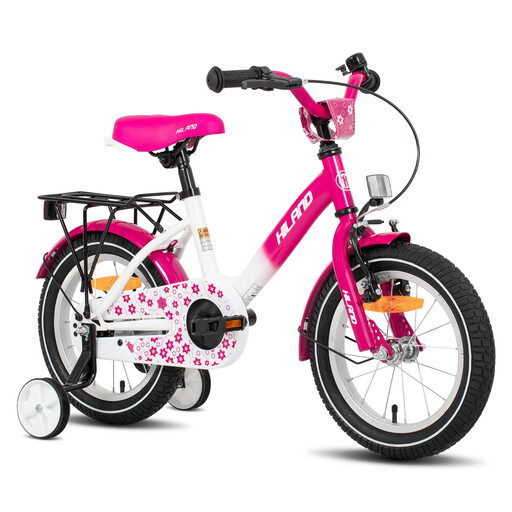
Why This Fits Their Persona: Designed for younger children aged approximately 2–4 years and 80–105 cm tall, this is a straightforward option for first rides in gardens, driveways and suitable parks.
The stated height range, single-speed drivetrain and included training wheels make the specification easier to assess than a vague age-only listing.
Front V-brake and rear coaster brake; chain cover, edge protectors and training wheels included.
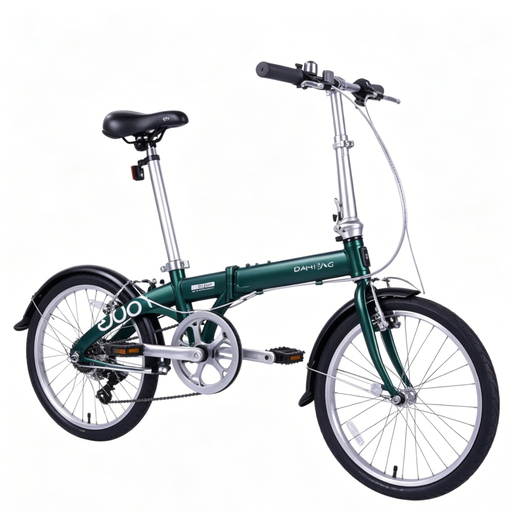
Why This Fits Their Persona: Suitable for adults from 145–190 cm, this lightweight folding bicycle is intended for urban journeys, car travel and compact home storage.
The folded dimensions of 80 x 34 x 66 cm and 11.98 kg weight provide useful information for checking storage and carrying needs.
7-speed Shimano Tourney drivetrain; front and rear mudguards included for wet UK commutes.
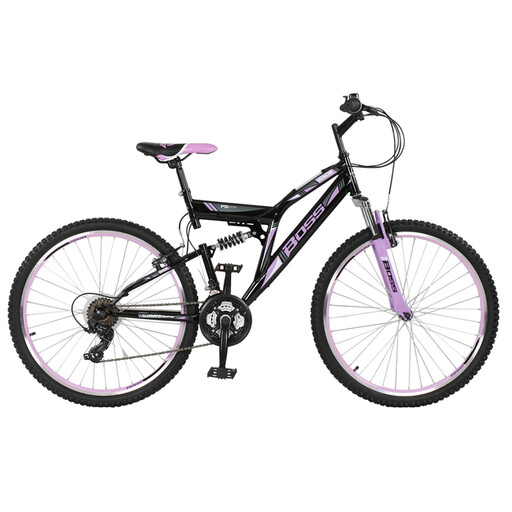
Why This Fits Their Persona: A practical choice for adult casual cyclists seeking adult mountain bikes for gravel paths, parks and general riding rather than extreme trails.
The listing states an 18-inch frame, 157–183 cm height range, 28–32-inch inside leg guidance and a 115 kg maximum rider weight.
21-speed gearing; suspension fork, V-brakes and deep-tread 26 x 1.95-inch tyres.
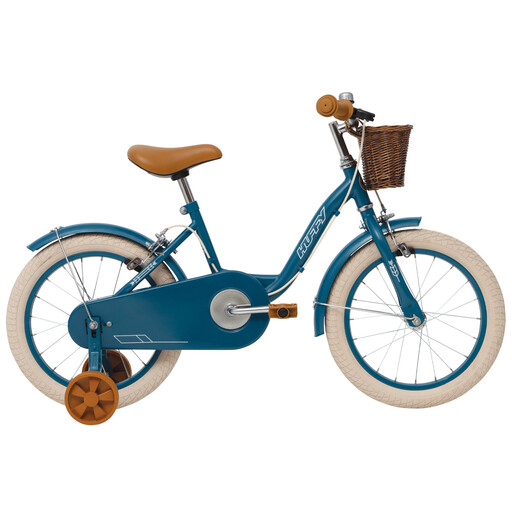
Why This Fits Their Persona: Intended for children aged approximately 5–7 years, it suits families wanting a simple, single-speed bicycle for supervised local riding.
The 35 kg maximum user weight and age warning are clearly stated, helping parents compare suitability rather than relying on styling alone.
Removable training wheels; front basket and front and rear caliper brakes.
Families comparing bikes for boys and girls may also consider the 20-inch junior mountain bike with mudguards and a water bottle holder. For a child who needs wider tyres and multiple gears, the Hiland Roon 20-inch fat-tyre bicycle combines 7-speed Shimano gearing with dual mechanical disc brakes, although its listed approximate weight of 16.8 kg may be substantial for some children.
For riders who prefer a compact commuter bike with included rack and mudguards, the DAHON Hit D6 has a 20-inch wheel, six-speed Shimano drivetrain, folded dimensions of 65 x 34 x 82 cm and a listed weight of 11.54 kg. The DAHON Boardwalk D7 is another compact option, with 16-inch wheels, seven speeds and folded dimensions of 77 x 30 x 63 cm.
We have compiled a complete, real-time list of products that fully satisfy these strict selection criteria and UK safety regulations.
They can be practical where storage and transport matter. Check the folded dimensions, weight, rider height range and maximum load before buying. Mudguards are useful for wet roads, while lights and reflectors may need to be added for low-light travel.
Service life depends on growth, use, storage and maintenance. A bicycle may remain mechanically usable while becoming too small for the child. Check tyre condition, brake pad wear, chain lubrication and frame integrity regularly, and never exceed the stated weight limit.
Confirm that the frame and wheels are undamaged, then fit or adjust the required components according to the instructions. Test both brakes, inflate the tyres to the sidewall recommendation and make sure handlebars, pedals, saddle and folding levers are secure before supervised riding.