
24/7 Customer Support

Free returns

Same-day & Next-day Delivery

Quality Guaranteed

Unlock Your Welcome Offers: FREE Delivery | Up to 80% OFF | Free 30-day JoyPlus trial
Download the APP
Choosing bin bags seems straightforward until a liner slips into the bin, splits when lifted or proves too small for a full week’s rubbish. UK households also need to consider food-waste collection rules, wheelie-bin dimensions and whether environmental wording describes a genuinely suitable disposal route.
As the Joybuy Product Recommendation Officer, I focus on practical product details rather than broad marketing claims. Use this guide to compare refuse sacks, bin liners and rubbish bags by capacity, construction and intended use.
A stated litre capacity is useful, but it does not guarantee a good fit. A tall, narrow kitchen bin may need a different liner shape from a wide pedal bin. A liner that technically holds 50 litres can still pull away from the rim if its width or height is unsuitable.
Before buying, measure the bin’s top circumference or width, its height and the distance needed to fold the bag over the rim. For a wheelie bin, look specifically for wheelie-bin liners rather than assuming a large refuse sack will fit securely.
Descriptions such as heavy-duty bin bags or extra-strong rubbish bags should be checked alongside the material, dimensions and stated use. No ordinary household sack is suitable for hot ashes, chemicals or unwrapped broken glass. Sharp packaging, garden branches and overfilled bags can puncture even a thicker liner.
Strength also depends on how the bag is handled. Leave space at the top, avoid dragging a full sack across rough ground and double-bag jagged waste where appropriate.
These terms are not interchangeable. A compostable bin liner is intended for suitable composting or food-waste systems, subject to local authority requirements. A biodegradable bin bag may break down under particular conditions, while a degradable refuse sack may use an additive and require specific environmental conditions after disposal.
Check the packaging and your council’s guidance before putting any bag into a food-waste or recycling collection. Do not assume a black degradable sack belongs in a home compost heap.
Capacity is not the only measurement. A 75-litre sack with a flush top may fit differently from a 75-litre drawstring bag. Compare the listed dimensions with your bin, allowing enough material to fold over the rim and tie safely.
Drawstring bin bags have integrated handles that can make lifting and tying more convenient. They are useful where the full bag must be carried through a hallway or to an outdoor collection point.
Tie-top refuse sacks provide separate tie handles and are often practical for general household or garden waste. A flush-top sack has a simpler opening and can fit neatly inside a compatible bin, but it may require gathering and tying the material manually.
Polyethylene and HDPE are common plastics used for household refuse sacks. Recycled content can reduce reliance on virgin plastic, but it does not make a bag compostable. For food waste, use a product labelled for composting only where the disposal system accepts it.
Never place hot fat, ashes, hazardous materials or loose sharp objects in standard bin bags. Keep unused plastic bags away from children and pets because of the suffocation risk.
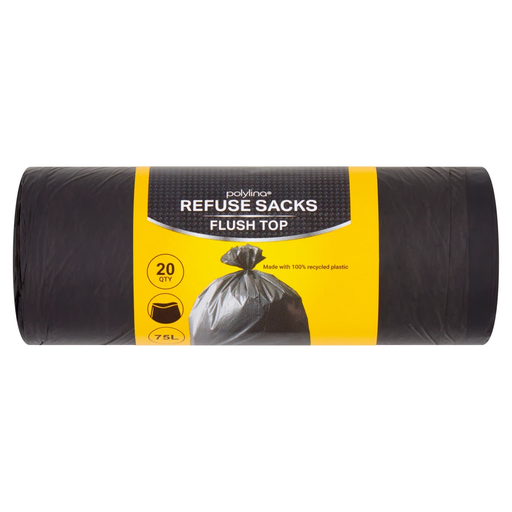
Why This Fits Their Persona: A straightforward option for kitchens, utility rooms and offices needing 75-litre general refuse sacks without a complicated closure system.
The listed 75-litre capacity and flush-top design make fit easier to assess than relying on a vague “large” description.
Pack of 20; polyethylene construction; intended for everyday non-sharp household and office waste.

Why This Fits Their Persona: Suitable for shoppers prioritising a defined 75-litre size, integrated handles and recycled plastic content for regular household or small-business waste.
The product information lists dimensions of 75cm by 86cm, helping buyers compare fit instead of choosing by capacity alone.
Drawstring closure; 10 bags per pack; made from 100% recycled plastic according to the product description.
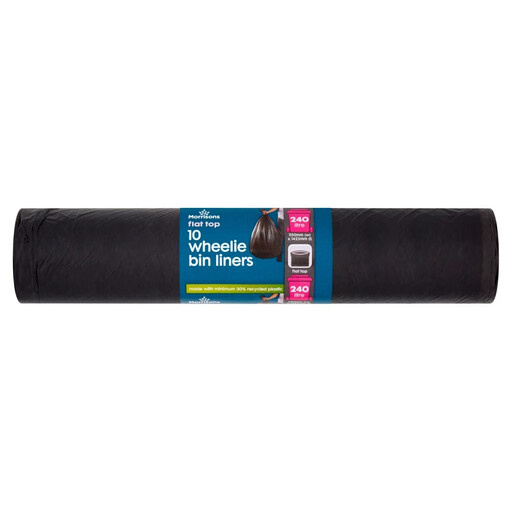
Why This Fits Their Persona: A targeted choice for UK households using standard wheelie bins and wanting a liner made for larger-volume weekly waste.
It is specifically described as a wheelie-bin liner, reducing the risk of forcing a household sack into an unsuitable container.
Flat-top opening; pack of 10; polyethylene construction for everyday household waste.
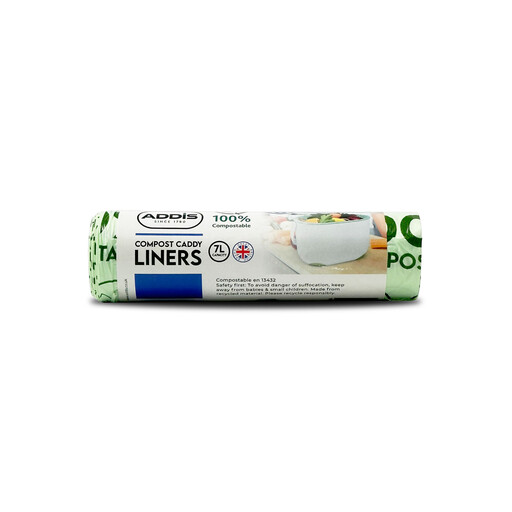
Why This Fits Their Persona: Designed for households separating peelings, coffee grounds and food scraps in a small kitchen caddy.
The description identifies corn starch and composting use, rather than presenting a general degradable refuse sack as a compost liner.
20 liners per roll; approximately 4-litre caddy fit; composting speed depends on local conditions.
We have compiled a complete, real-time list of products that fully satisfy these strict selection criteria and UK safety regulations.
Measure the bin’s height and circumference first. 20-litre bin liners suit compact bins, while 30-litre and 50-litre bin liners are common for taller kitchen bins. Choose a liner with enough extra material to fold over the rim without stretching.
A liner should be replaced when it is full, leaking or beginning to smell. Food-waste caddy liners may need changing every few days, depending on the product and council collection routine. General rubbish bags can last longer in the bin, but leaving wet waste for extended periods may increase odours and leakage.
No. Acceptance varies by council and collection contractor. Confirm the local rules before placing a compostable liner in a food-waste caddy. If the scheme does not accept liners, empty the food waste directly and dispose of the used bag according to its label.