
24/7 Customer Support

Free returns

Same-day & Next-day Delivery

Quality Guaranteed

Unlock Your Welcome Offers: FREE Delivery | Up to 80% OFF | Free 30-day JoyPlus trial
Download the APP
Choosing the right bin bags might seem like a simple task, but a poor choice can lead to split seams, overflowing messes and a bin that constantly needs scrubbing. Many UK households find themselves frustrated by liners that don't fit, tear at the slightest provocation, or make confusing environmental claims. Before you buy another roll, it’s worth understanding the common pitfalls that lead to wasted money and unnecessary hassle.
The most frequent issues often stem from two key areas:
This guide will help you navigate these issues, ensuring your next purchase is the right one for your home, your bin and your budget.
To avoid the common frustrations, focus on three non-negotiable factors: the material, the capacity and the closure type. Getting these right is the key to a reliable waste management system at home.
The material of a bin liner dictates its strength, flexibility and appropriate end-of-life.
While a bag's capacity, such as 50l bin liners, is a useful starting point, it doesn't guarantee a perfect fit. A tall, slim 50-litre bin needs a different shape of liner than a short, wide 50-litre bin.
Always check the dimensions (width and length) of the liner against the dimensions of your bin's opening and height. A good rule of thumb is to choose a liner with a circumference at least 10-15 cm wider than your bin's rim to allow for a secure overhang and prevent it from slipping inside.
How a bag closes can make the difference between a clean disposal and a messy trip to the wheelie bin.
Instead of a one-size-fits-all approach, we've matched specific products to the households that will benefit from them most.
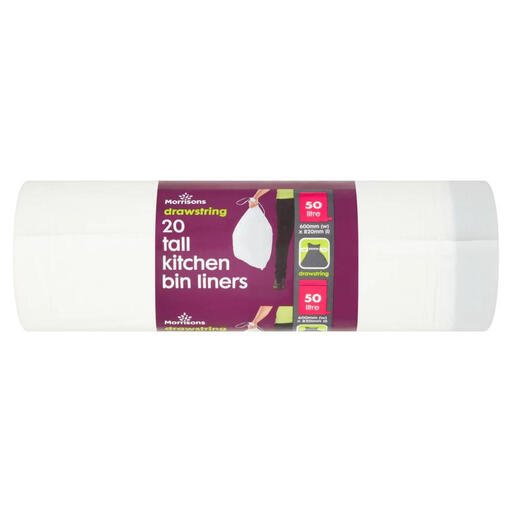
Why This Fits Their Persona: For a high-traffic kitchen that generates daily waste, convenience and reliability are paramount. This liner is designed for standard tall kitchen bins and its closure system simplifies the daily chore of taking out the rubbish.
It directly counters the "false economy" trap. Its durable construction is made to handle everyday kitchen waste without splitting, while the drawstring closure prevents the liner from slipping into the bin—a common issue with cheaper, ill-fitting bags.
The integrated drawstring bin bags closure offers superior hygiene and ease of use. Its 50-litre size is a versatile fit for the most common tall kitchen bins in UK homes.
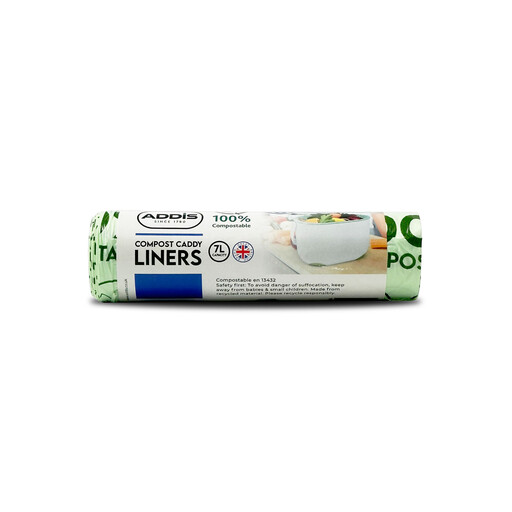
Why This Fits Their Persona: Ideal for households actively separating food waste for council caddies or a home compost system. This liner is designed to make that process cleaner and more hygienic, without contaminating the compost.
This product cuts through the "eco lingo" confusion. It is explicitly made from corn starch and designed to be fully compostable, unlike "degradable" or "biodegradable" bags which are unsuitable for composting and can harm the process.
These are genuine compostable food waste bags that break down with their contents. They keep the kitchen caddy clean and reduce odours, making food waste separation a much tidier habit.
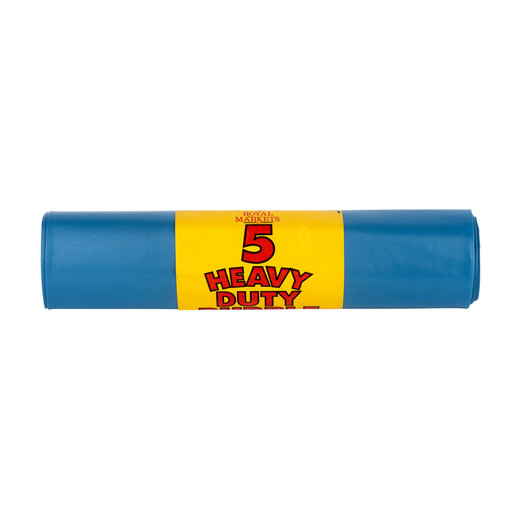
Why This Fits Their Persona: For anyone tackling a home renovation, garden clearance, or a major declutter. Standard kitchen bin liners are not up to the task of holding bricks, soil, plaster, or sharp-edged debris.
This is a purpose-built product that avoids the catastrophic failure of using a weak bag for a tough job. Its tear-resistant construction is specifically designed for the heavy, abrasive materials found in DIY and garden projects.
These are true heavy duty bin bags made from 100% recycled LDPE, offering the toughness needed for construction and garden waste. The roll format makes them easy to store in a garage or van.
We have compiled a complete, real-time list of products that fully satisfy these strict selection criteria and UK safety regulations.
A biodegradable bin bag is made from plastic with additives that help it break down into smaller pieces (microplastics) over time, usually in a landfill. It is not suitable for composting. A compostable food waste bag is made from plant-based materials and is designed to break down completely into organic matter in a compost environment, leaving no harmful residue. Always use certified compostable bags for your food waste caddy.
This is a common problem caused by a poor fit or a heavy load. To prevent it, choose a liner that is wider than the rim of your bin, allowing for a generous overhang. A drawstring bin bag is also an excellent solution, as the drawstring can be pulled tight to grip the rim. Alternatively, large rubber bands or clips designed for bins can hold a standard liner in place.
Yes, in most cases. Heavy duty bin bags and rubble sacks are intended for general waste and can be placed in your general waste wheelie bin for collection by your local council. However, be mindful of weight limits. Most councils have a limit on how heavy a wheelie bin can be, so if you are disposing of very heavy materials like soil or bricks, it's wise to distribute the weight across several bags and collection days, or take it to your local household waste recycling centre.