Dealing with household waste is a daily reality, but choosing the right bin liners can make all the difference. A bag that’s too small, too weak, or not suited to your waste type can lead to frustrating spills, leaks and odours. With so many options available—from small compostable caddy liners to heavy duty bin bags—finding the perfect match for your bin can feel unnecessarily complicated.
This guide is designed to simplify your decision. We will walk you through the key factors to consider when selecting bin bags, from size and material to closure type. We will also present our top recommendations to help you manage your household waste cleanly and efficiently.
How to Choose the Right Bin Liners for Your Needs
Before you add a roll of bin bags to your basket, a little thought can prevent a lot of hassle. Here are a few practical points to consider to ensure you get the right product for your home or business.
1. Match the Liner to Your Bin's Size and Shape
The most common cause of a messy bin situation is an ill-fitting liner. A bag that is too small will slip down, while one that is too large is wasteful and can be awkward to fit.
- Check the Litre Capacity: Bins are measured in litres (L). Check the base or lid of your bin for its capacity. Common household sizes include 5L food waste bags for kitchen caddies, 50L swing bin liners for standard kitchen bins, and larger 75L drawstring bin bags for wheelie bins or commercial use.
- Consider the Shape: A tall, narrow bin requires a different shape of liner than a short, wide one, even if their litre capacity is the same. It is helpful to measure your bin's height and circumference and compare it to the liner's dimensions, which are usually provided in centimetres.
2. Select the Right Material for the Job
The material of your kitchen bin liners determines their strength and environmental impact.
- Standard Liners: Suitable for general, lightweight household waste like paper and packaging.
- Heavy Duty Bin Bags: Made from thicker plastic, these are designed to handle heavier or sharper items without tearing. They are a good choice for garden waste, DIY clear-outs, or busy commercial settings.
- Recycled Bin Bags: These are made from post-consumer recycled plastic, offering a more sustainable option by reducing the demand for new plastic production.
- Biodegradable and Compostable Liners: It is important to understand the distinction. Biodegradable bin liners are typically made from plastic that includes additives to help them break down more quickly than standard plastic. Compostable caddy liners are made from plant-based materials (like corn starch) and are designed to break down completely into organic matter in a composting environment. These are often required for local council food waste collection schemes.
3. Choose a Convenient Closure Type
How a bag closes can impact cleanliness and ease of disposal.
- Tie Top Bin Bags: These have two or four flaps at the top that you tie together. They are a simple and effective solution for securing waste.
- Drawstring Bin Bags: These feature an integrated plastic cord that you pull to close the bag. This makes it easy to tie, lift and carry the bag to the outside bin without mess or contact with the rubbish.
Top Bin Liner Recommendations
Based on common household needs in the UK, here are our recommendations for reliable and practical bin liners.
For Food Waste Caddies: Morrisons 20 Tie Top Bio Caddy Bin Liners 5L
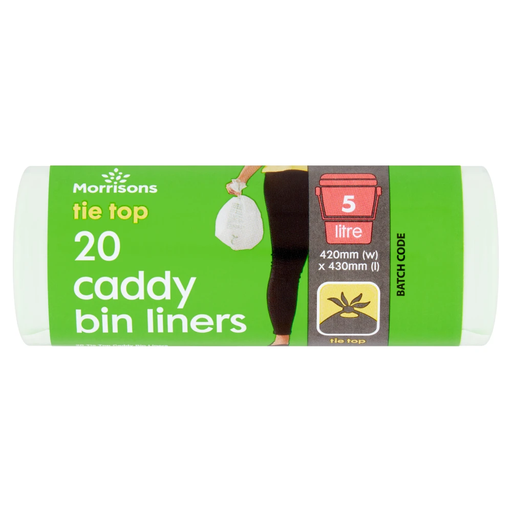
- Why It Stands Out: These liners are specifically designed for managing food waste. Being 100% compostable and biodegradable, they are suitable for most council food waste collection schemes and home composting systems, helping you segregate waste effectively.
- Pros:
- Capacity:5L, ideal for standard kitchen food caddies.
- Material: Fully compostable and biodegradable.
- Closure: Features a simple tie top for secure closure.
- Who is it for? Environmentally-conscious households participating in food waste recycling programmes who need a reliable liner for their small kitchen caddy.
For Standard Kitchen Bins: D2W Swing Bin Liner Drawtape 50L

- Why It Stands Out: These liners incorporate d2w oxo-biodegradable technology, which helps the plastic degrade in the presence of oxygen. This offers a step towards reducing long-term plastic accumulation compared to conventional bags. The drawtape closure is a significant convenience for everyday use.
- Pros:
- Capacity:50L, a perfect fit for most standard kitchen swing bin liners.
- Material: Made with d2w oxo-biodegradable bin liners technology.
- Closure: Convenient drawtape for easy and hygienic sealing and carrying.
- Who is it for? Households looking for a practical liner for their main kitchen bin, with the added benefit of a more responsible material and a secure drawstring closure.
For Heavy-Duty and Large Capacity Needs: Roar 10 Scarily Strong Drawstring Bin Bags 75L

- Why It Stands Out: When you need strength and capacity, these heavy duty bin bags deliver. Made from 100% recycled plastic, they are tear and puncture-resistant, making them suitable for challenging waste. The large capacity and strong drawstring make them ideal for big clear-outs or busy environments.
- Pros:
- Capacity: A generous 75L, suitable for larger household bins, wheelie bin lining, or commercial use.
- Material: Reinforced, tear-resistant plastic made from 100% recycled materials.
- Closure: A robust drawstring for secure tying and heavy lifting.
- Who is it for? Large families, small businesses, or anyone undertaking garden work, DIY projects or office clear-outs that generate heavy or bulky waste.
Looking for Other Options?
If the recommendations above do not quite match your specific needs, there is a wide variety of other sizes, materials and closure types available.
? Explore our full range of liner bags to find the ideal solution for your home or business.
Frequently Asked Questions
What is the difference between biodegradable and compostable bin liners?
While often used interchangeably, these terms mean different things. Biodegradable bin liners are typically oil-based plastics with additives that cause them to break down into smaller pieces over time. Compostable bin liners are made from plant-based materials and are designed to break down completely into non-toxic organic matter within a specific timeframe, but only in a proper composting environment (either at home or in an industrial facility). For council food waste collections, you should always use certified compostable liners.
How do I know what size bin liner to buy?
The most reliable way is to check the litre capacity of your bin, which is often stamped on the bottom or inside the lid. If you cannot find it, you can calculate a rough estimate. For a rectangular bin, multiply length (cm) x width (cm) x height (cm) and divide by 1000. For a round bin, use the formula: π x radius (cm)? x height (cm) and divide by 1000. It is always a good idea to buy liners that are slightly larger than your bin's capacity to ensure they fit over the rim securely.
For general office or bedroom waste, standard liners are usually sufficient. However, for kitchen bin liners that handle wet food scraps, sharp packaging or heavy items, heavy duty bin bags are a worthwhile consideration. They significantly reduce the risk of splits and leaks, saving you the unpleasant task of cleaning up spills. They are also essential for garden waste, DIY debris, or any situation where the contents are heavy or abrasive.


