
24/7 Customer Support

Free returns

Same-day & Next-day Delivery

Quality Guaranteed

Unlock Your Welcome Offers: FREE Delivery | Up to 80% OFF | Free 30-day JoyPlus trial
Download the APP
Navigating the world of bin liners can feel surprisingly complicated. A simple shopping trip can leave you staring at a wall of options, all promising a clean, hassle-free experience. Yet, we’ve all been there: the liner that slips into the bin, the bag that splits on the way to the wheelie bin or the "eco" bag that isn't suitable for your food caddy.
As the Joybuy Product Recommendation Officer, my role is to help you see past the marketing jargon. Before you add another roll of disappointing bin bags to your basket, let's look at the common pitfalls that lead to wasted money and unnecessary mess.
To ensure your next purchase is the right one, focus on these core parameters instead of just the price tag.
While a bin's litre capacity is a useful starting point, true fit comes from its dimensions. For a perfect fit that prevents slipping:
The material dictates the liner's durability and intended use.
How a bag closes can make a significant difference to hygiene and ease of use.
To help you find the right match, here are some recommendations for different household needs, all selected to avoid the common pitfalls.

Why This Fits Their Persona: For households generating high volumes of waste, strength and convenience are paramount. These 75-litre bags handle heavy loads without splitting, and the drawstring closure makes the daily task of taking the rubbish out quick, clean and secure.
It directly counters the "false economy" pitfall. The reinforced, tear-resistant material provides the reliability that cheaper, flimsier bags lack, preventing messy accidents.
The combination of a large 75L capacity, a secure drawstring closure and construction from 100% recycled plastic makes it a practical and responsible choice.
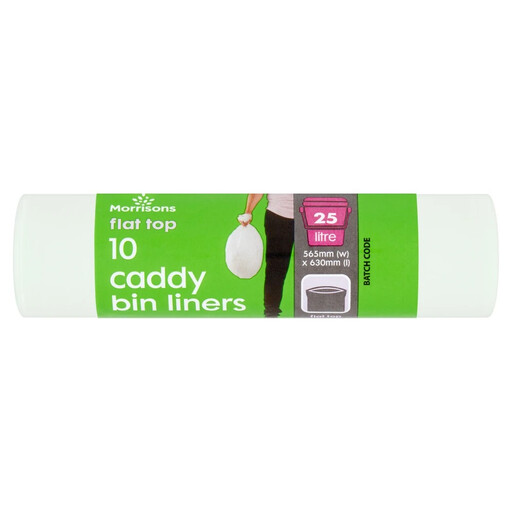
Why This Fits Their Persona: For those diligently separating food scraps for council collection or home composting, using the correct liner is non-negotiable. These are designed specifically for this purpose, helping to keep the caddy clean without contaminating the compost.
This product cuts through the confusing "eco" terminology. It is explicitly described as 100% compostable and biodegradable, making it the correct choice for food waste schemes, unlike standard "degradable" bags.
Its key benefit is its material composition, which is suitable for both home composting and local authority schemes, simplifying responsible food waste disposal.
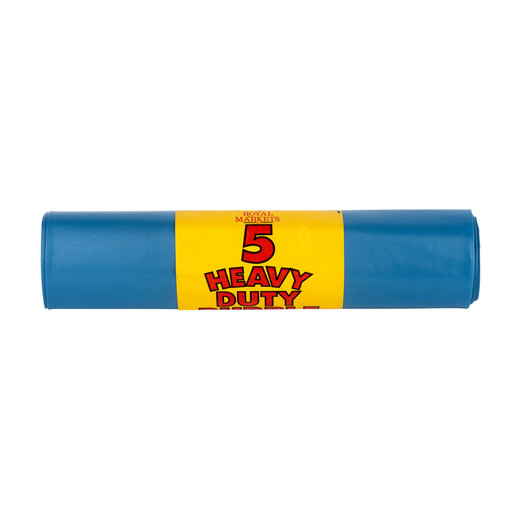
Why This Fits Their Persona: Standard refuse sacks are not built for the demands of a building site or garden overhaul. These heavy-duty rubble sacks are designed to handle sharp, abrasive and heavy materials like bricks, soil and broken tiles without failing.
This is a purpose-built product, not a general-purpose liner. It avoids the pitfall of using a weak bag for a tough job, ensuring safety and preventing the frustrating mess of a split sack of rubble or soil.
The tear-resistant construction from 100% recycled LDPE provides the necessary durability for construction and landscaping waste, making it a reliable choice for tradespeople and DIYers.
We have compiled a complete, real-time list of products that fully satisfy these strict selection criteria and UK safety regulations.
While the litre capacity is a good guide, the most accurate method is to measure your bin. Measure the height and the circumference of the rim. A well-fitting liner should be about 10-15 cm taller than the bin to allow it to be folded over the edge, and its circumference should be slightly larger than the bin's rim to fit comfortably without stretching or tearing.
Generally, no. Unless the packaging explicitly states the bag is "compostable" and ideally shows a certification mark (like the 'seedling' logo), it should not go in your food waste caddy. Most UK councils only accept certified compostable caddy liners for their collection schemes. "Biodegradable" or "degradable" bags can contaminate the composting process and should be placed in your general refuse bin. Always check your local council's specific guidelines.
For everyday kitchen waste, a standard liner is often sufficient. However, for garden waste (twigs, soil), DIY debris (plaster, wood offcuts) or clearing out a garage, heavy duty refuse sacks are a worthwhile investment. Their superior tear and puncture resistance prevents splits and spills, saving you the hassle of cleaning up and the potential need to double-bag with weaker, cheaper liners.