
24/7 Customer Support

Free returns

Same-day & Next-day Delivery

Quality Guaranteed

Unlock Your Welcome Offers: FREE Delivery | Up to 80% OFF | Free 30-day JoyPlus trial
Download the APP
Buying bin bags and liners seems straightforward until a liner slips into the bin, splits during removal or proves too small for the waste inside. UK households, families, small businesses and gardeners often pay more by choosing the wrong capacity or relying on vague descriptions such as “strong” without checking dimensions, material or closure type.
Before ordering, watch for three common pitfalls:
The practical solution is to match the bag to the bin, waste type and local collection arrangements rather than buying solely by pack price.
Measure the bin’s height, width and circumference before selecting a liner. The bag should reach over the rim without excessive stretching, while leaving enough material at the top to close securely.
Common sizes include:
A 75-litre bag measuring approximately 75cm × 86cm, for example, may fit a standard 75-litre bin, but the dimensions should still be compared with the bin opening and height.
The closure affects both convenience and spill control:
Do not overfill any closure type. Leaving room at the top reduces strain on the seams and makes the bag easier to seal.
Heavy-duty polyethylene can offer useful resistance to ordinary tears and punctures, but no plastic sack should be treated as a container for hot ashes, chemicals, liquids or hazardous waste. Wrap broken glass and pointed items securely, and follow your council’s instructions for specialist disposal.
For food waste, compostable caddy liners can make kitchen separation easier. However, acceptance varies between councils and collection contractors. Check whether your local food-waste service accepts certified compostable liners and whether the used bag must go into a dedicated caddy.
A product described as biodegradable bin liners or degradable is not automatically suitable for home composting. For example, d2w liners are specifically described as unsuitable for home composting and recycling, so they should be placed in the appropriate general waste stream. Similarly, recyclable bin bags should only be placed in recycling collections where the local authority explicitly permits them.
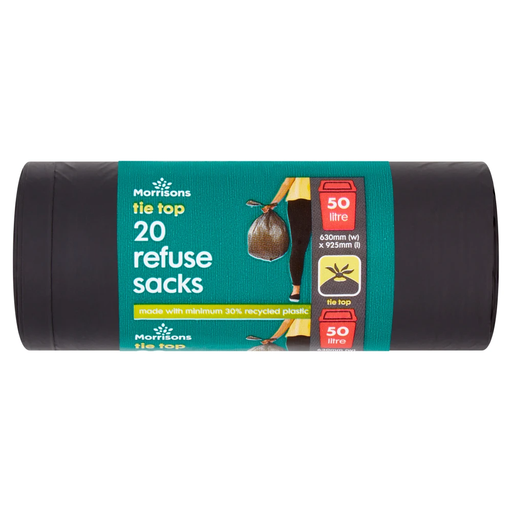
Why This Fits Their Persona: A 20-pack suits households needing a straightforward supply for everyday indoor or outdoor rubbish without adding a specialist closure system.
The tie-top design provides a defined way to close the sack instead of relying on a difficult knot or leaving the top open.
Pack of 20; tie-top closure; suitable for general household waste and indoor or outdoor use.
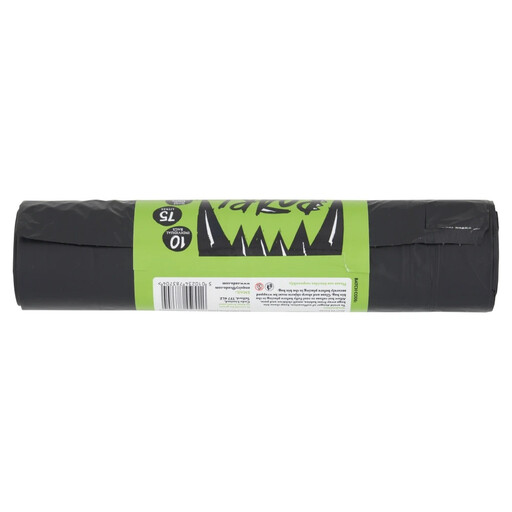
Why This Fits Their Persona: Suitable for busy kitchens, utility rooms and small businesses that prefer a larger capacity with a convenient lifting and sealing method.
The listing specifies a 75-litre capacity, 75cm × 86cm dimensions, reinforced recycled plastic and a seamless base, giving shoppers more useful detail than a generic strength label.
Drawstring closure; 10 bags per pack; made from 100% recycled plastic according to the product description.
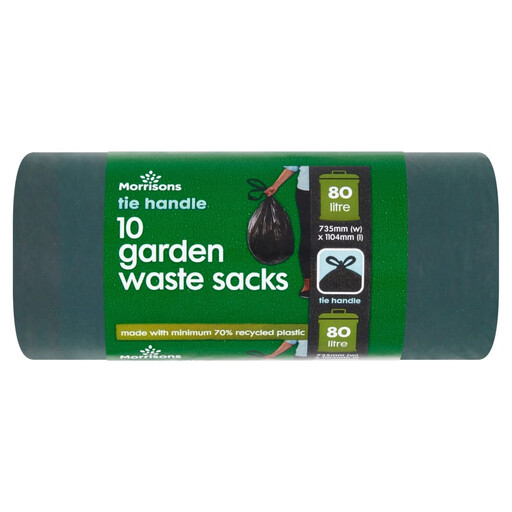
Why This Fits Their Persona: Gardeners and households clearing leaves, grass clippings and other non-hazardous garden debris may value the larger 80-litre format and carrying handles.
The product is clearly positioned for garden waste, helping avoid using a small kitchen liner for bulky but relatively lightweight debris.
80-litre capacity; integrated tie handles; pack of 10; approximately 735mm × 1104mm.
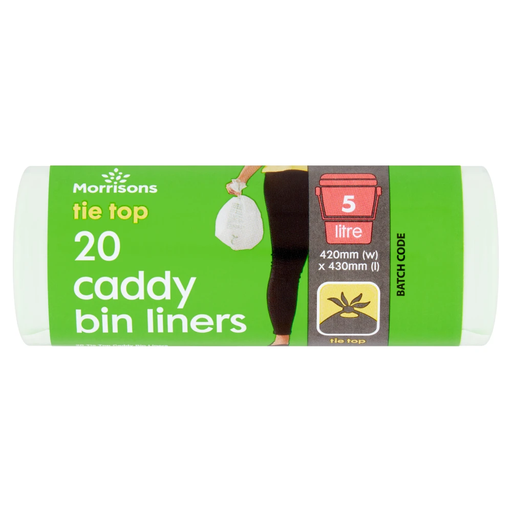
Why This Fits Their Persona: A 5-litre caddy liner is designed for separating food scraps from general rubbish in kitchens that use a food-waste collection service.
Its intended food-waste use is clearer than buying a general-purpose liner and assuming it belongs in a composting or council collection stream.
Pack of 20; tie-top format; product description states the material is 100% compostable and biodegradable. Check local collection rules before disposal.
We have compiled a complete, real-time list of products that fully satisfy these strict selection criteria and UK safety regulations.
Using the correct size can reduce split bags and unnecessary double-lining. Keep a small liner for dry bedroom or office waste, a suitable 30 litre bin liner for a compact kitchen bin and larger 70–75 litre refuse sacks for high-volume general waste.
For wet rubbish, avoid allowing liquid to pool at the bottom. Drain suitable food packaging first, use a caddy for food scraps and do not place hot materials into plastic bags. Store unused liners in a cool, dry cupboard away from direct sunlight, which can affect some plastics over time.
For families and small businesses, compare the number of bags per pack as well as the price. A lower unit price may not represent value if the bag tears frequently or does not fit the bin securely.
Many compact pedal bins use 20 litre bin liners, while taller kitchen bins commonly use 30 or 50 litre bin liners. Measure the bin rather than relying only on its advertised capacity, and allow extra material above the rim for tying.
Not necessarily. “Biodegradable” and “recyclable” refer to different disposal routes. Check the packaging and your council’s guidance. Some degradable liners are intended for general waste and should not enter household recycling or home composting.
Unused bags can remain suitable for a considerable period when stored away from heat, moisture and sunlight, but always follow the product label. Once fitted, replace a liner when it is full, leaking or difficult to remove safely rather than leaving waste in it for extended periods.