Bakers who need grated coconut texture
For coconut biscuits, macaroons or toppings that call for a dry, shredded ingredient, look for desiccated coconut. Coconut milk will not supply those pieces of coconut.


Choose desiccated coconut if a biscuit recipe calls for grated coconut: it is a dry, shredded ingredient, not a form of coconut milk. Use tinned coconut milk when the recipe specifies that liquid, and a carton coconut drink only where a milk-style drink is suitable. Check the recipe wording and the current pack label before baking.
The ingredient named in the recipe matters more than the shared word ‘coconut’: grated coconut and coconut liquids serve different purposes in a biscuit mixture.
For coconut biscuits, macaroons or toppings that call for a dry, shredded ingredient, look for desiccated coconut. Coconut milk will not supply those pieces of coconut.
If the recipe measures coconut milk into a dough, filling or other wet component, buy the specified liquid rather than desiccated coconut. Check whether it calls for tinned coconut milk or a different product.
A carton coconut drink is a milk-style liquid to consider only when the recipe permits that kind of substitution. It is neither grated coconut nor automatically interchangeable with tinned coconut milk.
Start with the recipe’s required form, then check the product label for the details that matter to your bake.
| Priority | What to check | Your needs |
|---|---|---|
| Coconut texture | Look for desiccated coconut when the recipe calls for dry, shredded coconut. Check whether it specifies a particular texture or quantity. | I want coconut pieces in the biscuit dough or on top, rather than extra liquid in the mixture. |
| Liquid ingredient | Check whether the recipe says coconut milk or allows a carton plant drink. Sainsbury’s lists 68% coconut extract in its tinned coconut milk; Alpro lists 5.3% coconut milk in its Coconut Original carton drink. | If my recipe calls for coconut milk, I will check that the product matches it rather than assuming a carton drink will work the same way. |
| Ingredients and allergens | Read the current ingredient list and allergen statements on the exact pack. Tesco Groceries lists sulphur dioxide as a preservative in Buchanans Desiccated Coconut, showing why the product name alone is not enough. | I may need to avoid a particular ingredient or check precautionary allergen information before adding coconut to a shared batch. |
| Opened-can storage | If using tinned coconut milk, follow that product’s refrigeration and use-by-after-opening instructions. Sainsbury’s states three days after opening; Tesco Groceries lists two days for Blue Dragon Coconut Milk. | When a recipe uses only part of a can, I need a plan for the remainder within the pack’s stated period. |
Desiccated coconut is a dry, shredded baking ingredient. Tinned coconut milk and carton coconut drinks add liquid instead, so they will not provide the texture called for by grated coconut.
Read the ingredient wording in the recipe before shopping. Choose desiccated coconut for a dry grated ingredient; use a coconut liquid only when the recipe calls for one.
A product labelled desiccated coconut can still contain another ingredient: Tesco Groceries lists sulphur dioxide in Buchanans Desiccated Coconut.
Check the current pack’s ingredients and allergen statements, particularly when baking for someone with an allergy, intolerance or ingredient restriction.
These product examples illustrate the distinction between dry coconut and coconut liquids; the details apply to the named products, not every item sold by each brand.
Sainsbury’s lists both desiccated coconut and a separate tinned coconut milk.
Tesco Organic Desiccated Coconut is a dry coconut option in a 200g pack.
Waitrose lists a 250g desiccated coconut in its home-baking range.
M&S describes its 250g desiccated coconut as suitable for baking uses including macaroons and cupcakes.
Alpro Coconut Original is a carton coconut drink to consider for recipes that permit a milk-style liquid.
These options are for biscuit recipes that call for dry, grated coconut. A recipe specifying coconut milk needs a liquid ingredient instead.
 No image available
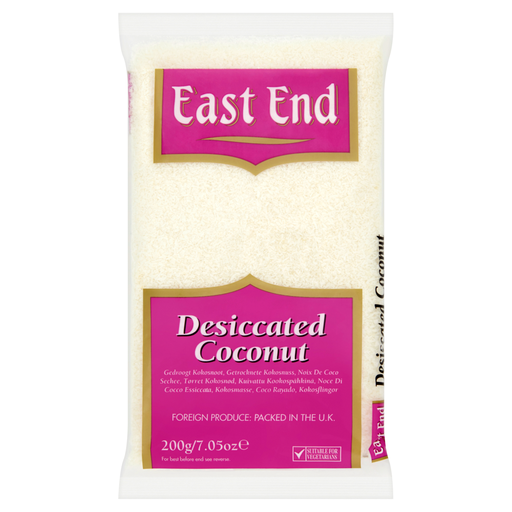
Consider this fine coconut for biscuits that require a dry, grated ingredient rather than coconut milk. Check the current pack’s ingredients and allergen information before using it for allergy-sensitive baking.
 No image available
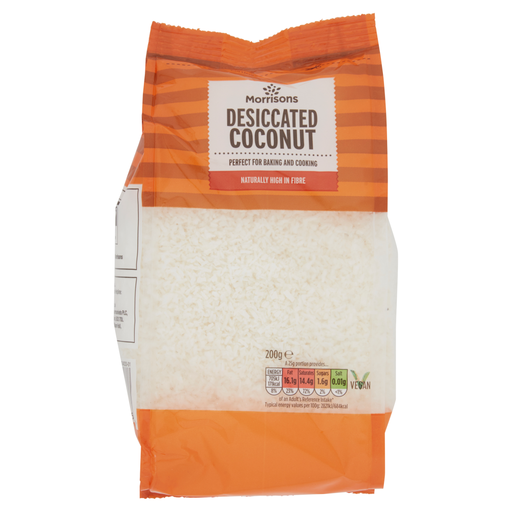
Desiccated coconut is the form to check for a biscuit recipe requiring dry coconut texture. Check the current pack for sodium metabisulfite and for nut or sesame precautionary statements if these matter to you.
Buy desiccated coconut if the recipe needs a dry, shredded coconut ingredient. Coconut milk is a liquid, so the phrase ‘pre-grated coconut milk’ combines two different product forms.
Not as a direct replacement for dry coconut texture. Tinned coconut milk adds liquid rather than shredded coconut; use it when the recipe specifies coconut milk or provides instructions for an adapted version.
Use a carton drink only where the recipe permits a milk-style liquid. These named products differ substantially: Alpro lists 5.3% coconut milk and 0.9g fat per 100ml in Coconut Original, while Sainsbury’s lists 68% coconut extract and 14.8g fat per 100ml in its tinned coconut milk.
Follow the instructions on your particular pack. Sainsbury’s says to refrigerate its coconut milk and use it within three days of opening; Tesco Groceries lists a two-day period for Blue Dragon Coconut Milk.
Yes, check the ingredients and precautionary statements on the exact pack. GOV.UK explains that food businesses must disclose any of the 14 regulated allergens used as ingredients; Tesco Groceries, for example, lists sulphur dioxide as a preservative in Buchanans Desiccated Coconut.